
From Everyday Essentials to Modern Fashion Icons Bengal’s Gamcha and Fatua
There are two names deeply intertwined with Bengali daily life, literature, and culture: the ‘Gamcha’ (traditional cotton towel) and the ‘Fatua’ (collarless casual shirt). Once a comfortable companion for people working under the scorching sun in rural Bengal, these handwoven cotton textiles have now evolved into a global fashion statement. Today, on Vunavya’s ‘Textile Heritage’ page, we explore the fascinating journey of Bengal’s traditional weaves turning into modern ‘Gamcha Fashion’ with the touch of domestic and international designers.
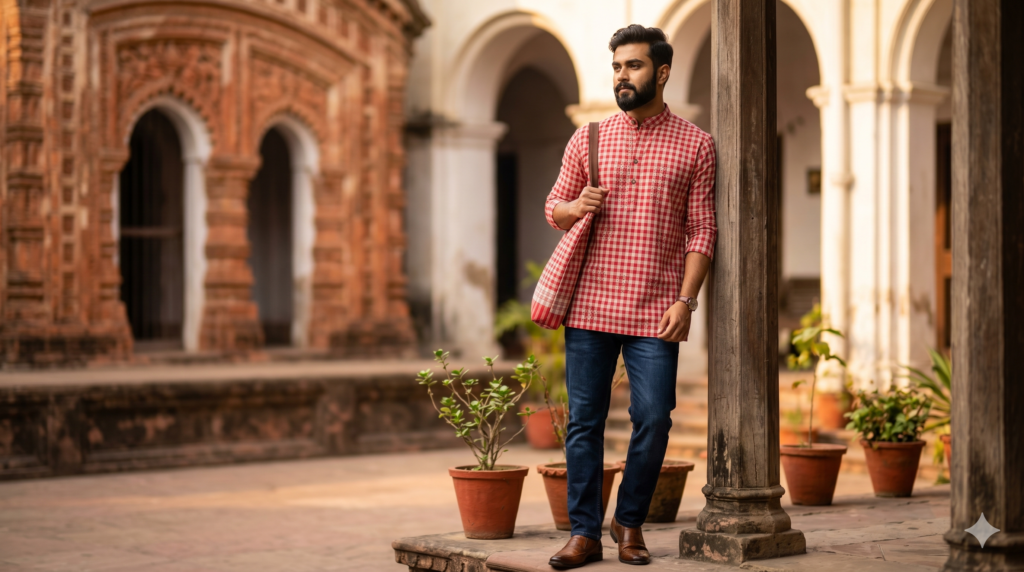
Gamcha
Bengal’s Very Own Check Print The Gamcha is essentially a very thin, highly comfortable, and water-absorbent handwoven cotton fabric. Its main attraction lies in its vibrant color palette and geometric check patterns. The weaving of small and large checks in red-white, green-white, or yellow is the exclusive signature style of Bengal’s weavers. Bengal’s Gamcha print has now carved out its own distinct identity in the global fashion arena.
Origin and Early Use: The word ‘Gamcha’ is derived from two words: ‘Ga’ (body) and ‘Mocha’ (to wipe). It has been the everyday companion of Bengal’s farmers and working class since ancient times. It served multiple purposes—tied like a turban to protect the head from the scorching sun, used to wipe sweat, dry the body after a bath, or even tied as a bundle to carry groceries from the local market.
Geographical Diversity: Not all Gamchas are the same! The check print changes based on the region. The weaving and color patterns of Gamchas from Shantipur, Phulia, and Bankura in West Bengal are entirely different from those woven in Kushtia, Sirajganj, and Tangail in Bangladesh.
Cultural and Religious Significance: The Gamcha is not just a piece of everyday fabric. The use of a fresh, red-and-white Gamcha remains mandatory in Bengali rituals, offering ‘Bhog’ to deities, or tying the ‘Gatchhora’ (nuptial knot) during weddings. It is considered a symbol of purity.
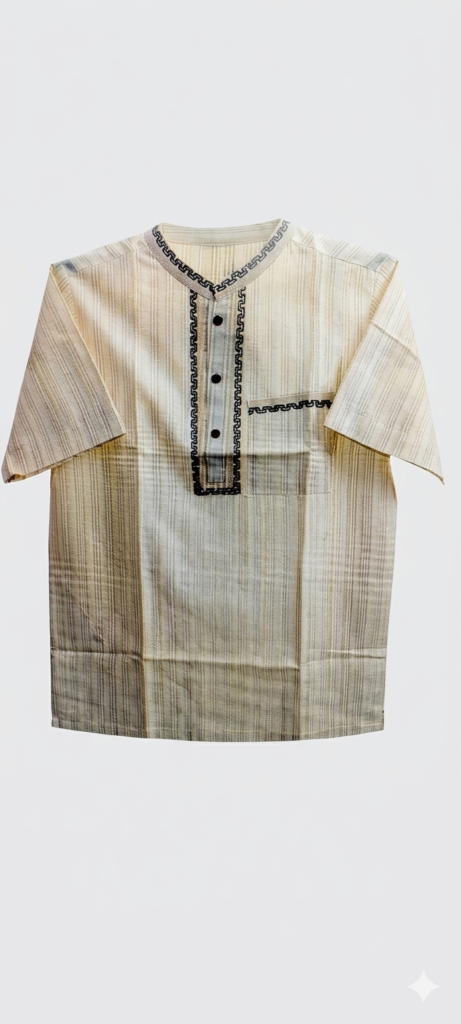
Fatua
Another Name for Comfort In Bengal’s hot and humid weather, the most preferred and soothing garment is the Fatua. This collarless, button-down cotton wear was once limited to being worn indoors, during casual neighborhood chats, or as loungewear. Today, however, the design of the Fatua has undergone a massive transformation. With the addition of beautiful block prints, pockets, wooden buttons, and modern cuts, the Fatua has become incredibly popular as a festive or casual outfit.
History and Roots: The Fatua was originally the comfortable attire of Bengal’s Baul singers, farmers, and the working class. Interestingly, the Zamindars (landlords) and the elite ‘Babu’ community of the time also loved wearing fine cotton or Garad Fatuas as loungewear during their evening gatherings or chess games.
Weather and Science: There is no substitute for the Fatua in Bengal’s extreme heat and humid climate. Its collarless design, short sleeves, and loose button-down fit allow air to circulate freely, helping to dry sweat and keep the body cool.
Modern Fusion and Detailing: Previously, Fatuas were mostly solid-colored (usually white or cream). But today, Fatuas made of Khadi, Linen, or Gamcha fabric are adorned with Kantha stitch, block prints, or batik work. The addition of coconut shell or wooden buttons gives the modern Fatua a stunning ‘Indo-Western’ or ‘Boho’ aesthetic
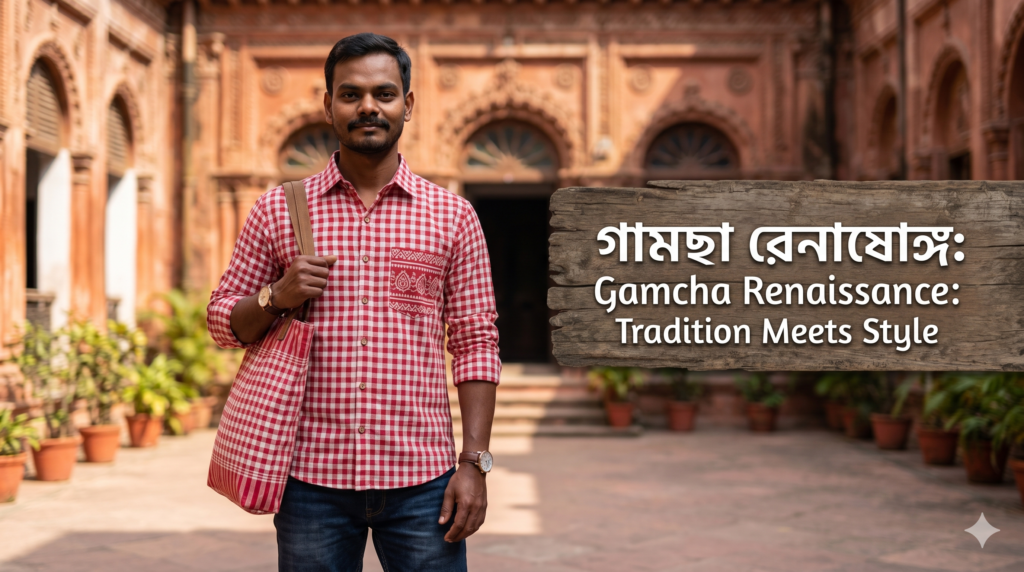
The Evolution
Rise of ‘Gamcha Fashion’ The biggest revolution occurred when the Gamcha fabric was adapted into mainstream clothing. The Gamcha is no longer just something you drape over your shoulder.
- Men’s Fashion: Gamcha check prints are being used to create trendy shirts, Nehru jackets, and designer Fatuas, which create an excellent ‘fusion look’ when paired with denim or jeans.
- Women’s Fashion: Fashion designers are transforming Gamcha fabric into stunning fusion kurtis, skirts, crop tops, designer blouses, and even full Gamcha sarees!
- Accessories: Beyond clothing, bags, shoes (like sneakers or Nagrai), and jewelry made from Gamcha fabric have become symbols of ‘Boho Fashion’ among the modern generation.
Vunavya and Bengal’s Handloom Vunavya doesn’t just deal in royal sarees or luxury clothing; we respect every woven thread connected to the soil of Bengal. The way the traditional Gamcha weaving of Bengal’s weavers is being appreciated worldwide today is a matter of immense pride for our handloom industry.
Do you have any Gamcha print shirts, Fatuas, or fusion kurtis in your wardrobe? Let us know in the comments how you like this modern Gamcha fashion of Bengal!