
The ultimate guide to Manipur’s Shaphee Lanphee and Leirum Phee. Discover the fascinating history, motifs, and weaving techniques of these heritage textiles.
Read this in – हिन्दी/অসমীয়া/বাংলা
Manipur’s textile heritage is celebrated globally, but not just for its physical beauty. In fact, every single garment from this region holds a deep cultural story. In Manipuri traditions, certain textiles are woven purely as symbols of high honor. Today, on this exclusive blog by Vunavya, we explore two highly prestigious handlooms of Manipur: Shaphee Lanphee and Leirum Phee. Let us understand their history and weaving style in a simple way.
1: Shaphee Lanphee — The Royal Shawl of Brave Warriors
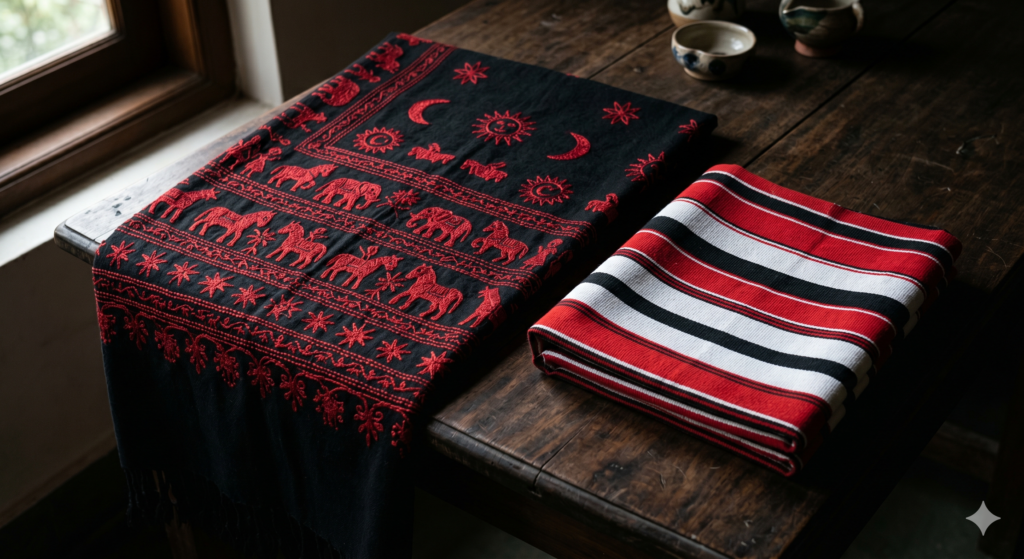
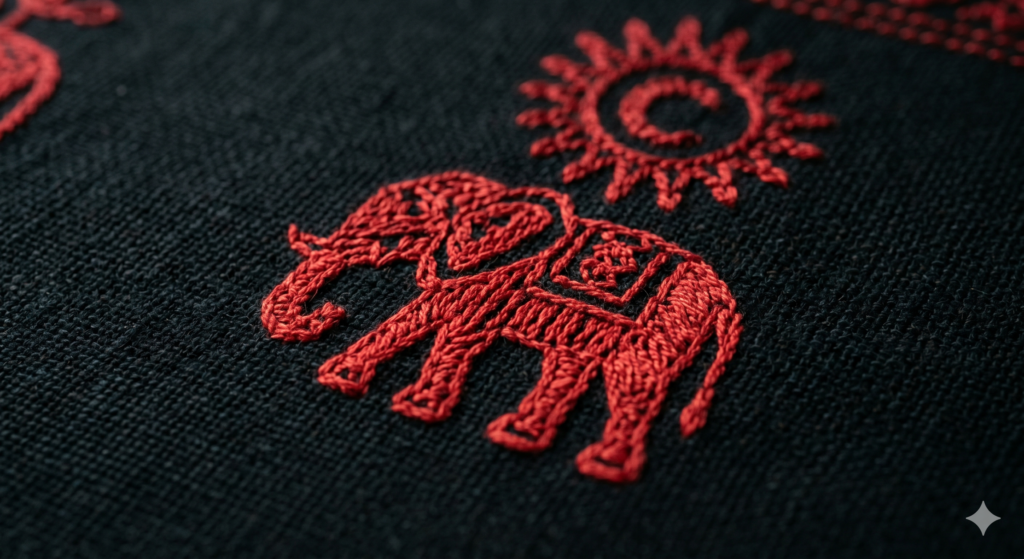
Shaphee Lanphee is a spectacular creation of the Meitei community of Manipur. It is traditionally a black cotton shawl, embroidered meticulously with bright red cotton threads. In ancient times, the Kings of Manipur presented this magnificent drape to brave warriors as a token of appreciation. Therefore, it represents the highest award for valor in Manipuri society. Today, this historic craft proudly holds the prestigious GI Tag (Geographical Indication).
- The Magic of Motifs: The core essence of this shawl lies in its unique symbolic motifs. The surface displays geometric patterns of elephants, horses, peacocks, stars, and the sun. Weavers craft these intricate designs entirely by hand without using any graphs. Furthermore, the striking contrast of black and red gives the shawl an elegant visual appeal.
2: Leirum Phee — The Dignified Scarf of Hospitality
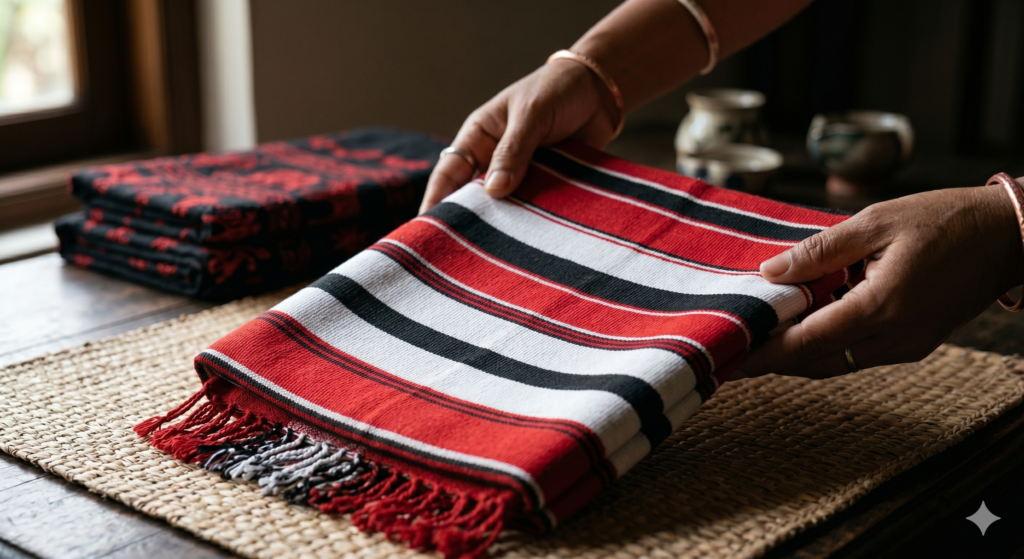
Leirum Phee plays an essential role in the social life of Manipur. It is primarily a cotton textile featuring a broad striped pattern. In Manipuri culture, people wear it as a traditional stole or scarf.
- Cultural Significance: The use of Leirum Phee is mandatory during any auspicious ceremony or cultural gathering in Manipur. When a respected guest visits, the hosts welcome them by wrapping a Leirum Phee around their shoulders. On the other hand, gifting this specific textile to the groom’s family during a Manipuri wedding is an ancient ancestral custom.
- The Weave Structure: Weavers craft Leirum Phee by blending red, white, and black cotton yarn. It features broad red borders on both sides with fine geometric blocks in the middle. Woven on traditional loin looms, the fabric is heavy and durable.
Conclusion
Shaphee Lanphee and Leirum Phee demonstrate how textiles can preserve a community’s history and values. From the courage of a warrior to the warmth of hospitality, every emotion is alive within these threads. Vunavya stands proud in bringing this magnificent mountain craftsmanship to the global stage.