
Jharkhand’s GI-tagged Kuchai Silk. Discover the rich history, organic textures, and royal elegance of the Kharsawan-Kuchai region’s famous Tussar handlooms.
Read this in – বাংলা/हिन्दी/मैथिली
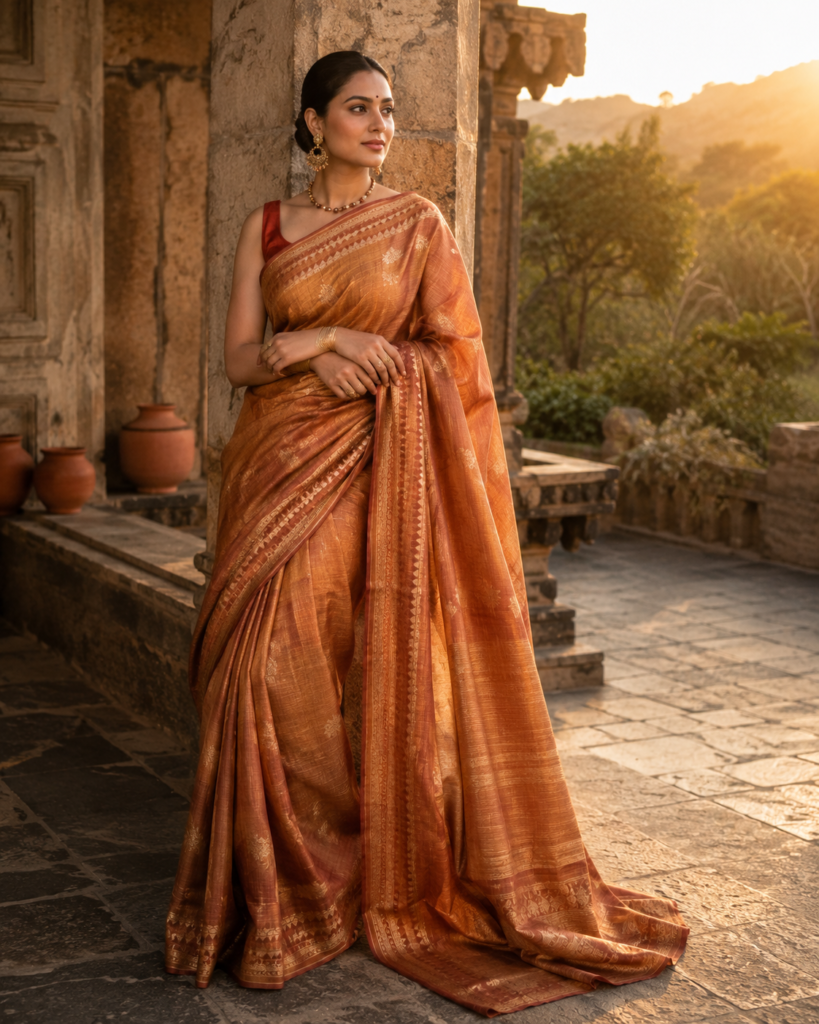
Nestled within the rich tribal landscape of the Chota Nagpur Plateau in Bihar and Jharkhand, the historic region of Kharsawan-Kuchai holds an extraordinarily prestigious place in Indian textile history. Every single thread woven on the traditional looms of this region carries a story of an ancient heritage. For centuries, the indigenous master artisans of Jharkhand have crafted magnificent silk that stands today as a stellar global blueprint for sustainable slow fashion. Today, on this exclusive blog by Vunavya, we explore the fascinating history, fully organic extraction mechanics, and royal textures of the iconic Kuchai Silk.
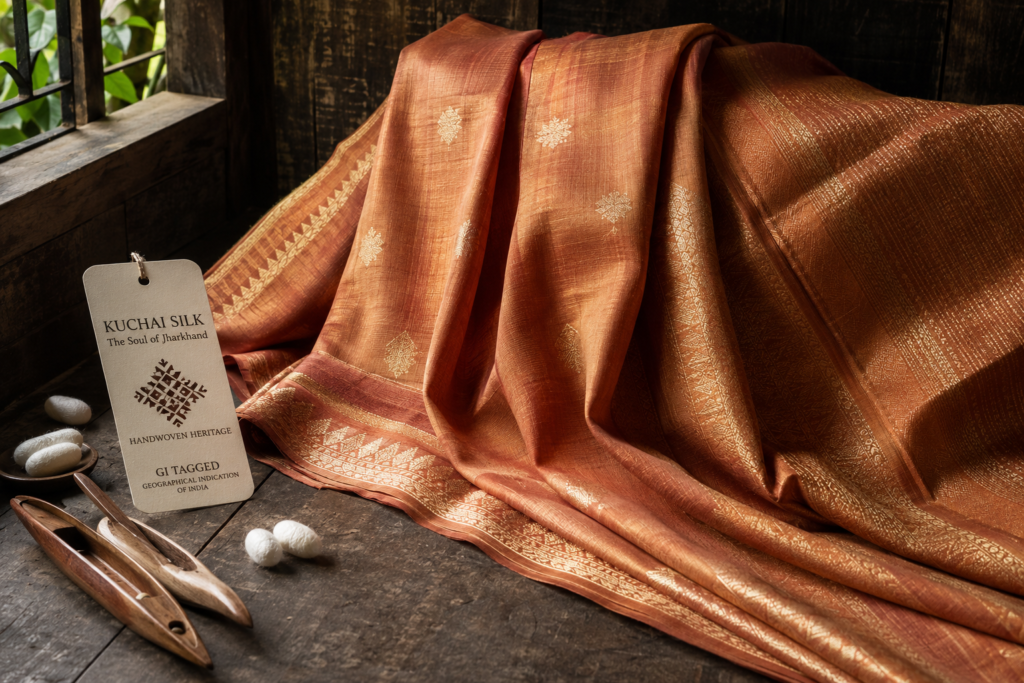
1: The Textile Mechanics of Kuchai Silk — A 100% Organic Processing
The primary allure of Kuchai Silk lies heavily within its strictly cruelty-free, organic extraction process and unique tactile texture. It is celebrated as one of India’s finest eco-friendly wild silks.
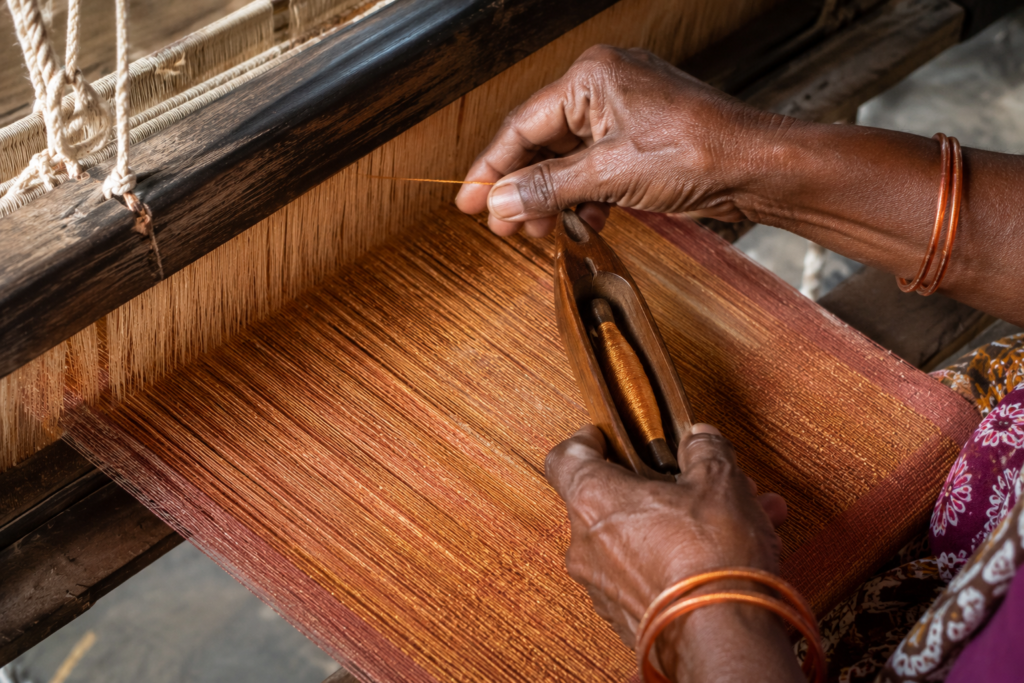
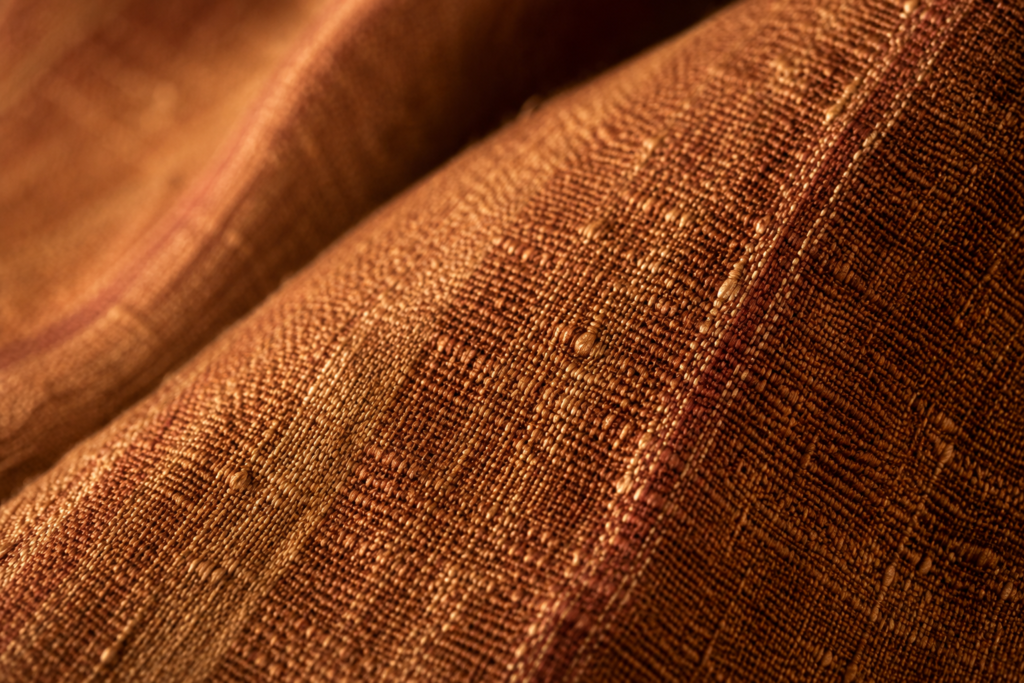
- Wild Cocoons and Yarn Extraction: Weavers harvest these premium threads strictly from wild silkworms that feed naturally on local Arjun and Sal trees in the dense forests. Furthermore, the entire spinning and processing exclude any toxic chemicals. Consequently, the yarn retains a distinct, natural earthy-golden tint and a beautifully irregular, raw slubby texture.
- Weaving Framework: The local tribal artisans intricately process this handspun yarn on traditional handlooms. The resulting textile is highly breathable, exceptionally lightweight, and provides magnificent thermal comfort across all seasons.
2: The GI Tag Status and Contemporary Global Fashion Trends
In an era deeply focused on conscious clothing and zero-chemical footprints, Kuchai Silk perfectly bridges the gap between ancient heritage and modern luxury.
- Global Authenticity: The prestigious GI Tag (Geographical Indication) explicitly protects and certifies the purity of Kuchai Silk on the international platform. Therefore, it has become highly sought after by premium boutique owners and global fashion designers. Contemporary slow-fashion houses are actively transforming this raw golden fabric into high-end designer sarees, luxury stoles, structural jackets, and royal menswear silhouettes.
Conclusion
The tribal handlooms of Jharkhand demonstrate how fashion can co-exist organically with nature for hundreds of years. From the rich matted sheen of raw Tussar to the eco-friendly ethics of Kuchai Silk, every single drape narrates a story of sustainability and identity. Bridging the gap between these rural master weavers and global textile lovers, Vunavya stands proud in keeping this heritage alive.