
The ultimate guide to Lucknowi Chikankari. Discover the rich history, intricate shadow-work stitches, and practical tips to identify authentic handloom luxury.
Read this in – বাংলা/हिन्दी/मैथिली
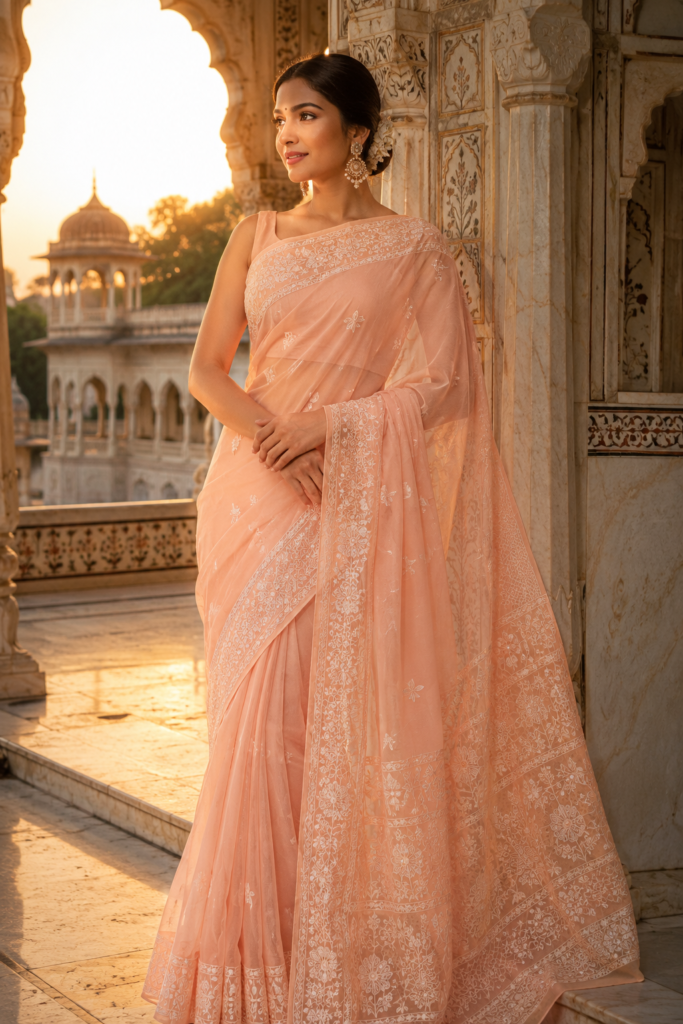
The imperial city of Lucknow in Uttar Pradesh holds an extraordinarily prestigious place in global textile history as the definitive heartland for fine hand embroidery. Every single stitch executed on lightweight transcalent fabrics carries a magnificent reflection of Mughal elegance and centuries-old artisan traditions. Especially during warm summer seasons, an authentic Lucknowi Chikankari Saree or tunic stands out as the ultimate emblem of comfort and royal sophistication. Today, on this comprehensive blog by Vunavya, we explore the fascinating history, intricate stitching mechanics, and provide practical answers to some highly essential questions regarding Lucknowi Chikankari.
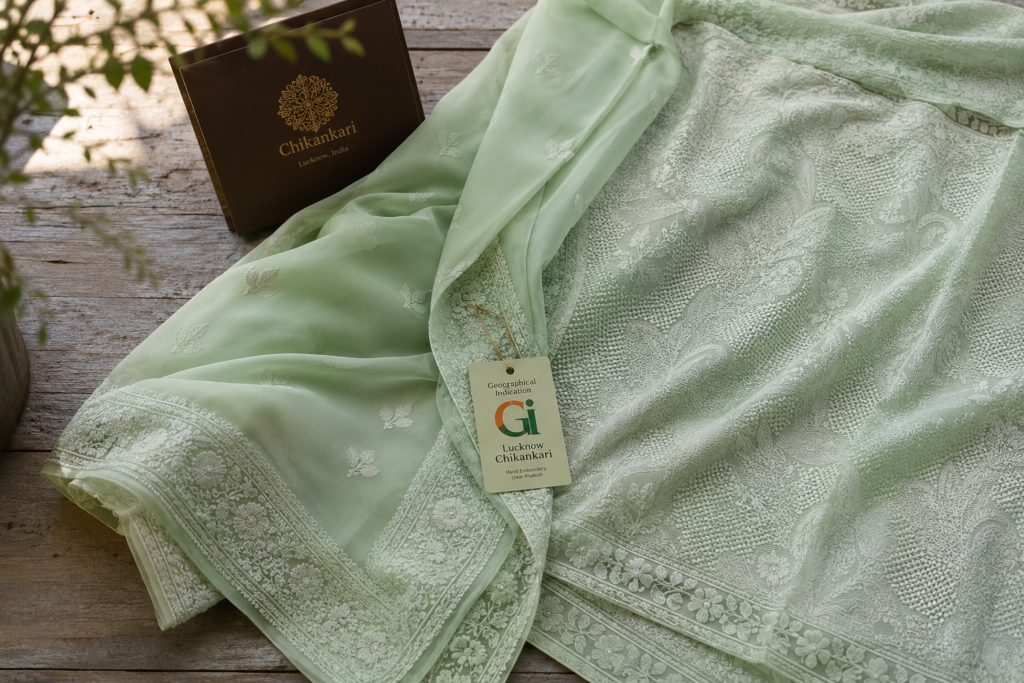
1: The Technical Mechanics of Chikankari — The Art of 32 Stitches
The primary allure of Lucknowi Chikankari lies heavily within the spectacular diversity of its manual stitches combined with fine fabric structures. Master artisans strictly process these historic configurations over premium muslin, mulmul, pure georgette, and organza bases.
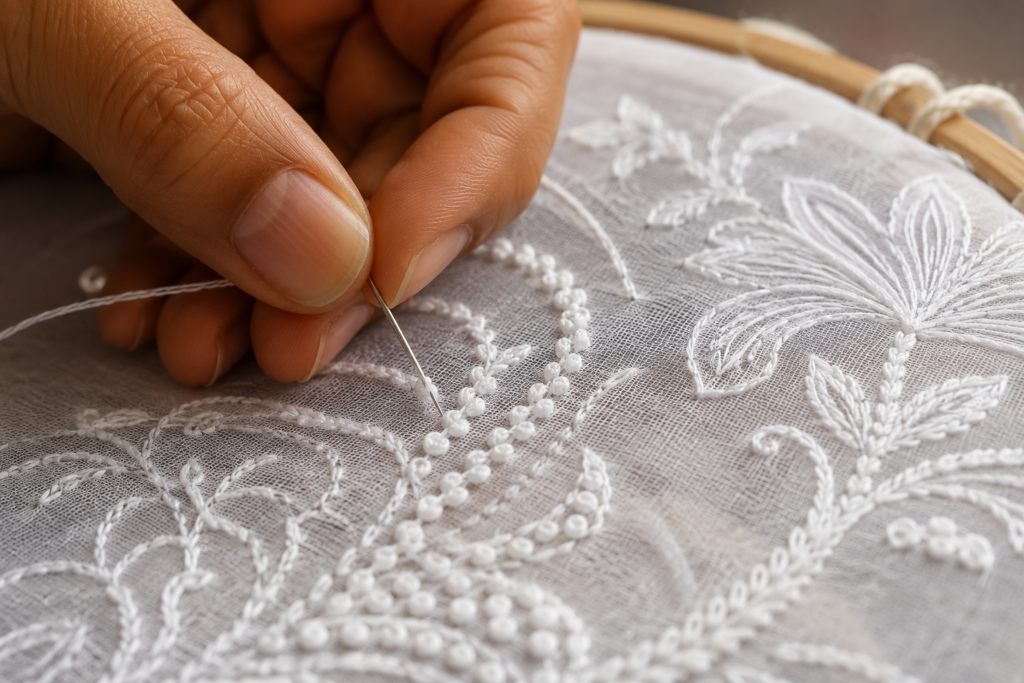
- The Block-Printing and Washing Cycle: Before the embroidery begins, craftsmen strictly trace the design patterns onto the fabric using wooden blocks dipped in erasable indigo dye, a process locally termed ‘Chhapayi’. Artisans then use fine needles and cotton threads to embroider directly over these traced outlines. Once completed, the fabric is thoroughly washed to erase the indigo marks, leaving behind only the pristine white or pastel thread work.
- The Complexity of Stitches: Chikankari incorporates nearly 32 distinct structural stitches. The most premium variations include ‘Murri’ and ‘Phanda’, which form beautifully raised, rice-grain-like three-dimensional (3D) knots. Conversely, the mechanism of working from the reverse side to create a delicate shadow effect on the front profile is globally celebrated as ‘Shadow Work’.
2: Mughal Motifs and Contemporary Sustainable Luxury Trends
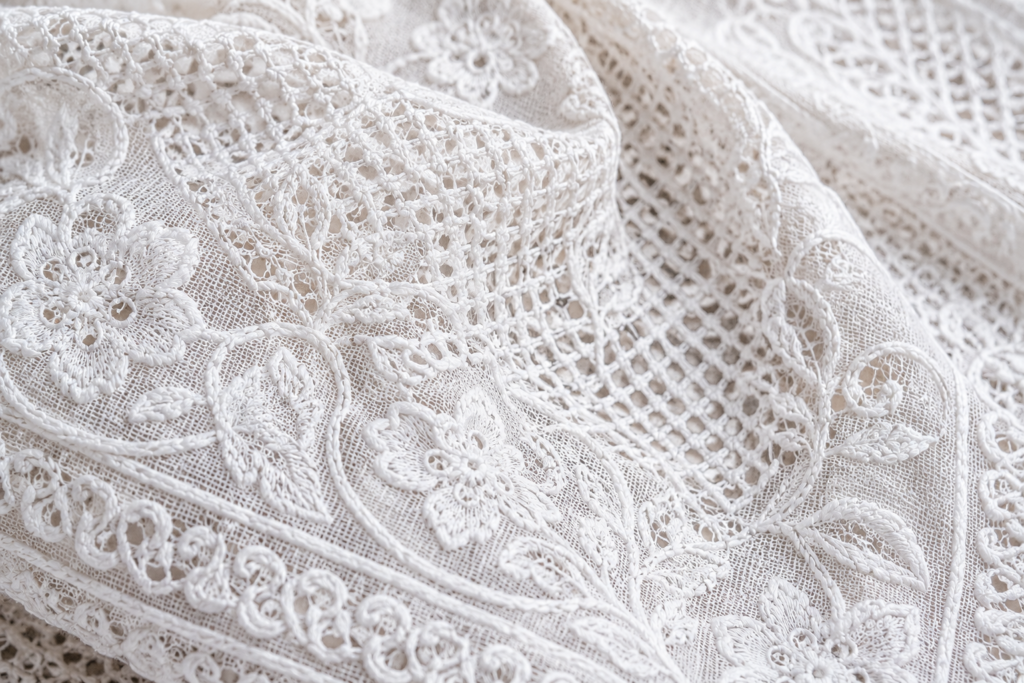
- The Language of Persian Symbolism: The surface details of a Chikankari garment explicitly showcase patterns inspired by Persian and Mughal architecture. These feature stylized floral vines (Bel), mango paisleys (Ashrafi), and delicate geometric meshes (Jali). Today, certified strictly by its official GI Tag (Geographical Indication), contemporary global designers actively integrate these hand-embroidered panels into high-end sustainable summer tunics, luxury sarees, and flowing resort wear for the international slow-fashion market.
3: Frequently Asked Questions (FAQ)
Q1: How can I reliably distinguish between authentic hand-embroidered Chikankari and machine imitations?
Answer: An authentic hand-embroidered Chikankari garment will explicitly display tiny yarn knots, thread loose ends, and minor artistic inconsistencies on its reverse side. Machine-made lookalikes feature a perfectly flat, uniform, and mesh-like polyester backing that feels synthetic to the touch.
Q2: Is Chikankari fabric suitable and breathable for extreme summer months?
Answer: Yes, absolutely. Authentic Chikankari is crafted on pure mulmul, lightweight cotton, or premium georgette. This makes the textile highly porous, allowing optimum air circulation to keep the skin cool and comfortable during peak summers.
Q3: What is the recommended cleaning and maintenance routine for a Chikankari saree?
Answer: Because it involves delicate manual thread work, you should strictly hand wash the garment at home using mild liquid soap and cold water. Never throw it into a washing machine. When pressing the fabric, always iron it from the reverse side to protect the raised knots.
Conclusion
The delicate embroideries of Lucknow demonstrate how fashion can co-exist organically with human precision and timeless elegance for hundreds of years. From the raised grain knots of the Murri stitch to the soft whispers of shadow work, every single panel narrates a story of sustainability and identity. Bridging the gap between these rural master craftswomen and global textile lovers, Vunavya stands proud in keeping this heritage alive.