
The ultimate guide to Lucknowi Zardozi. Discover the Kalabattu metallic thread mechanics, and practical tips to identify authentic handloom luxury.
Read this in – বাংলা/हिन्दी/मैथिली
The historic capital of Lucknow in Uttar Pradesh holds an extraordinarily prestigious place in global textile history as the premier heartland for opulent metallic embroidery. Every single stitch executed on heavy structural bases carries a magnificent reflection of Mughal courtly grandeur and centuries-old artisan legacies. Especially during royal celebratory occasions, an authentic Zardozi Saree stands out as the ultimate emblem of majestic weight and imperial sophistication. Today, on this comprehensive blog by Vunavya, we explore the fascinating history, intricate material specifications, and provide practical answers to some highly essential questions regarding Lucknowi Zardozi.
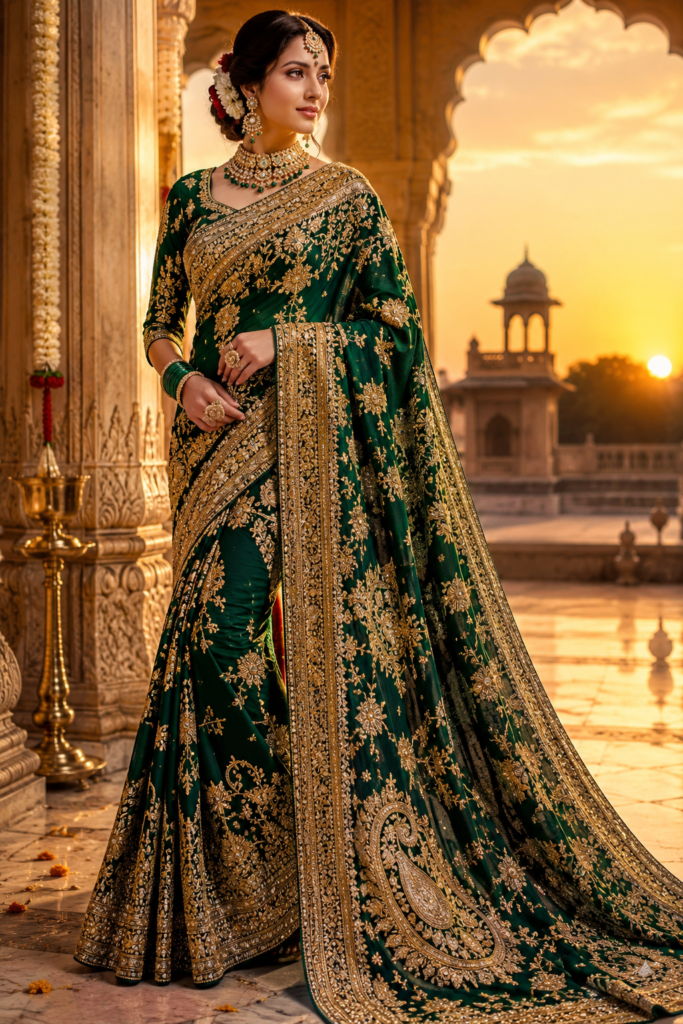
1: The Material Specifications of Zardozi — The Alchemy of ‘Kalabattu’
The primary allure of Lucknowi Zardozi lies heavily within the spectacular technical configuration of its metallic wires combined with rich velvet, pure Katan silk, and high-density georgette bases.
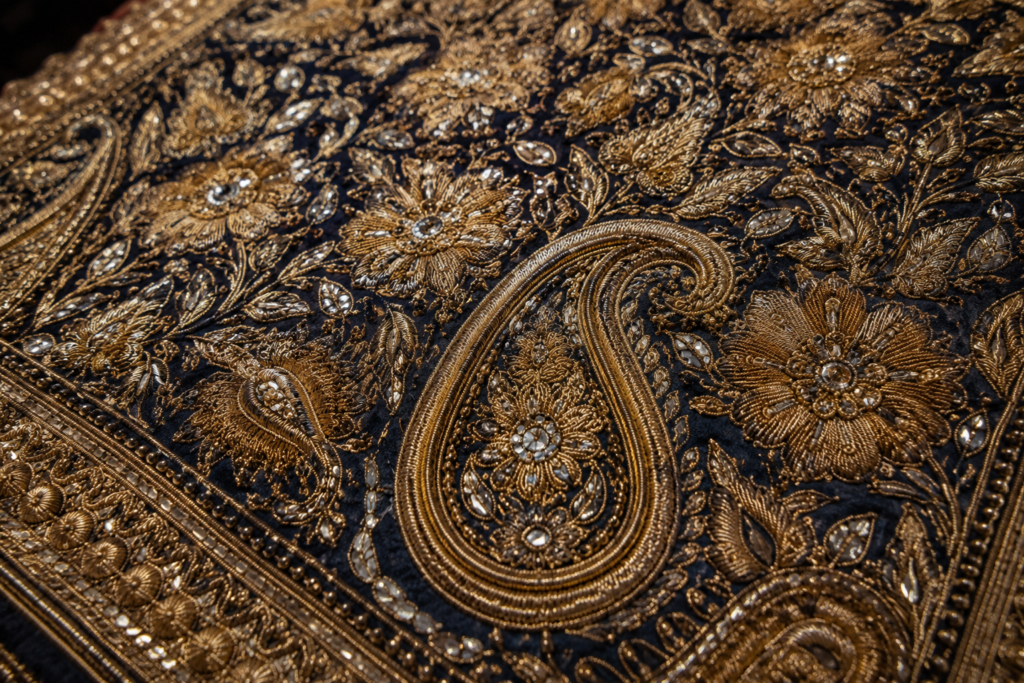
- The Kalabattu Wire Infrastructure: This luxury craft strictly rejects ordinary embroidery threads. Instead, artisans exclusively deploy ‘Kalabattu’, a highly specialized thread made of pure silver wire that is meticulously gold-plated.
- The Diversity of Supplementary Elements: To achieve a raised, three-dimensional (3D) ornamental relief, craftsmen integrate coiled metallic springs termed ‘Salma’, reflective metallic spangles known as ‘Sitara’, and tubular glass beads called ‘Katdana’. To anchor this intense weight, a dense base padding of organic cotton thread is pre-stitched beneath the primary patterns.
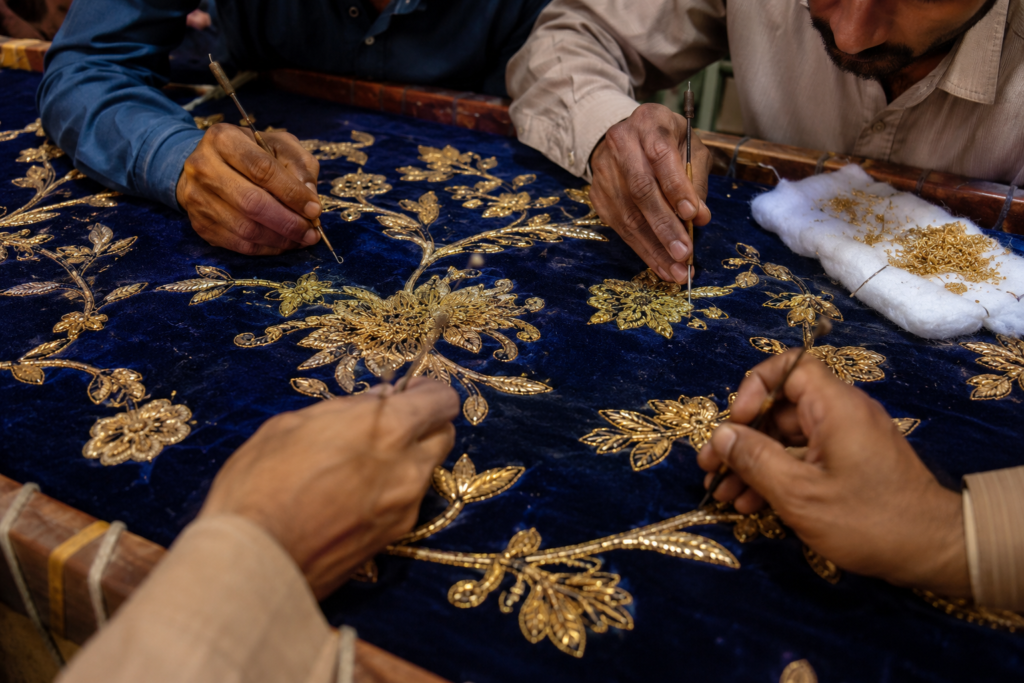
- The Traditional Geographical Hub: The definitive historical hub for this intricate work is the Chowk area of Old Lucknow. Here, master craftsmen sit around massive horizontal wooden frames called ‘Karchob’, spending weeks executing a single masterpiece. Today, protected strictly by its official GI Tag (Geographical Indication), contemporary global luxury designers actively transform these hand-embroidered panels into high-end bridal couture.
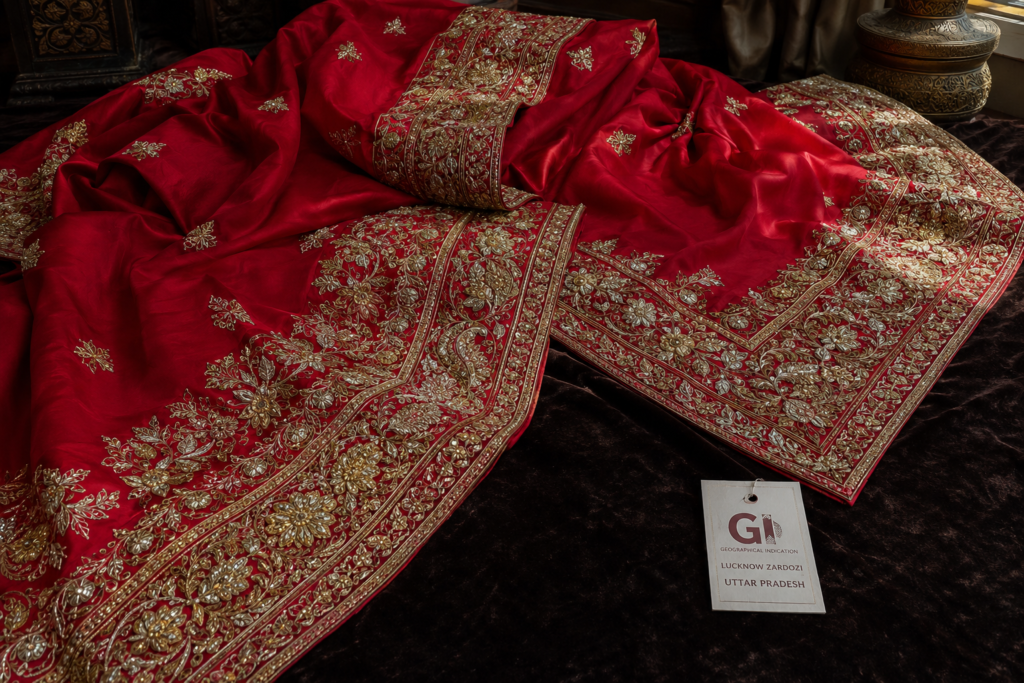
2: Traditional Geographical Hub and Contemporary Sustainable Luxury
The true magicians of this century-old craft are the local artisans of Lucknow, who have meticulously kept this regal heritage alive across generations.
- The Old Lucknow Chowk Hub: The definitive historical and geographical epicenter for authentic zardozi is the Chowk area of Old Lucknow and its surrounding ancestral alleys. Here, master craftsmen sit collectively around massive horizontal wooden frames called ‘Karchob’, spending countless hours manually weaving a single imperial saree. The official GI Tag (Geographical Indication) protection from the Government of India explicitly certifies its pristine purity on the global platform.
- Modern Silhouette Adaptations: Respecting this magnificent heritage, contemporary luxury fashion designers actively integrate heavy Zardozi embroidered panels into high-end bridal lehengas, majestic sherwanis, and structural corporate ethnic jackets. Consequently, this unique blend of historic aristocracy and artisanal green ethics has made it highly coveted across international slow-fashion markets.
3: Frequently Asked Questions (FAQ)
Q1: What is the most definitive technique to identify an authentic hand-crafted Karchob Zardozi saree?
Answer: An authentic handloom Zardozi saree will explicitly showcase the white or cream cotton base padding and hand-tied metallic knots on its reverse side. Machine-made lookalikes feature an explicitly flat, light, and uniform synthetic thread backing with no structural weight.
Q2: Do the metallic wires of an authentic Zardozi saree turn black over time?
Answer: Yes, absolutely. Because authentic Zardozi utilizes genuine silver and gold-plated Kalabattu wires, they naturally undergo mild oxidation upon prolonged exposure to air, developing a beautiful vintage coppery or dark patina. This tarnishing is the ultimate hallmark of purity. Plastic or chemical zari components never tarnish.
Q3: What is the recommended preservation and storage routine for a heavy Zardozi saree?
Answer: Due to the delicate nature of real precious metals, you must strictly dry clean the garment. Never store a Zardozi saree in plastic sheets or zip-locks. Instead, wrap it gently in a soft, breathable cotton muslin cloth, and store it flat or vertically in a moisture-free closet.
Conclusion
The grand embroideries of Lucknow demonstrate how fashion can co-exist organically with metallic architecture and absolute human precision for hundreds of years. From the pristine lines of the Kalabattu wire to the raised relief of Salma-Sitara work, every single panel narrates a story of sustainability and identity. Bridging the gap between these rural master craftsmen and global textile lovers, Vunavya stands proud in keeping this heritage alive.