
The Evolution of the Blouse: A Journey from Jorasanko to Modern Runway
The Saree is the ultimate symbol of grace for a Bengali woman. But did you know that the “matching blouse,” which we consider essential today, didn’t even exist in Bengal until the mid-19th century?
For centuries, Bengali women draped the saree without any stitched undergarments or blouses. It was simply a long piece of cloth wrapped around the body. The transition to the modern blouse we wear today is a fascinating story of social revolution, rooted in the famous Tagore family of Jorasanko.
The Turning Point in History
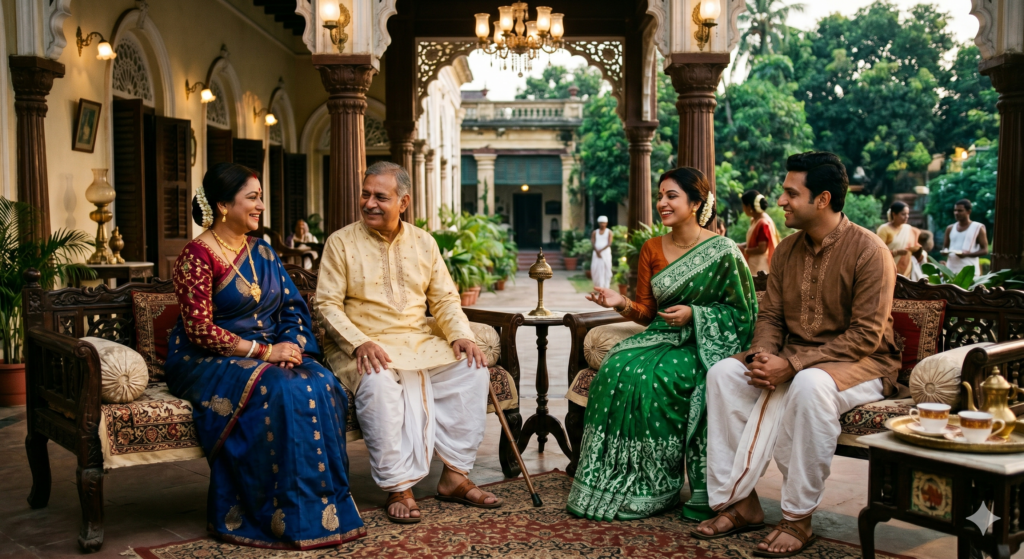
In the late 19th century, Jnanadanandini Devi (wife of Satyendranath Tagore, the first Indian ICS officer) was once denied entry to a British club in Calcutta. The reason? Her traditional way of draping the saree without a blouse was deemed “indecent” by the British elite.
This incident sparked a fashion revolution that would change Bengali attire forever.
Parsi Inspiration and the ‘Brahmika’ Saree
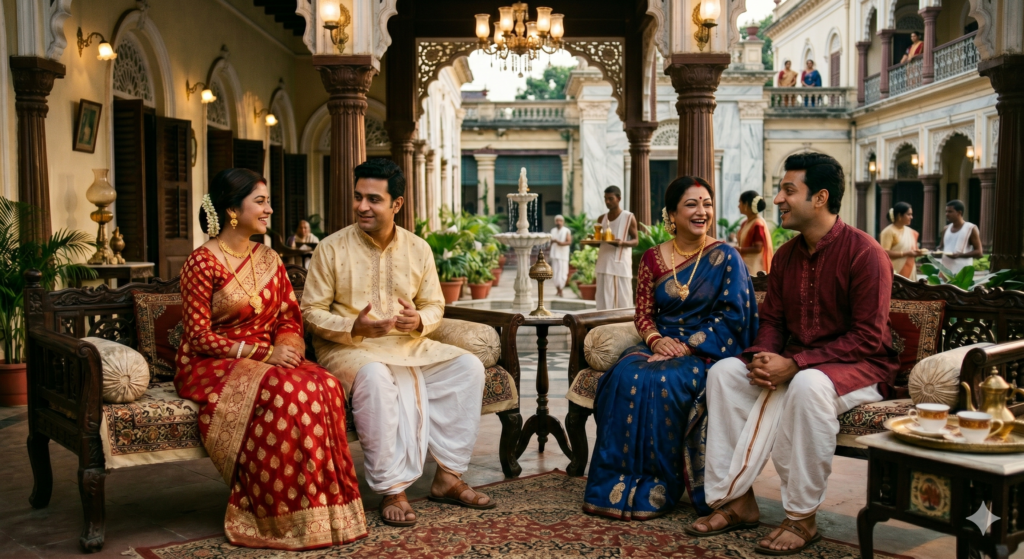
While staying in Bombay with her husband, Jnanadanandini Devi observed Parsi and Gujarati women. They wore stitched “jackets” or shirts (then called chemises) under their sarees.
She adopted this style and modified it to suit the climate and sensibilities of Bengal. She introduced a new way of draping the saree with the pallu over the left shoulder, which came to be known as the ‘Brahmika Saree’. Along with it, the stitched ‘blouse’ made its first grand entry into the wardrobes of Bengali women.
Evolution Through the Decades
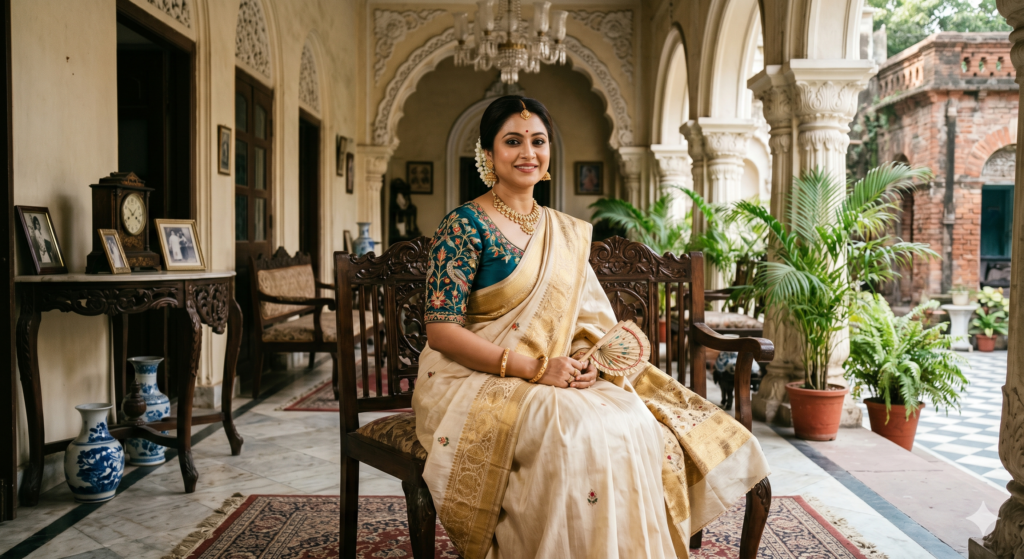
From the inner chambers of the Tagore household, the blouse began to evolve:
- The 1940s-50s: Due to fabric shortages after WWII, sleeves became shorter. This era saw the rise of the iconic ‘Puff Sleeves’ or Ghoti Hata.
- The 1960s-70s: Influenced by cinema icons, sleeveless and deep-neck blouses became popular, turning the garment into a symbol of modern femininity.
- Today: What was once a basic covering is now a ‘statement piece’. A simple handloom saree paired with a heavily embroidered, backless, or designer blouse can completely transform a look.
Preserving Heritage with Vunavya
Fashion is a cycle, but elegance is eternal. At Vunavya, we believe in celebrating this rich history. Pairing a traditional Garad or Baluchari saree with a vintage ‘High-neck’ or ‘Puff-sleeve’ blouse creates a timeless, aristocratic look.
What is your favorite blouse style? The vintage Ghoti Hata or the modern sleeveless? Let us know in the comments, and stay tuned to Vunavya for more untold stories of Indian textiles!