
The ultimate guide to Jharkhand’s Santhali Panchi and Parhan. Discover the rich tribal history, bold striped patterns, and beautiful geometric borders of this heritage craft.
Read this in – हिन्दी/मैथिली/বাংলা
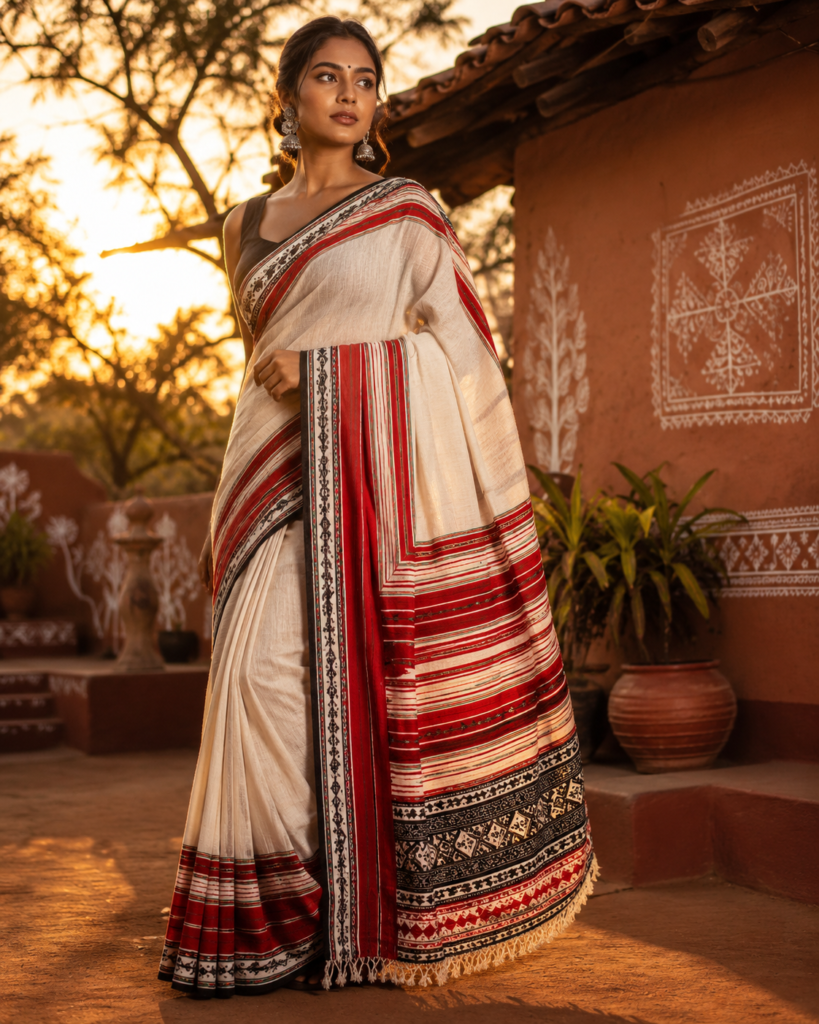
The indigenous tribal landscape of Jharkhand holds an extraordinarily prestigious place in Indian textile history, and the absolute centerpiece of this heritage is the weaving craft of the Santhal community. Every single thread woven on their traditional looms reflects a beautiful harmony with nature. The traditional attire worn by Santhali women consists of two distinct matching garments: the Panchi and the Parhan. It stands today as a powerful symbol of their social identity and cultural pride. Today, on this exclusive blog by Vunavya, we explore the fascinating history, structural mechanics, and geometric beauty of the iconic Santhali Panchi & Parhan.
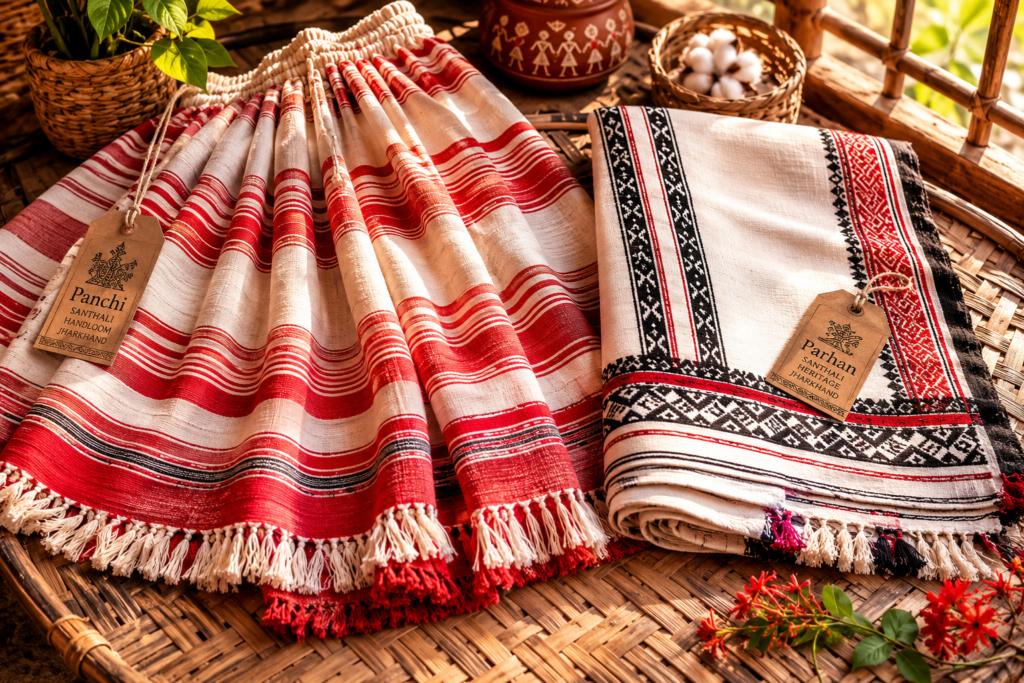
1: Panchi and Parhan — The Structural Framework of Santhali Attire
The traditional ensemble of Santhali women is strictly divided into two functional pieces, tightly woven using high-quality cotton yarn on handlooms.
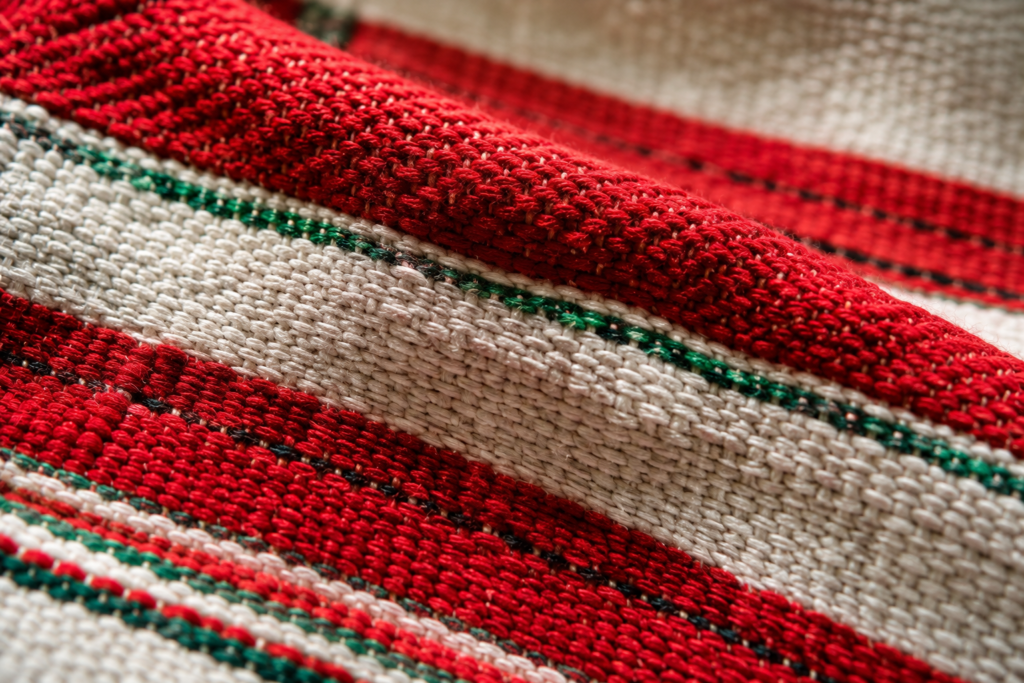
- The Santhali Panchi: This is the lower garment worn as a classic wrap-around skirt. The primary visual signature of a Panchi lies heavily within its broad, bold vertical or horizontal striped patterns.
- The Santhali Parhan: On the other hand, the Parhan is a broader piece of fabric used as an upper drape or shawl over the shoulders. It typically features a clean white background decorated with vibrant red and black borders along the edges.
2: Meaning of Colors and Modern Sustainable Fashion Trends
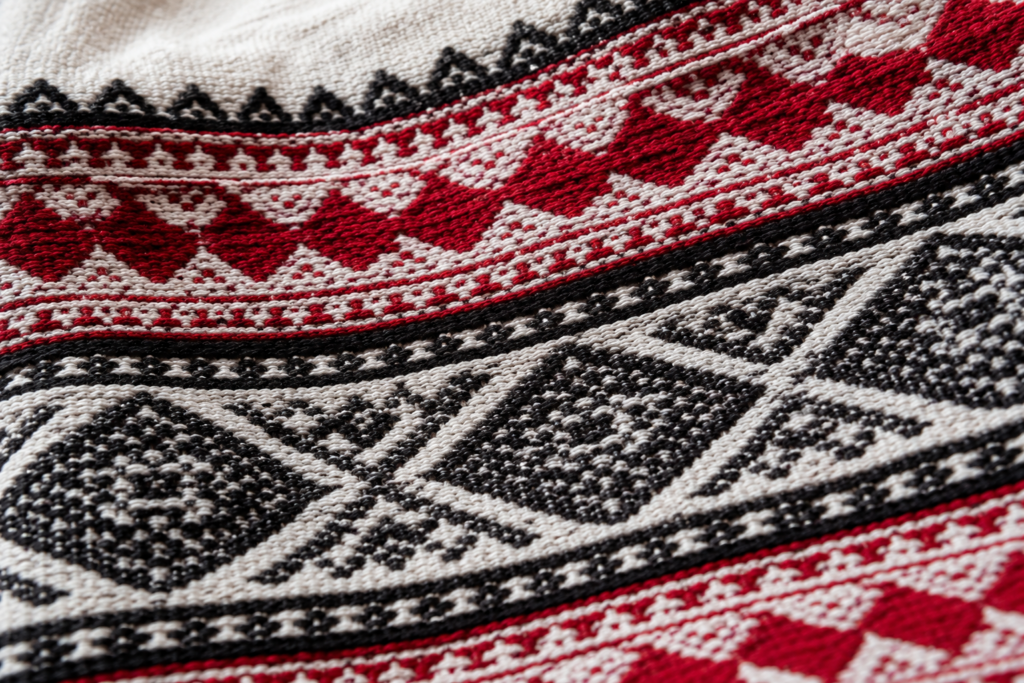
The primary allure of Santhali handlooms lies in their calculated color palette and the intricate geometric motifs woven into the borders.
- Red, Black, and White Symbolism: Red represents courage and energy, black forms the stable link to the soil, and white symbolizes peace. Weavers meticulously introduce beautiful representations of wild flowers and mountain lines into the borders. Modern slow-fashion designers blend these traditional striped configurations into contemporary cotton sarees, fusion stoles, and eco-friendly silhouettes, making them globally coveted.
Conclusion
The tribal handlooms of Jharkhand demonstrate how fashion can co-exist organically with history for hundreds of years. From the striking stripes of the Panchi to the nature-inspired borders of the Parhan, every single thread narrates a story of sustainability and identity. Bridging the gap between these rural master weavers and global textile lovers, Vunavya stands proud in keeping this heritage alive.