
The ultimate guide to Jharkhand’s Kurmi and Oraon tribal weaving. Discover the rich loin-loom heritage, nature-inspired motifs, and practical care tips.
Read this in – हिन्दी/मैथिली/বাংলা
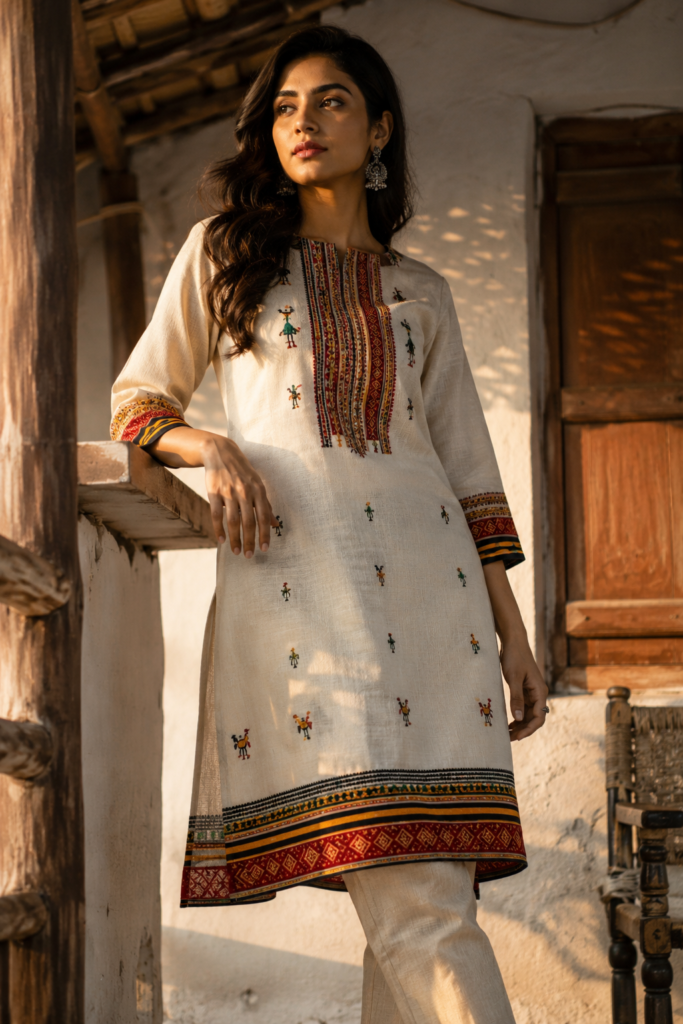
The deep-rooted indigenous culture of Jharkhand holds an extraordinarily prestigious place in Indian textile history, heavily represented by the historic handlooms of the Kurmi and Oraon communities. Every single thread interlaced on their traditional looms reflects an ancient story of survival and structural harmony with nature. These garments are far more than clothing; rather, they serve as living testaments to ancestral tribal festivals. Today, on this comprehensive blog by Vunavya, we explore the fascinating history, weaving patterns, and provide answers to some highly practical questions regarding Kurmi and Oraon Tribal Weaving.
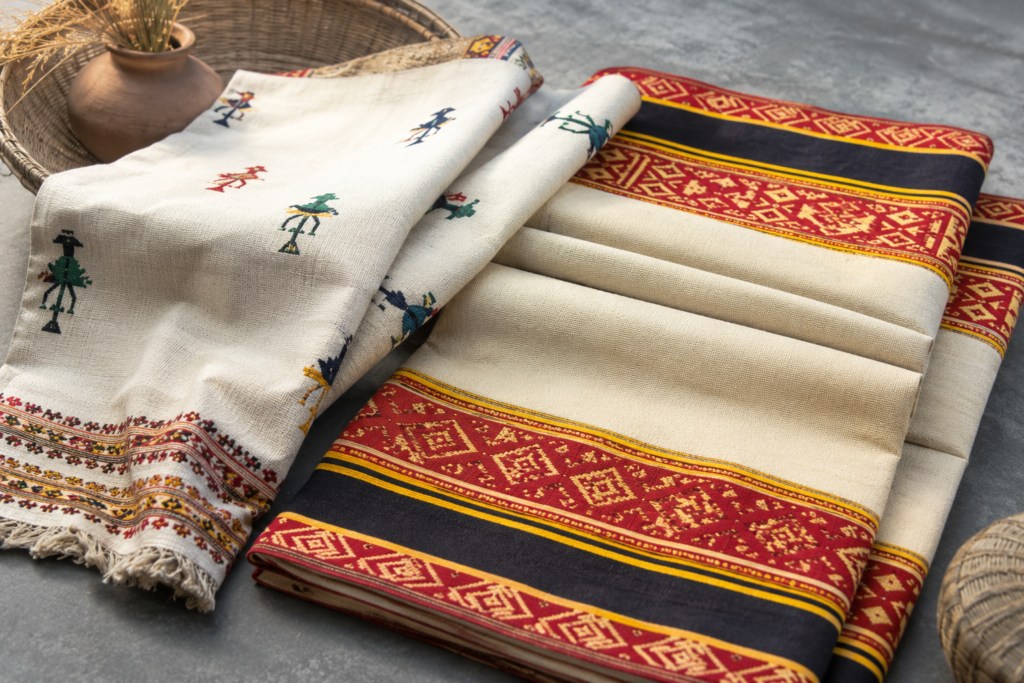
1: The Weaving Ecosystem — Traditional Mechanics of Kurmi and Oraon Textiles
The design language of Kurmi and Oraon handlooms is strictly preserved through traditional generational practices passed down to young weavers.
- The Kurmi Weaving Craft: Kurmi women strictly utilize heavy, dense cotton yarn counts to weave their everyday garments. The absolute signature of a Kurmi weave lies heavily within its thick geometric borders decorated in bold red, yellow, and pitch-black configurations.
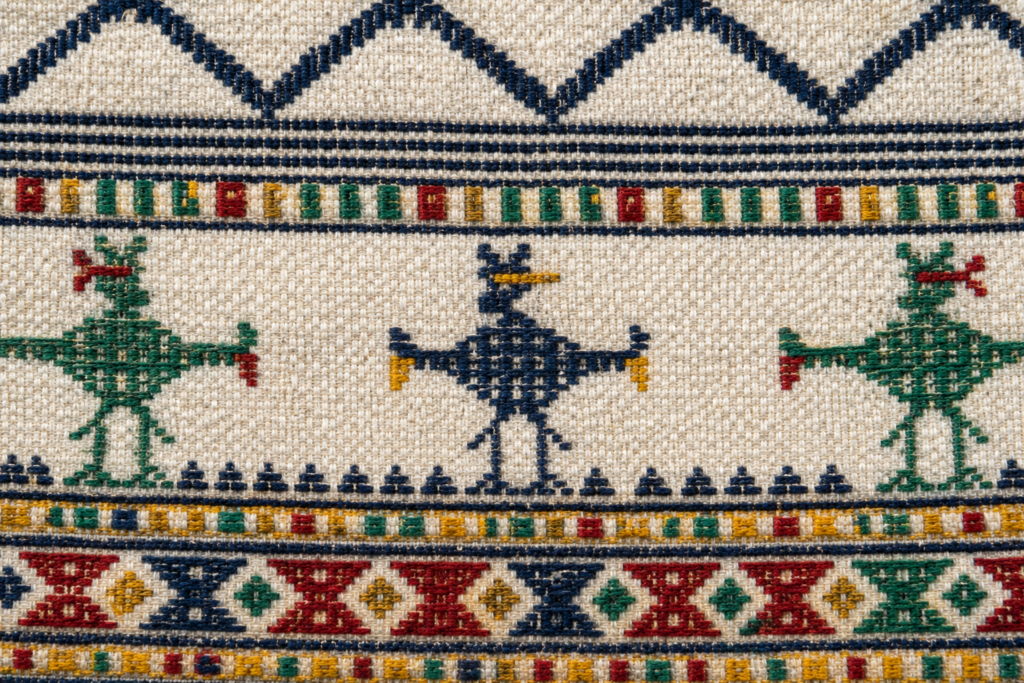
- The Oraon Ceremonial Shawl: Conversely, the Oraon community weaves dedicated celebratory wraps or shawls worn exclusively during major seasonal festivals. Woven over an off-white base layer, it features delicate multicolored extra-weft miniature motifs.
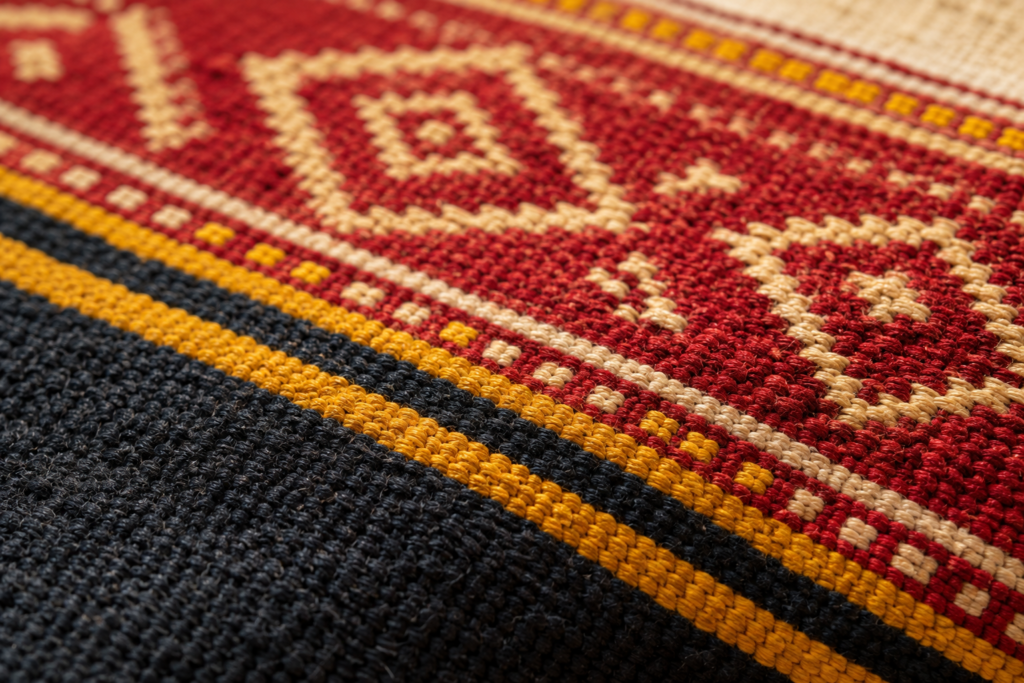
2: Nature-Inspired Motifs and Global Slow-Fashion Alignment
- The Language of Motifs: The primary allure of these handlooms is their strict geometric representations of local flora and fauna. Weavers explicitly convert local mountain rivers, wild birds, and ancestral markings into beautiful striped panels. Modern slow-fashion houses actively transform these structured textiles into contemporary everyday dresses, summer jackets, and conscious stoles.
3: Frequently Asked Questions (FAQ)
Q1: What is the primary characteristic of Kurmi and Oraon handloom fabrics?
Answer: The defining traits are their heavy-duty texture, exceptional durability, and the bold layout of hand-woven geometric lines and borders done in organic red, black, and yellow hues.
Q2: Is this tribal fabric comfortable to wear during hot summers?
Answer: Yes, absolutely. Woven entirely out of 100% pure natural cotton, these fabrics are highly breathable, allow free air circulation, and keep the skin cool in hot weather.
Q3: How should one wash and maintain these handcrafted tribal sarees or shawls?
Answer: Because they involve organic yarns and natural dyes, it is strictly recommended to dry clean the garment for the first two washes. Afterward, you can gently hand wash it at home using cold water and a mild, eco-friendly liquid soap.
Conclusion
The tribal handlooms of Jharkhand demonstrate how fashion can co-exist organically with nature for hundreds of years. From the rich geometric lines to the eco-friendly dyes, every drape narrates a story of sustainability and identity. Bridging the gap between these rural master weavers and global textile lovers, Vunavya stands proud in keeping this heritage alive.