
The guide to Banarasi Silk Sarees. Discover the rich history, Kadwa and Fekua weaving mechanics, and practical tips to identify authentic handloom luxury.
Read this in – বাংলা/हिन्दी/मैथिली
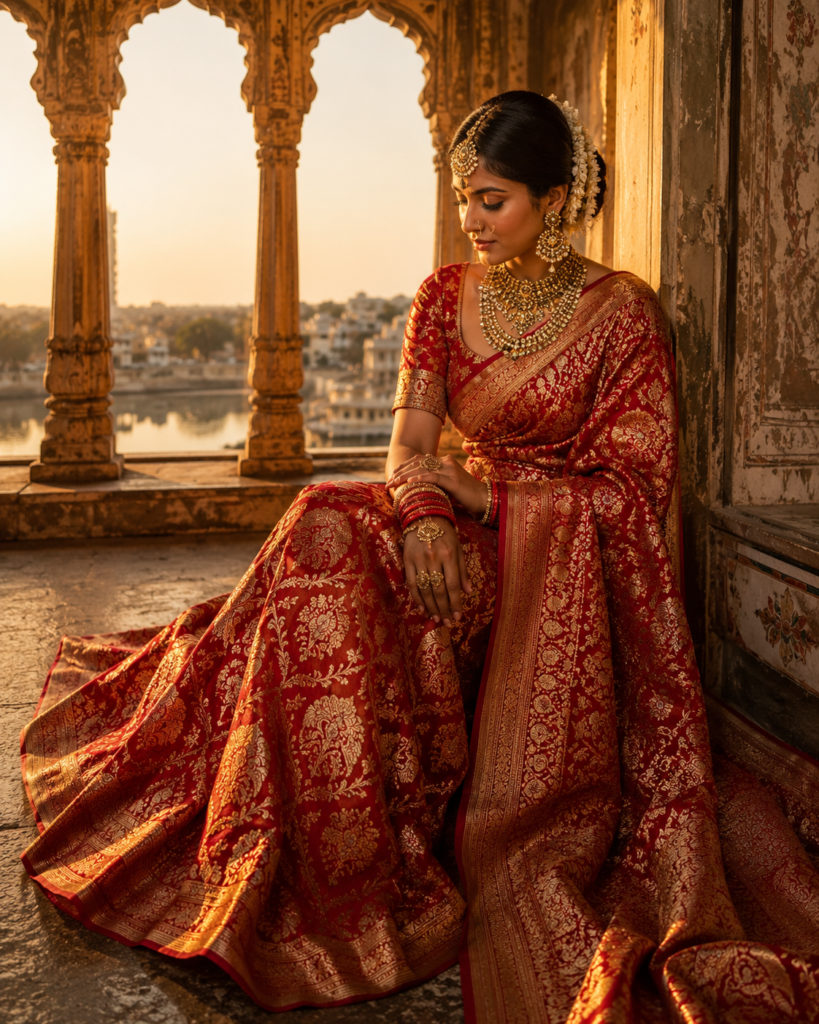
The historic city of Varanasi in Uttar Pradesh holds an extraordinarily prestigious place in global textile history as the definitive capital for luxury silk weaving. Every single thread interlaced on the traditional handlooms of this region carries a magnificent reflection of Mughal opulence and timeless Indian heritage. Especially within traditional Indian weddings, a bridal trousseau remains explicitly incomplete without a pure Banarasi Silk Saree. Today, on this comprehensive blog by Vunavya, we explore the fascinating history, intricate weaving mechanics, and provide practical answers to some highly essential questions regarding the Banarasi Silk Saree.
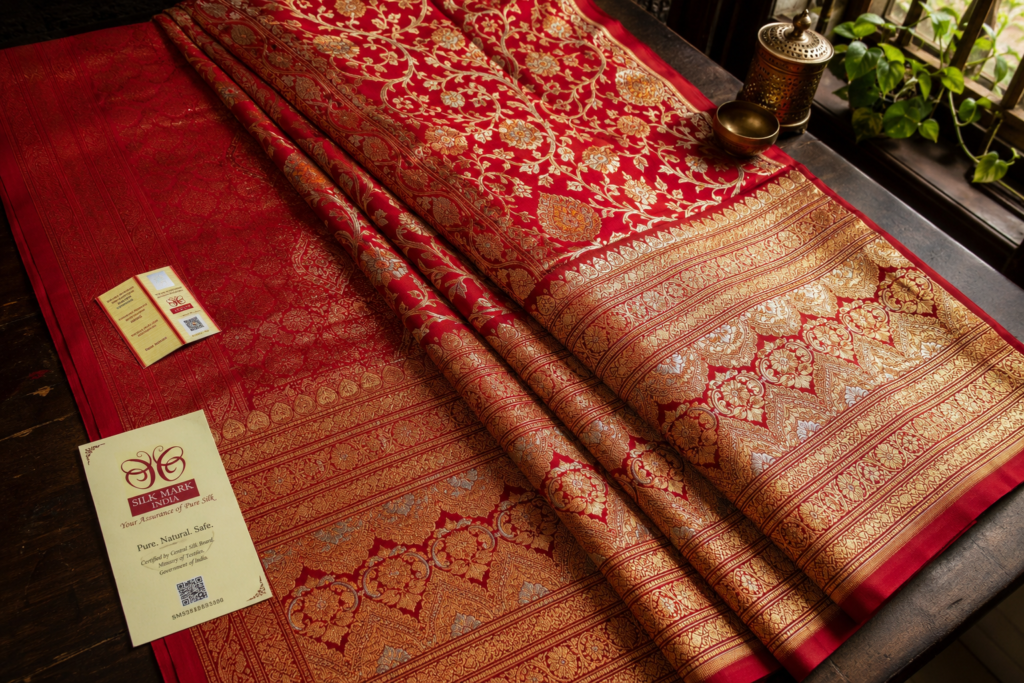
1: The Textile Mechanics of Banarasi Weaving — Kadwa vs. Fekua Techniques
The primary allure of a Banarasi Silk Saree lies heavily within its dense structural weave and the deployment of real gold and silver metallic threads (Zari). Master artisans strictly execute these historic configurations over a pure, twisted Katan silk base.
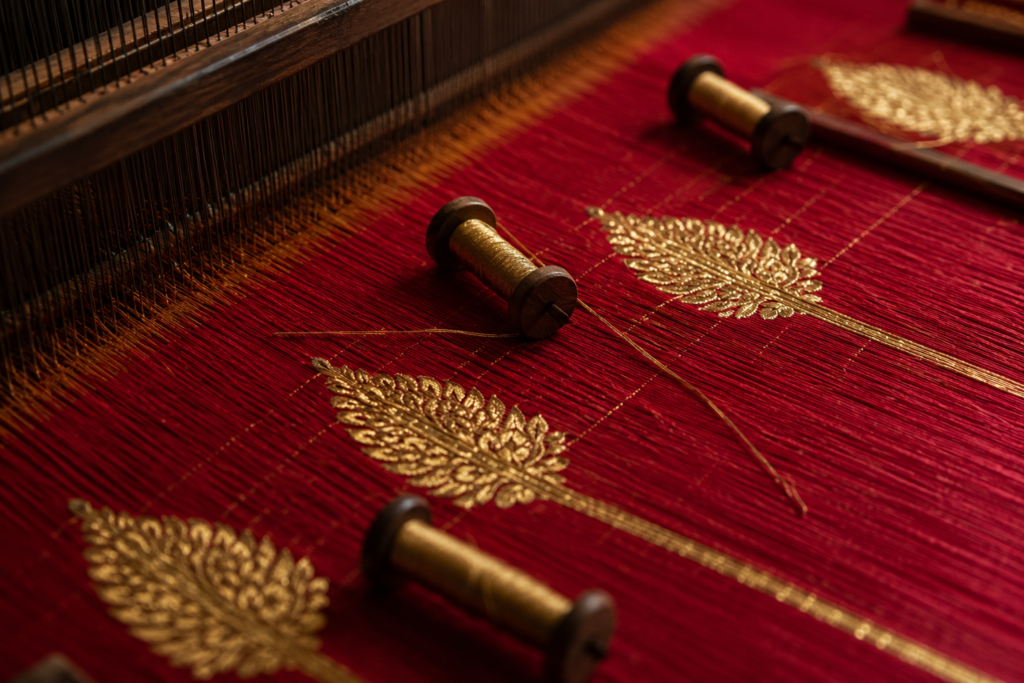
- The Kadwa Weave: This is the most complex, time-consuming, and premium method of crafting a Banarasi saree. In this technique, weavers intricately weave each individual booti or motif separately on the loom. Consequently, this extra-weft mechanism explicitly eliminates any loose floats or loose threads on the reverse side of the fabric, leaving an exceptionally smooth texture.
- The Fekua Weave: Conversely, Fekua is a faster shuttle-throwing technique where the zari thread runs continuously from one end of the saree selvage to the other. This process leaves loose float yarns behind the motifs on the reverse side, which are later meticulously cut and trimmed by artisans using hand scissors.
2: Imperial Motifs and Contemporary Sustainable Luxury Trends
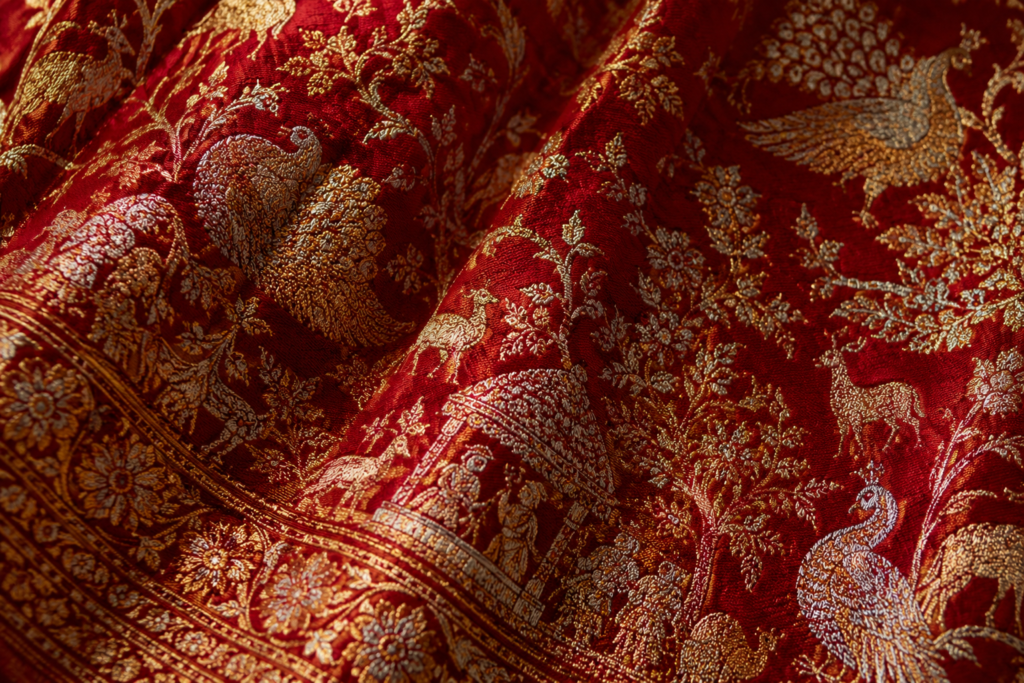
- The Language of Mughal Symbolism: The dense borders and heavy pallu of a Banarasi saree explicitly showcase patterns inspired by Persian and Mughal aesthetics. These feature stylized floral vines (Jhallar), mango paisleys (Ashrafi), and dense hunting configurations known as ‘Shikargah’. Today, certified strictly by its official GI Tag (Geographical Indication), contemporary luxury fashion designers actively transform these heritage handloom silk panels into high-end bridal lehengas, imperial sherwanis, and structural corporate blazers for the global slow-fashion market.
3: Frequently Asked Questions (FAQ)
Q1: What is the most reliable method to identify an authentic handloom Banarasi saree?
Answer: An authentic hand-woven Banarasi saree will explicitly show small thread knots or trimmed yarn floats on its reverse side within the motifs. Powerloom imitations feature an absolutely flat, smooth, or uniform synthetic mesh-like reverse surface.
Q2: What is the main structural difference between Katan Silk and Banarasi Georgette?
Answer: Katan Silk is crafted from pure, tightly twisted mulberry silk yarns, yielding a firm structure with an intense natural sheen. Banarasi Georgette, on the other hand, utilizes high-twist crinkled silk yarns, creating a highly fluid, lightweight, and translucent drape.
Q3: How should one store and maintain a premium Banarasi Silk saree?
Answer: Because it involves delicate real metallic zari and natural silk fibers, it must strictly be dry cleaned only. Never store the saree in plastic bags; instead, wrap it carefully in a breathable cotton or muslin cloth, store it in a dark closet, and periodically change its fold lines every few months to prevent fiber breakage.
Conclusion
The regal drapes of Varanasi demonstrate how fashion can co-exist organically with royal artistry and absolute human precision for hundreds of years. From the pristine lines of the Kadwa weave to the glorious tales of the Shikargah border, every single motif narrates a story of sustainability and identity. Bridging the gap between these rural master weavers and global textile lovers, Vunavya stands proud in keeping this heritage alive.