
The ultimate guide to Odisha’s GI-tagged Gopalpur Tussar Silk. Discover the rich history, organic handspun weaving mechanics, and regal elegance of this heritage craft.
Read this in – বাংলা/हिन्दी/ଓଡ଼ିଆ
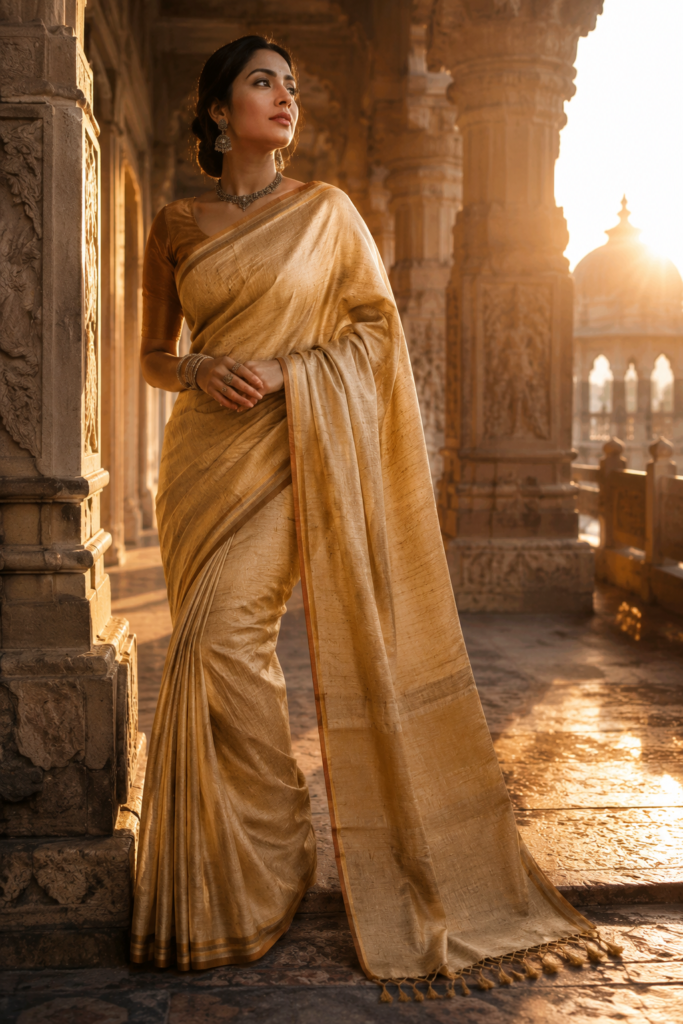
Nestled within the Jajpur district of Odisha, the historic village of Gopalpur holds an extraordinarily prestigious place in Indian textile history as a premier hub for luxury wild silks. Every single thread interlaced on the traditional handlooms of this region reflects a century-old legacy of royal patronage and meticulous craftsmanship. The master artisans of Gopalpur continue to craft magnificent silk that stands today as a stellar global blueprint for sustainable luxury. Today, on this comprehensive blog by Vunavya, we explore the fascinating history, handspun yarn mechanics, and provide practical answers to some highly essential questions regarding Gopalpur Tussar Silk.
1: The Technical Mechanics of Gopalpur Weaving — The Magic of Handspun Ghicha
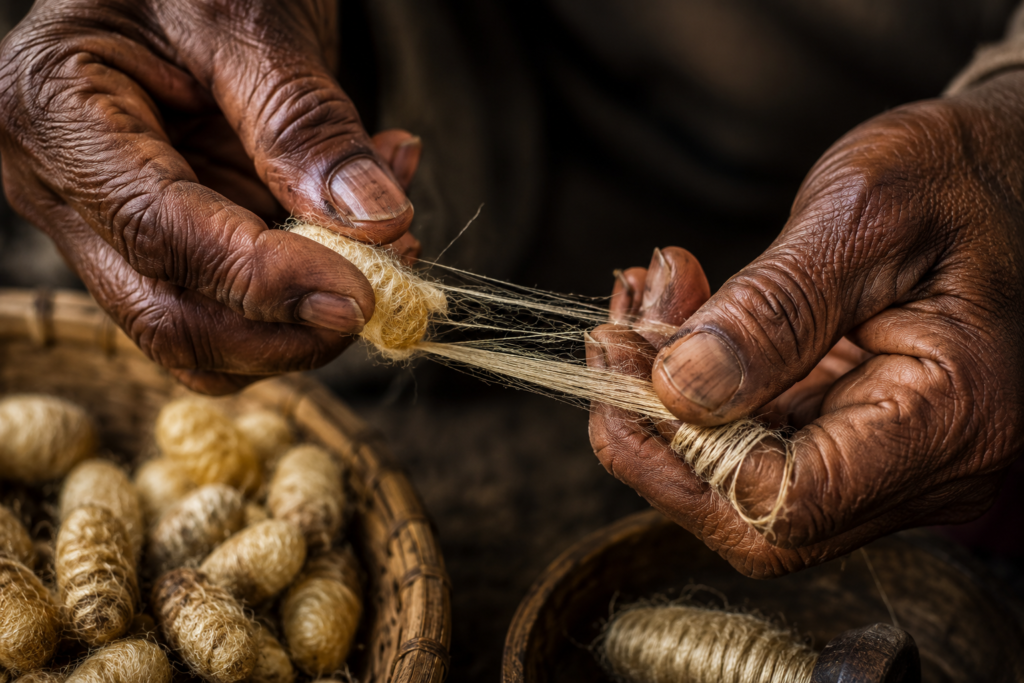
The primary allure of Gopalpur Tussar Silk lies heavily within its ancient, entirely manual yarn-reeling process and distinct structural texture.
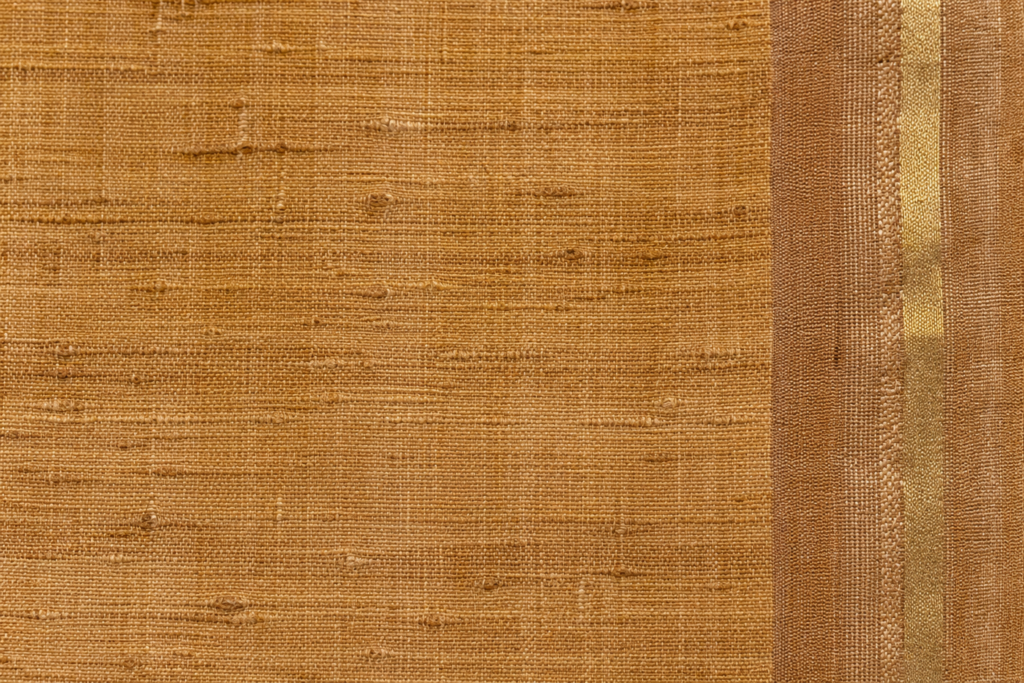
- The Symphony of Tussar and Ghicha: Artisans extract these premium threads strictly by hand-pulling them directly from the wild silkworm cocoons, a specialized local method known as ‘Ghicha’ spinning. Consequently, this irregular manual কताई explicitly introduces beautiful organic slubs and a distinct raw tactile feel across the fabric surface.
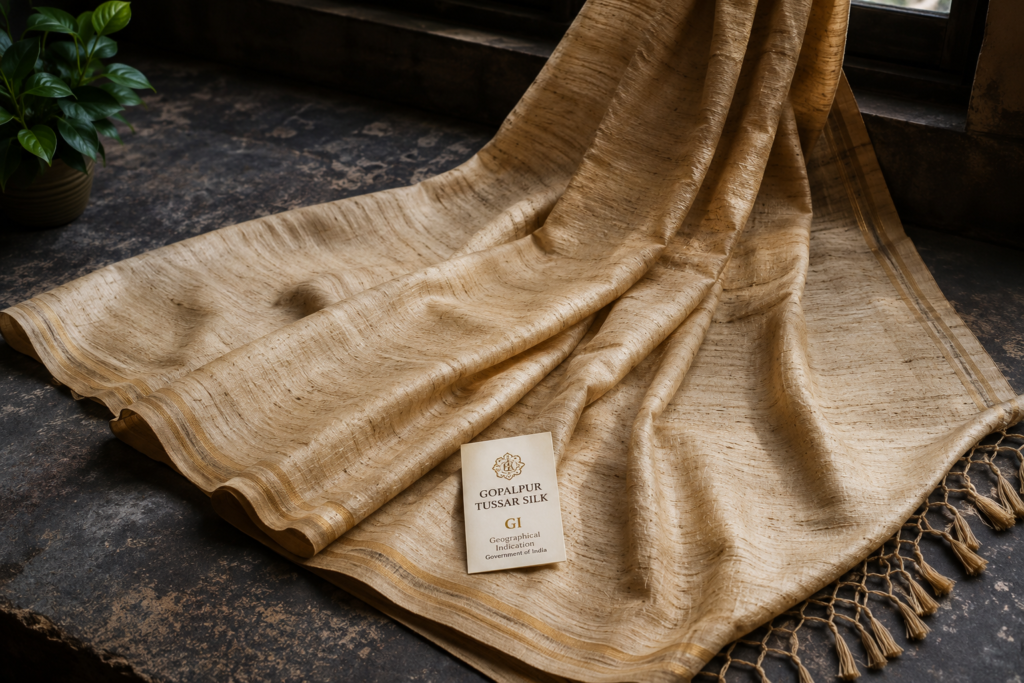
- The Natural Sheen: Weavers meticulously process these unique yarns on fly-shuttle pit looms. The resulting textile boasts a signature, un-dyed matted golden-copper tint. Therefore, it exudes a quiet, dignified royal charm without requiring heavy chemical finishing treatments.
2: Heritage Aristocracy and Contemporary Global Fashion Trends
- Global Authenticity Framework: The prestigious GI Tag (Geographical Indication) explicitly protects and certifies the structural purity of Gopalpur Tussar Silk on the international platform. Therefore, it has become highly sought after by premium boutique owners and conscious slow-fashion designers worldwide. Modern luxury houses are actively adapting this organic matted fabric into high-end designer sarees, structured stoles, and imperial ethnic menswear like royal kurtas and sherwanis.
3: Frequently Asked Questions (FAQ)
Q1: How can I identify an authentic hand-woven Gopalpur Tussar Silk saree? Answer: Authentic Gopalpur Tussar silk is explicitly distinguished by its characteristic tactile slubs (slight irregular bumps in the weave) and a muted, earthy golden-tan sheen. Synthetic or machine-made lookalikes will feel uniformly smooth and show artificial glare.
Q2: Is a Gopalpur Tussar silk saree comfortable across all seasons? Answer: Yes, absolutely. Gopalpur Tussar silk is a highly breathable natural fiber. Due to its unique organic porous mechanics, it remains comfortably cooling during hot summer months and provides gentle insulation during winters.
Q3: What is the recommended care and maintenance routine for this premium fabric? Answer: Since it is crafted out of 100% pure organic wild silk, it is strictly recommended to dry clean the garment. Never expose the wet fabric to direct harsh sunlight; always dry it flat in a shaded, well-ventilated space.
Conclusion
The traditional drapes of Jajpur demonstrate how fashion can co-exist organically with nature and premium luxury for hundreds of years. From the rich handspun slubs of Ghicha to the eco-friendly ethics of wild silk, every single drape narrates a story of sustainability and identity. Bridging the gap between these rural master weavers and global textile lovers, Vunavya stands proud in keeping this heritage alive.