
The ultimate guide to Uttarakhand Thulma and Pankhi handlooms. Discover Bhotiya wool mechanics, twill weave, weaving duration, and authentic price range.
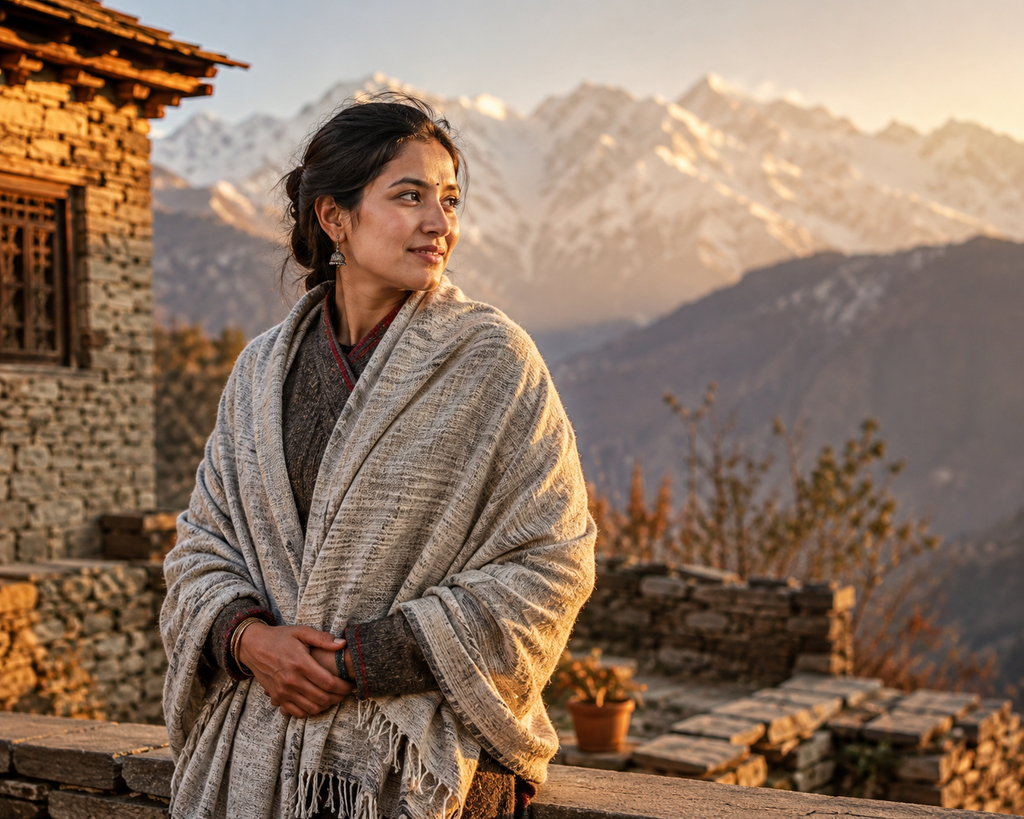
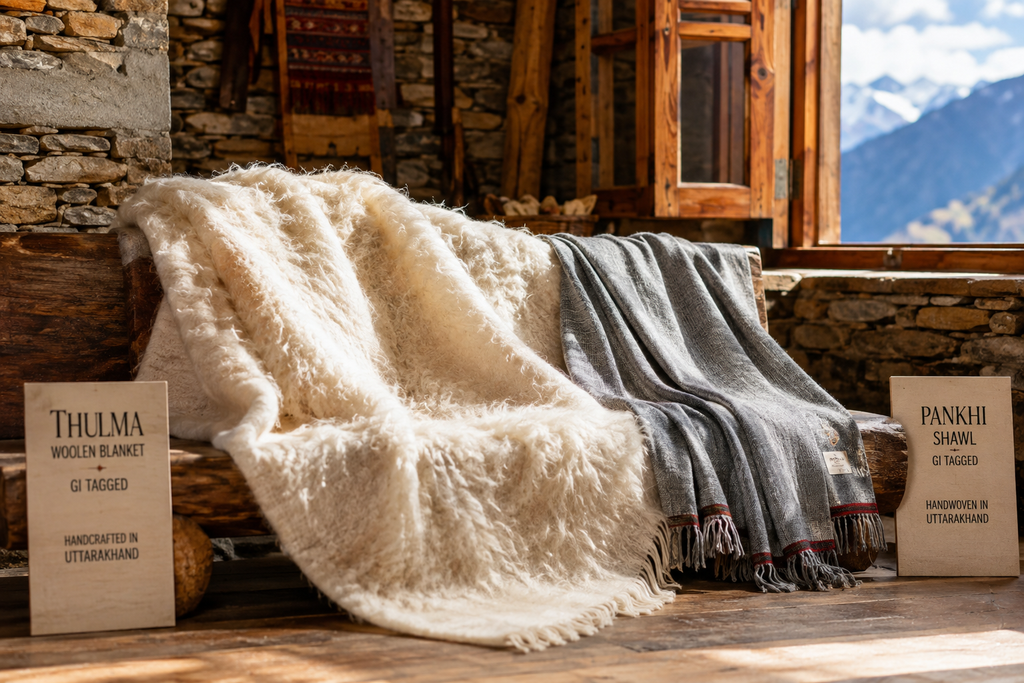
The serene Himalayan state of Uttarakhand, revered as ‘Devbhoomi’, holds an extraordinary legacy in indigenous wool craftsmanship. Designed to withstand severe sub-zero winters, the region is internationally celebrated for its official GI Tagged handloom masterpieces—the plush Thulma blanket and the refined Pankhi shawl. Handcrafted predominantly by the indigenous Bhotiya and Shauka weaver communities, these heritage woolens represent sustainable highland living. Today, on this comprehensive guide by Vunavya, we explore the technical mechanics, weaving duration, practical price points, and care instructions for these iconic Himalayan weaves.
1: Material Specifications & Weaving Mechanics — Mountain Fleece & Twill Brushing
The thermal insulation and structural longevity of Thulma and Pankhi stem directly from high-altitude natural sheep fleece and ancestral pit-loom operations.
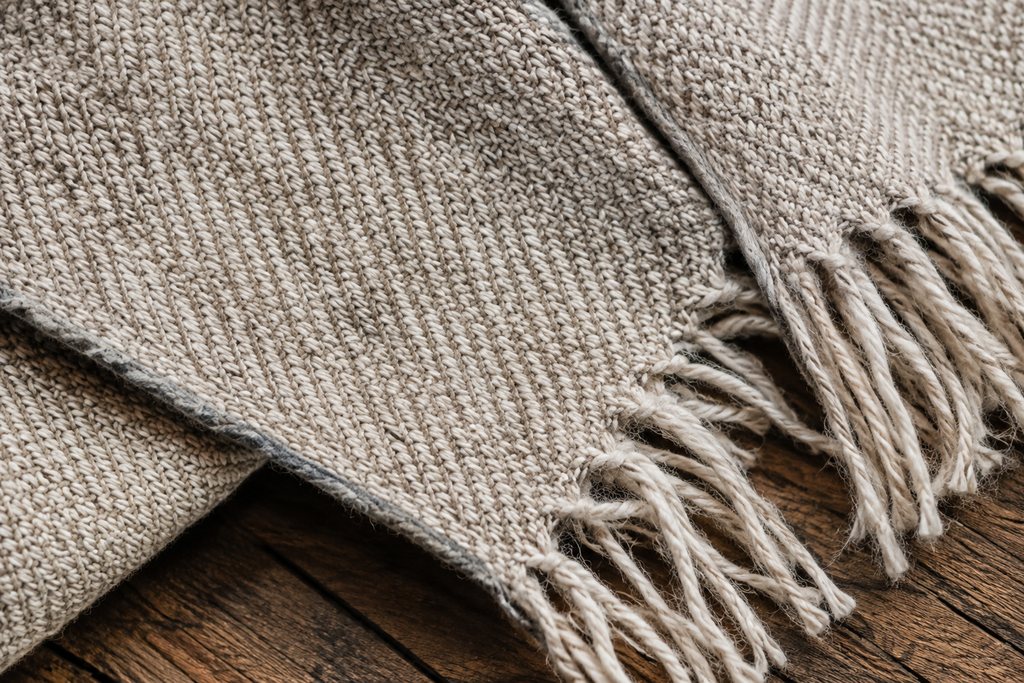
- Raw Mountain Wool & Twill Weave: Sourced from indigenous sheep reared across the upper alpine pastures of Chamoli and Pithoragarh, the raw fleece is manually sheared, carded, and hand-spun on wooden spindles (Takli) or traditional Charkhas. Weavers construct a balanced 2/2 twill weave structure on pit-looms, achieving remarkable tensile density.
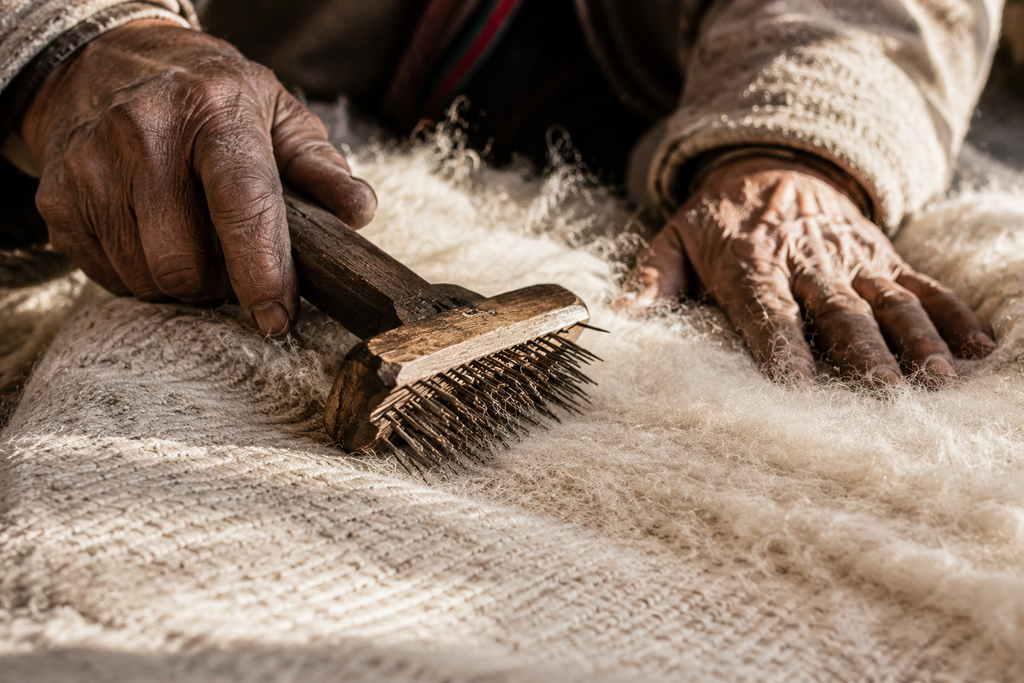
- The Manual Brushing Process: The defining characteristic of a Thulma blanket is its shaggy, plush loft. Post-weaving, artisans meticulously brush the surface using local wild thorny brambles or specialized wire brushes. This raises the surface fibers, forming a dense, fleece-like air trap that retains radiant body heat.
- Pankhi Shawl Structure: Conversely, ‘Pankhi’ is woven with a tighter, un-brushed plain or fine twill weave. It delivers a lightweight, drapeable, and smooth texture designed for cool autumn evenings and transitional mountain climates.
2: Weaving Duration and Practical Price Range Guide
Unlike factory-processed synthetic fleece, an authentic handloom Thulma involves intensive physical craft across multiple weeks.
- Time and Artisanal Labor: From wool sorting and spinning to the final loom weaving and brushing, a single double-bed Thulma blanket takes 15 days to 1 month of dedicated labor by 2 master artisans. A Pankhi shawl requires approximately 7 to 12 days.
- Price Range and Budget Guide: Certified officially with a GI Tag, a genuine handloom Thulma blanket ranges from ₹4,500 to ₹12,000 depending on thickness and pure wool grading. Genuine Bhotiya Pankhi shawls generally retail between ₹2,200 and ₹5,500.
3: Traditional Geographical Hub and Sustainable Highland Ethics
The heartbeat of this century-old craft resides within the remote tribal valleys of Uttarakhand.
- The Chamoli and Pithoragarh Corridor: The primary geographical epicenters are Chamoli (Joshimath, Mana Village), Pithoragarh (Munsiyari, Dharchula), and Uttarkashi. Here, weaver families continue to pass down pit-loom mechanics through oral lineage.
- Contemporary Sustainable Luxury: With absolute zero synthetic blends or chemical micro-plastics, these pure wool textiles align seamlessly with global slow-fashion values and conscious interior lifestyles.
4: Frequently Asked Questions (FAQ)
Q1: How can one distinguish an authentic handloom Thulma from a synthetic imitation?
Answer: An authentic Thulma has a distinct natural wool scent and a substantial, reassuring weight. The brushed fleece originates organically from its own woven threads rather than bonded synthetic microfibers.
Q2: What is the primary difference between a Thulma and a Chutka?
Answer: A Thulma is a soft, heavily brushed blanket meant for sleeping and warmth. A ‘Chutka’ is a heavier, coarse-woven, felted woolen rug used primarily as floor insulation or sitting mats in alpine homes.
Q3: What is the recommended care routine for pure Himalayan woolens?
Answer: Handwoven wool naturally repels dust and odor. Simply air the blanket or shawl under indirect sunlight seasonally. If washing is necessary, gently hand wash in cold water using a wool-safe liquid detergent without wringing, and store folded inside breathable cotton bags.
Conclusion
The mountain weaves of Uttarakhand showcase how human ingenuity seamlessly transforms local natural wool into timeless winter luxury. Every thread spun by the Bhotiya weavers carries the resilient spirit of the Himalayas. Bringing these authentic treasures to discerning homes worldwide, Vunavya stands proud in keeping this heritage alive.