
Complete guide to Uttarakhand’s GI-tagged Kumaoni Rangwali Pichhoda. Explore sacred motifs, turmeric dyeing, artisanal weaving hours, and genuine pricing.
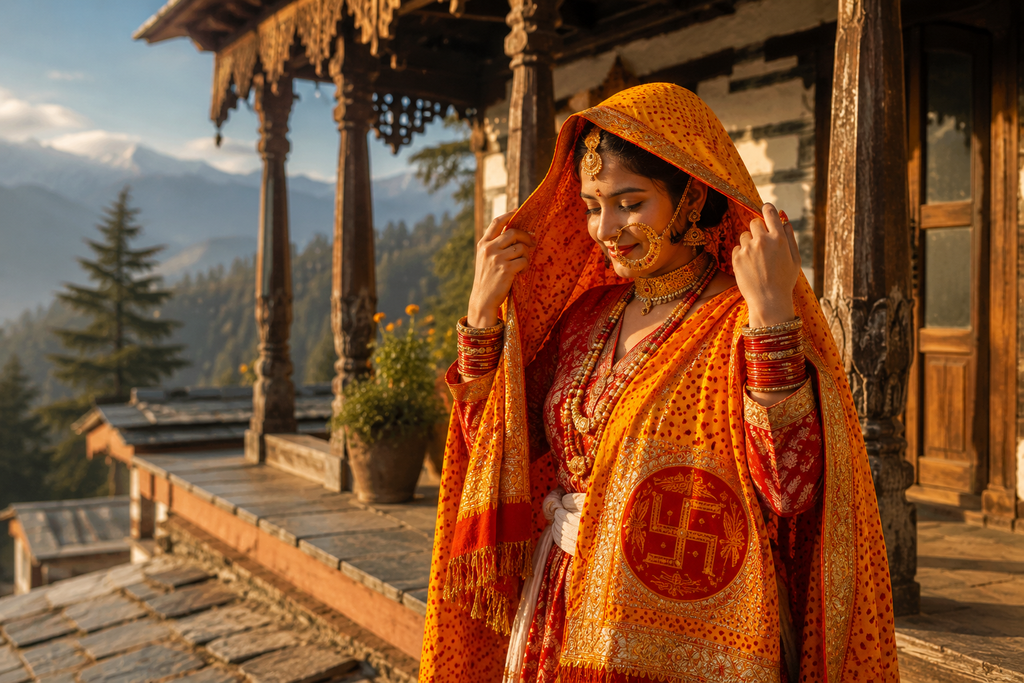
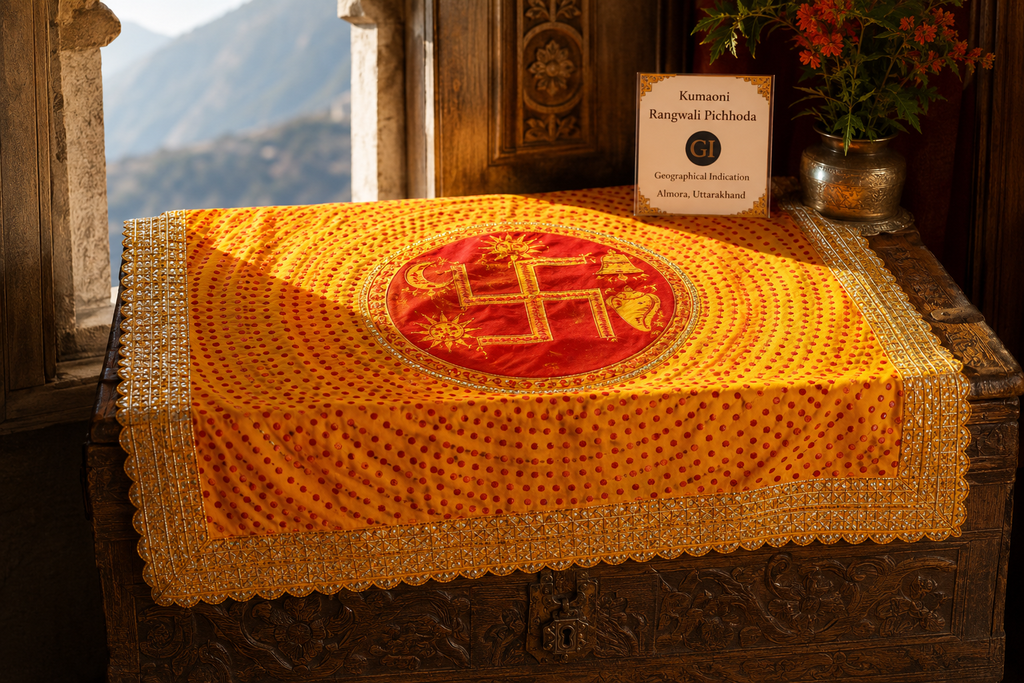
Draped gracefully over the head of every bride and married woman during sacred rituals across the rugged valleys of Uttarakhand, the Kumaoni Rangwali Pichhoda is a luminous testament to ancient mountain heritage. Officially protected by India’s GI Tag (Geographical Indication) registry, this ceremonial drape, glowing in radiant saffron-yellow and deep vermilion, is far more than an accessory—it is an emblem of marital bliss, cosmic protection, and spiritual continuity. Today, Vunavya delves deep into the sacred structural geometry, indigenous dyeing mechanics, weaving duration, and authentication standards of this Himalayan icon.
1: Sacred Geometry & Natural Dye Mechanics
The Kumaoni Pichhoda stands distinct in Indian textile topography due to its strict adherence to Vedic iconography and ritual symmetry.
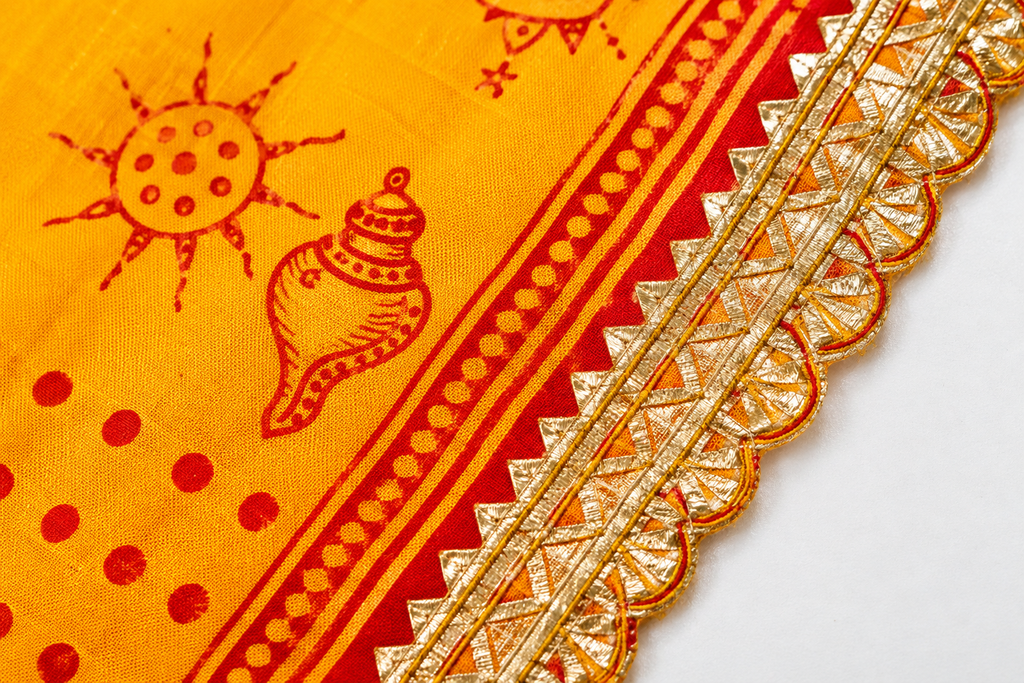
- The Central Swastika Matrix: At the absolute epicentre of the fabric lies a boldly rendered Swastika. The four arms symbolize the cardinal quadrants as well as the four essential pursuits of human life—Dharma (duty), Artha (prosperity), Kama (love), and Moksha (spiritual liberation). Flanking the four corners of this central motif are four celestial elements: the Sun (cosmic vitality), the Moon (mental peace), the Shankha/Conch (auspicious resonance), and the Bell/Ghanta (dispeller of negative forces).
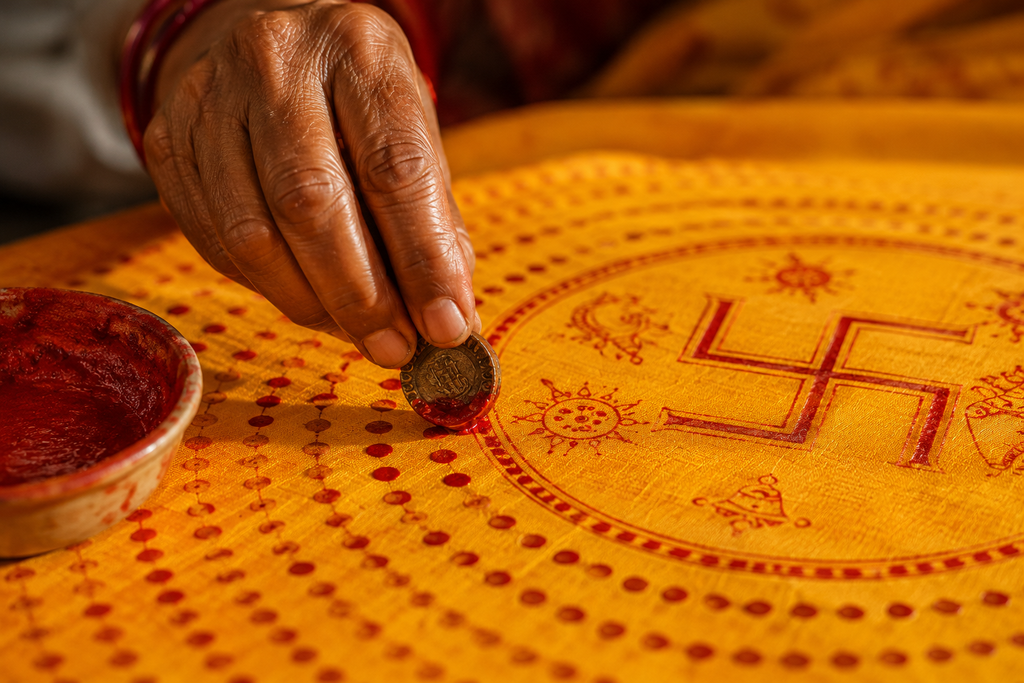
- Coin-Stamped Rhythmic Dots: Radiating outward from the central matrix, hundreds of small vermilion dots (locally known as ‘butis’) are manually printed using coins or thumb impressions. These dots are placed rhythmically across the saffron field, forming concentric protective waves.
- Organic Extraction & Base Yarns: Historically, master weavers constructed the base from fine hand-spun cotton muslin or pure Mulberry silk. The radiant golden base was achieved by soaking the yarn in natural turmeric solutions, while the crimson imprints were extracted from local Himalayan roots and lac extracts.
2: Weaving Duration and Practical Price Range Guide
A genuine handcrafted Kumaoni Pichhoda requires dedicated human touch, from base loom preparation to intricate border embellishments.
- Artisanal Labor and Time: Sourcing base fibers, treating fabric with natural saffron-yellow shades, hand-printing complex symmetrical motifs, and attaching the metallic Gota-Zari borders requires 3 to 7 working days per piece, engaging two family artisans.
- Price Range and Budget Guide: An authentic GI-tagged Kumaoni Rangwali Pichhoda crafted on cotton-silk or fine mulberry silk with handcrafted gotta borders retails between ₹2,500 and ₹8,500. Elaborate bridal variations decorated with real silver-plated zari cords or heavy zardozi embroidery range from ₹12,000 to over ₹20,000.
3: Geographical Epicenters and Contemporary Slow-Fashion
The craft is deeply tied to the alpine corridors of Kumaon.
- The Almora Weaving Hub: The cultural heartland of this craft remains Almora district, alongside active artisan settlements in Nainital, Bageshwar, and Pithoragarh.
- Modern Silhouette Transformations: Forward-thinking sustainable fashion houses now incorporate these auspicious motifs into lightweight festive dupattas, handloom sarees, and capsule ethnic wear, making the Pichhoda a cherished keepsake across the global diaspora.
4: Frequently Asked Questions (FAQ)
Q1: How do you identify a genuine handcrafted Kumaoni Pichhoda?
Answer: A genuine handcrafted Pichhoda displays subtle, organic irregularities in the crimson dots caused by manual coin stamping. The border will feature neatly hand-stitched traditional gotta lace rather than flat, heat-pressed synthetic polyester trims.
Q2: What is the spiritual significance of the saffron-yellow and red color palette?
Answer: In Himalayan lore, yellow embodies Jupiter (Brihaspati) and earthly vitality, signifying harmony and good fortune. Red symbolizes Shakti (divine feminine strength), passion, and enduring matrimonial protection.
Q3: What are the primary care instructions for an authentic Pichhoda?
Answer: Strictly opt for professional dry cleaning to prevent bleed over the natural yellow base and protect the metallic gotta edges. Store it wrapped neatly in unbleached cotton muslin away from moisture.
5: Conclusion
The Kumaoni Rangwali Pichhoda exemplifies how sacred Himalayan traditions are meticulously preserved through rural textile mastery. By bringing authentic, certified Pichhodas directly from mountain artisans to discerning collectors, Vunavya ensures that this timeless heritage shines uninterrupted.