
The ultimate guide to Haryana’s Panipat Khes. Explore traditional double-cloth mechanics, yarn counts, artisanal weaving time, and real market pricing.
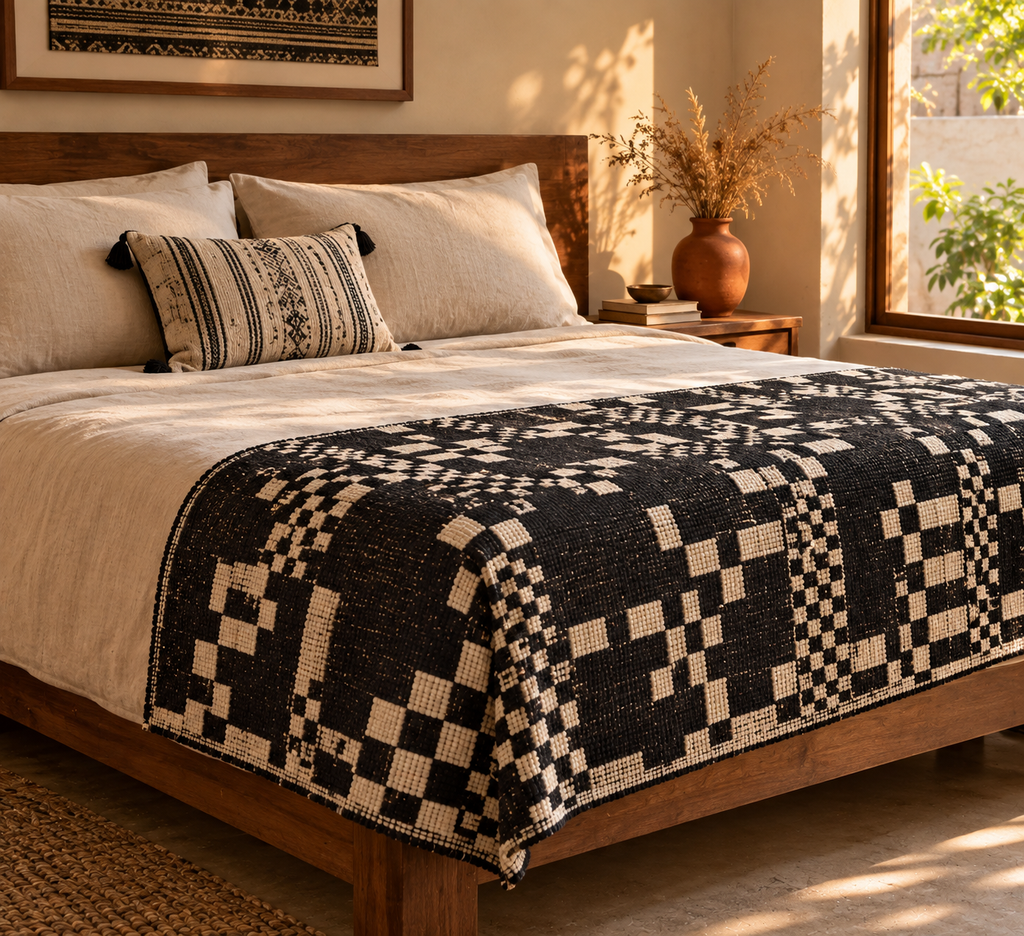
The historic town of Panipat in Haryana is globally recognized not merely for its monumental battlegrounds, but as India’s premier “Textile City.” One of the most resilient and celebrated handloom traditions of undivided Punjab and Haryana is the Panipat Khes. A traditional heavy cotton coverlet celebrated for its intricate double-cloth structure, the Khes has provided functional warmth and understated rustic luxury across rural households for generations. Today, Vunavya breaks down the technical weaving mechanics, labor hours, market pricing, and authenticity benchmarks of this iconic craft.
1: Material Specifications & The Double-Cloth Mechanics
The enduring strength and aesthetic appeal of Panipat Khes lie in its specialized double-face weaving geometry.
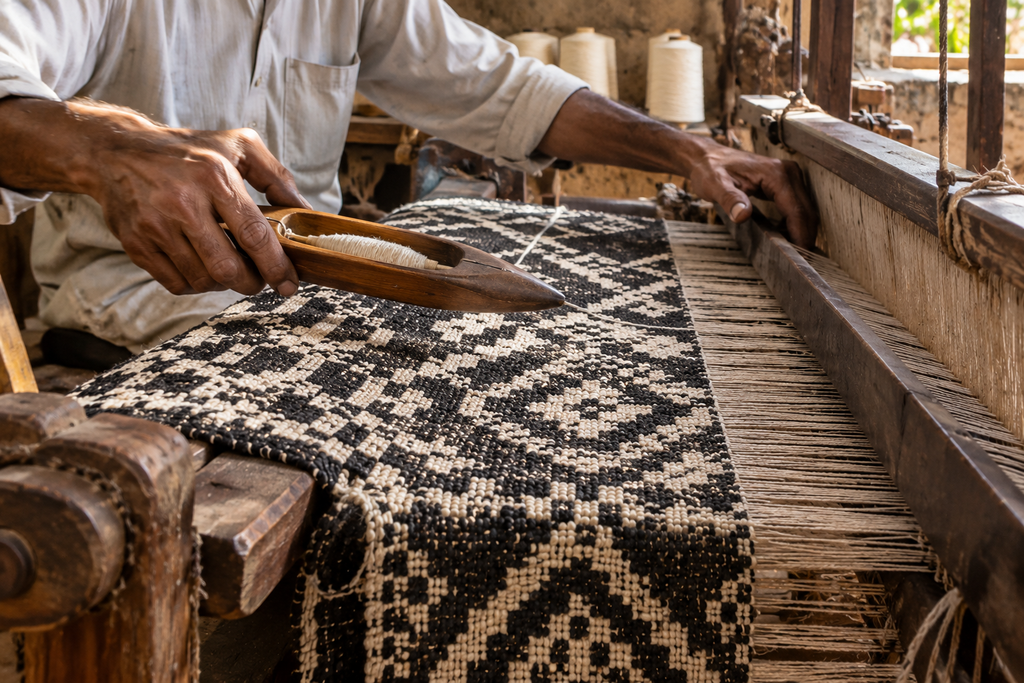
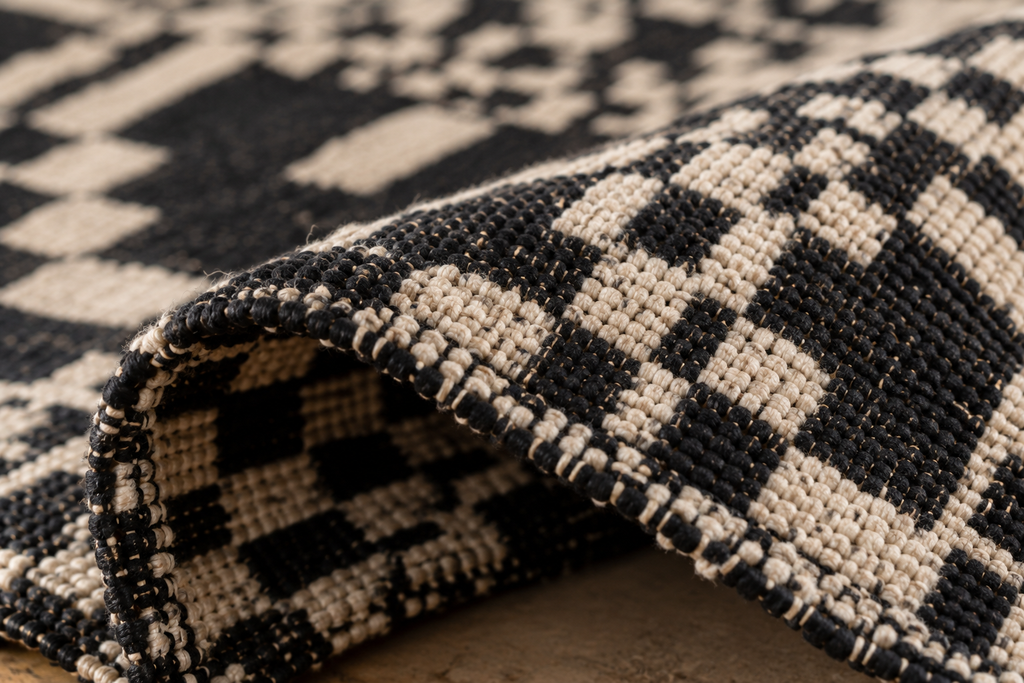
- The Double-Cloth Technique: Weavers utilize two distinct sets of warp and weft threads simultaneously on the loom. This creates an interconnected reversible fabric where color placements invert automatically on the alternate side, displaying crisp contrasting patterns without loose floating threads.
- Yarn Counts and Geometry: Artisans deploy coarse, high-tensile 2/20s or 2/10s combed organic cotton yarns. Using traditional frame looms and pit-looms equipped with multi-treadle or jacquard systems, they weave iconic checkerboard (Charkhana) and stepped diamond motifs.
2: Weaving Duration and Practical Price Range Guide
A genuine handloom Khes requires calculated thread tension and steady manual labor.
- Artisanal Labor and Time: From yarn winding and loom setup to weaving a full-size double-bed sheet, the process demands 7 to 12 days of focused craftsmanship involving 2 experienced weavers.
- Price Range and Budget Guide: An authentic hand-woven Panipat cotton Khes ranges between ₹1,800 and ₹5,500. Collector-grade versions featuring dense geometric motifs and premium double-ply yarn can range from ₹6,000 to ₹9,000.
3: Geographical Epicenter and Modern Interior Utility
Panipat remains the undisputed geographical anchor for this handloom legacy.
- The Panipat Weaving Belt: The cottage loom clusters situated across Old Panipat and adjacent rural hubs represent the primary source of authentic Khes production.
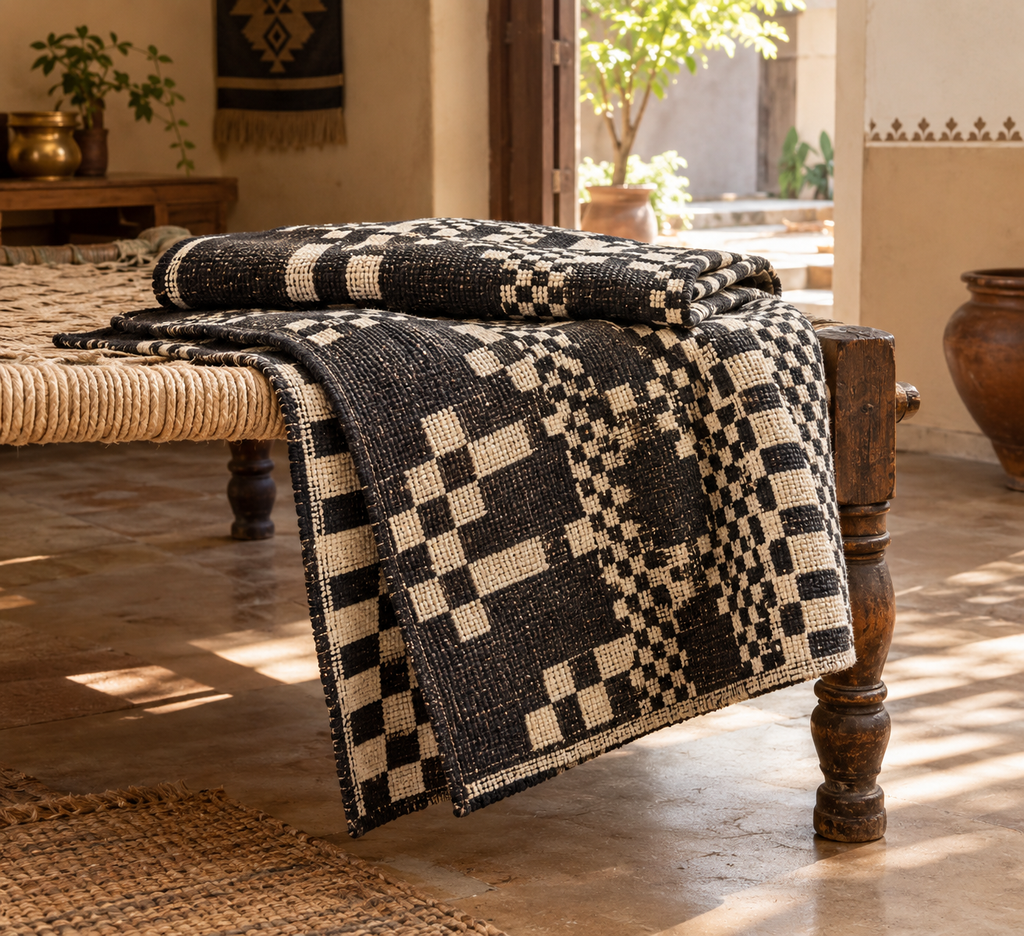
- Contemporary Evolution: Global interior decorators frequently style these rustic geometric drapes as sustainable sofa throws, summer bed-spreads, and textured floor accents in minimalist spaces.
4: Frequently Asked Questions (FAQ)
Q1: How can one distinguish an authentic handloom Khes from mill-made bedcovers?
Answer: Authentic handloom Khes exhibits a reassuring weight, visible warp-weft intersections along the selvages, and an identical reversible contrast that cannot be duplicated by flat surface printing.
Q2: In which seasons is a Panipat Khes typically used?
Answer: Due to its dense, breathable 100% cotton construction, it serves as a lightweight blanket for mild winters, spring, and air-conditioned summer bedrooms.
Q3: What is the ideal washing instruction for pure cotton Khes?
Answer: Machine wash on a gentle cycle or hand wash in cold water using mild liquid soap. Air dry in shaded areas to maintain cotton suppleness and prevent color fading.
5: Conclusion
The Panipat Khes stands as a testament to utilitarian craftsmanship, turning basic organic cotton into structurally complex, long-lasting textile art. By supporting these generational rural artisans, Vunavya is committed to celebrating the timeless dignity of authentic Indian handlooms.