
The definitive guide to Ladakh’s rare Thigma tie-dye & Snambu handloom. Discover Changpa nomadic wool mechanics, ring-dyeing techniques, and price guide.

Perched at elevations exceeding 14,000 feet, the cold desert plateau of Changthang in Ladakh is home to one of the world’s most resilient and undocumented textile crafts. While tie-dye techniques like Bandhani and Leheriya are celebrated across India’s arid plains, few know of the indigenous high-altitude woolen tie-dye known as Ladakhi Thigma. Practiced for centuries by the nomadic Changpa pastoralists, Thigma involves creating meticulous circular resist patterns on heavy hand-spun sheep wool fabric called Snambu (Snam-bu). Today, Vunavya presents an authentic technical breakdown of this near-extinct Himalayan craft, its labor mechanics, production timeline, and valuation.
1 : Material Specifications & Thigma Resist Mechanics
The sheer distinctiveness of Thigma lies in applying complex resist-dye chemistry onto coarse, dense mountain fleece.
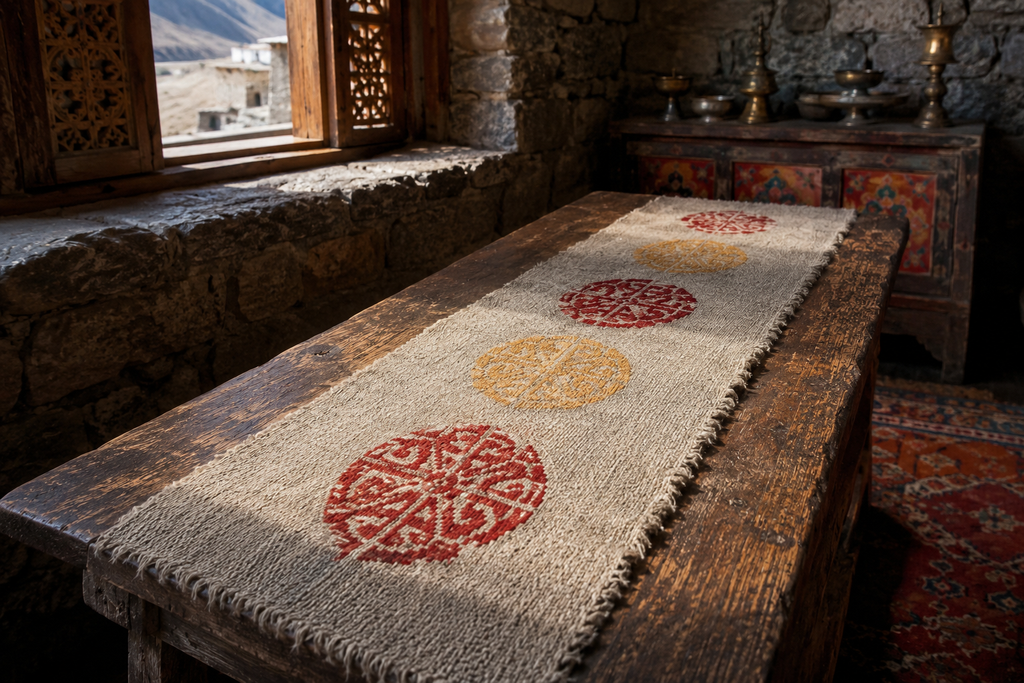
- Snambu Backstrap Weaving: Raw fleece sheared from indigenous Himalayan sheep (Luk) is meticulously hand-carded and spun using portable wooden drop spindles (Takli). Weavers then set up narrow portable floor or backstrap looms to weave 10 to 12-inch wide strips known as ‘Snambu’. The resulting fabric is windproof, heavy, and tightly felted.
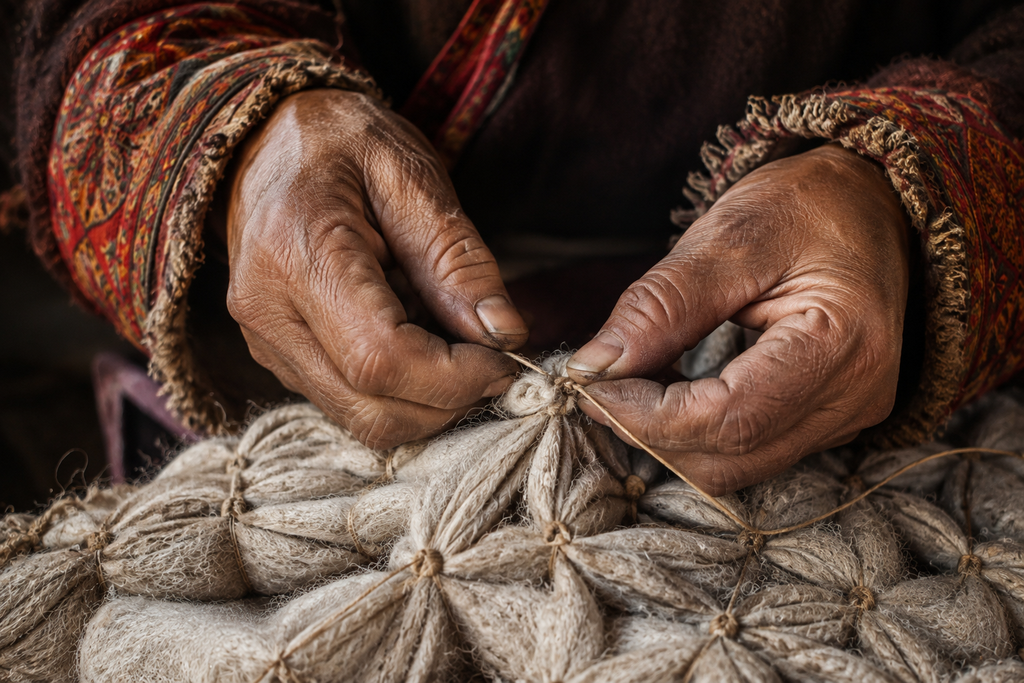
- Thigma Pinch-Resist Dynamics: Because dense wool resists folding, artisans use strong pincers or fingers to pinch precise sections of the Snambu cloth, binding them tightly with waxed cord or sinew into small cruciform or eyelet knots. Post-dyeing, removing these ties reveals crisp undyed or cross-colored rings.
- Wild Alpine Dye Extraction: Master dyers traditionally utilize wild high-altitude botanical matter: madder roots (Chungks), wild rhubarb bark for vibrant yellows, and walnut rinds for deep earthy terracottas.
2: Weaving Duration and Practical Price Range Guide
Creating authentic Thigma requires enduring harsh alpine weather and intensive physical concentration.
- Artisanal Labor and Time: From wool sorting, spinning, and narrow-loom weaving to tying hundreds of precise Thigma eyelets and vat dyeing, producing a standard 20-meter Snambu roll requires 25 days to 1.5 months of intermittent nomadic labor.
- Price Range and Budget Guide: Authentic, hand-dyed Snambu Thigma borders (traditionally stitched onto woolen boots or Gonchas) retail between ₹3,000 and ₹8,000. Bespoke wool shawls, jackets, or collector throws featuring intricate overall Thigma patterns command between ₹10,000 and ₹25,000+.
3: Geographical Epicenters and Contemporary Sustainable Utility
This endangered craft survives strictly within specific mountain settlements.
- Changthang and Leh Clusters: The primary geographical belt spans the nomadic plateaus of Changthang (Nyoma, Rupshu) and traditional artisan clusters around Leh Valley.
- Modern Slow-Fashion Evolution: Global textile collectors and avant-garde fashion researchers now actively seek authentic Thigma for its uncompromised zero-chemical ethics, applying it to high-fashion trench borders, bespoke winter capes, and winter home accents.
4: Frequently Asked Questions (FAQ)
Q1: How does Ladakhi Thigma differ from traditional silk or cotton Bandhani?
Answer: Bandhani relies on thin, pliable silk or cotton tied with fine thread. Thigma is executed on coarse, felted 100% mountain sheep wool, requiring heavy manual torque and specialized binding materials to withstand hot plant-dye vats.
Q2: What is the cultural function of Thigma in Ladakh?
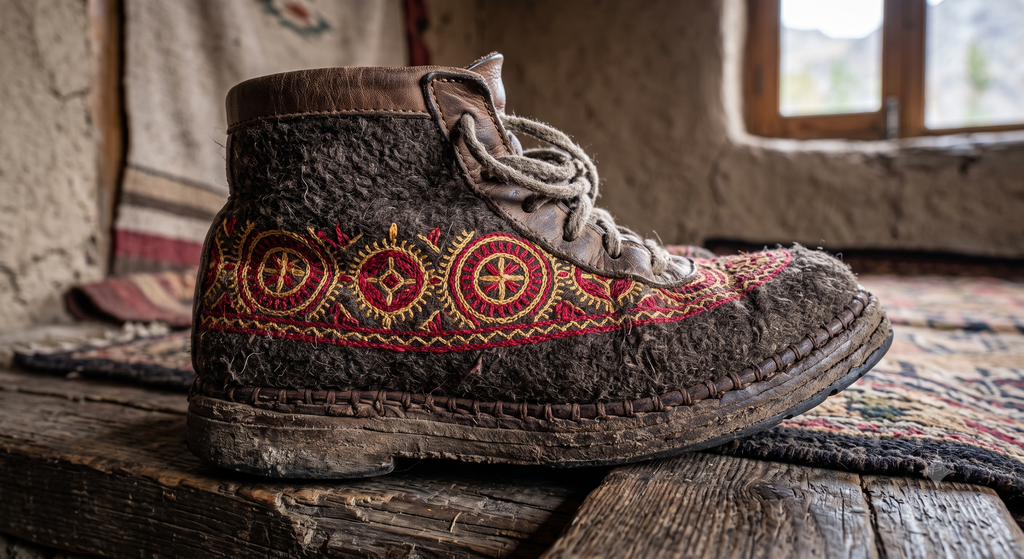
Answer: Thigma strips are traditionally stitched along the collars, cuffs, and hemlines of the Ladakhi woolen robe (Goncha) and alpine snow boots (Pabu), functioning as both an amulet of protection and a mark of social prestige.
Q3: What are the maintenance guidelines for pure Thigma woolens?
Answer: Pure mountain wool naturally repels dirt. Air the garment under indirect sunlight seasonally. For washing, strictly opt for professional dry cleaning or gentle spot-cleaning in ice-cold water using wool-safe liquid detergents.
5: Conclusion
Ladakh’s Thigma on Snambu wool stands as a triumph of nomadic ingenuity over extreme geography. Every hand-tied ring mirrors the resilience of the Changpa herders surviving on the roof of the world. By chronicling and bringing these undocumented treasures to global textile connoisseurs, Vunavya remains steadfast in preserving India’s rarest weaving wisdom.