
The Traditional Textiles of Majuli: A Beautiful Blend of Satra Culture and Tribal Weaving | Vunavya
Read this in – বাংলা /हिन्दी / असमिया
Resting on the mighty Brahmaputra River, Majuli—the world’s largest river island—is not just a geographical landscape; it is the spiritual and cultural epicentre of Assam. The Neo-Vaishnavite movement, initiated here by the saint-reformer Mahapurush Srimanta Sankardeva, deeply shaped the island’s way of life. However, Majuli harbors another unique identity hidden inside its profound textile heritage. Today, on the pages of Vunavya, we explore how Majuli’s sacred ‘Satra’ (monastery) culture and the indigenous tribal weaving styles seamlessly intertwine to create an extraordinary textile legacy.
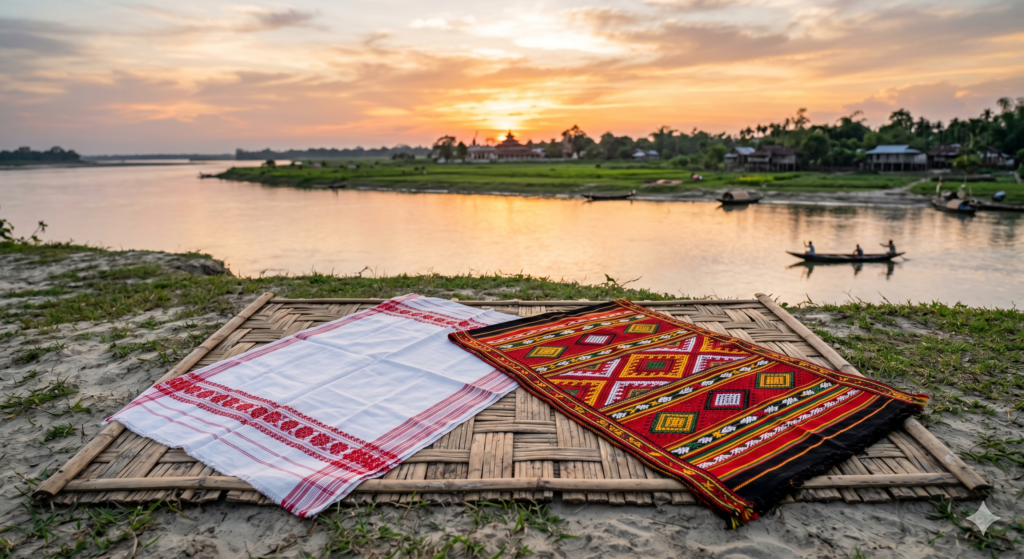
1. Satra Culture and the Spiritual Attire of Vaishnavite Monks
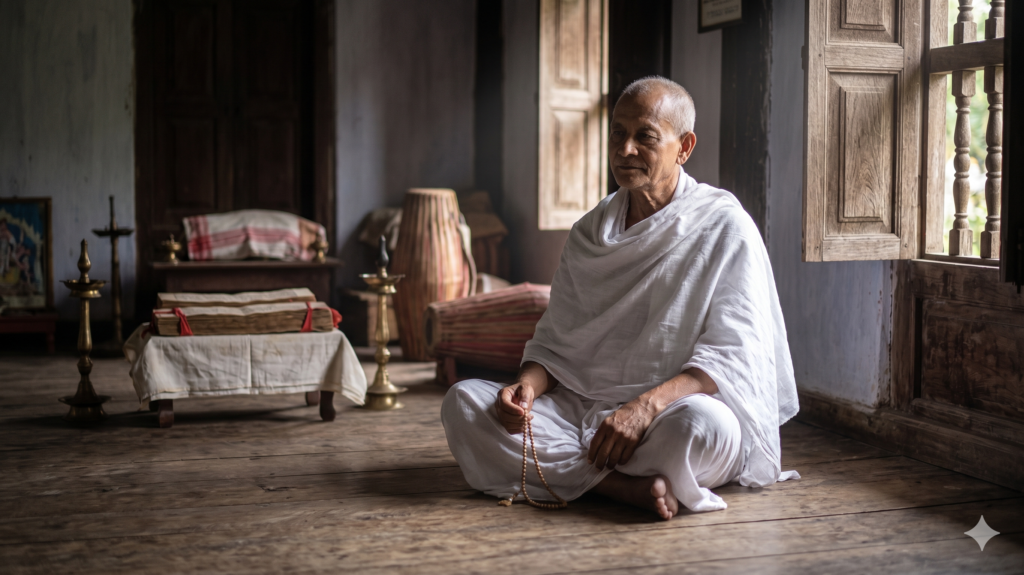
The identity of Majuli is entirely incomplete without its ‘Satras’ or Vaishnavite monasteries. The attire of the monks or ‘Bhokots’ residing in these Satras reflects absolute purity and minimalist elegance.
- Dhoti and Cheleng Chador: During daily routines and prayers, the monks wear pure white, handwoven cotton dhotis and ‘Cheleng Chadors’. Free from flamboyant colors or decorations, this pristine white fabric symbolizes the core Vaishnavite philosophies of non-violence, simplicity, and spiritual sanctity.
- Costumes of Satriya Dance and Bhaona: During sacred religious dance performances (Satriya) and traditional theatrical plays known as ‘Bhaona’, beautifully crafted costumes made from fine silk-cotton blends are worn. These garments are often woven with ancient spiritual emblems and traditional motifs, turning fabric into a piece of devotional art.
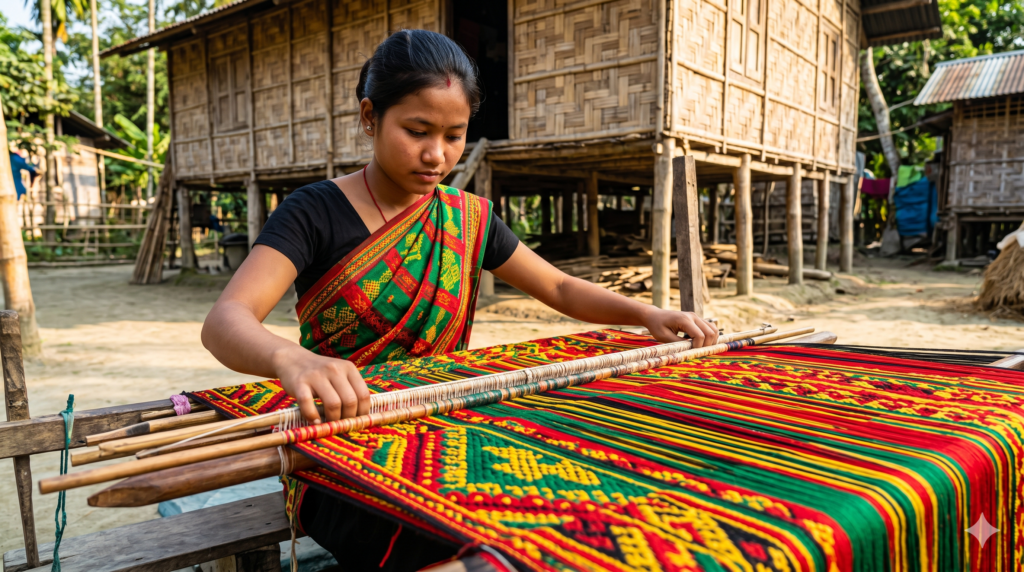
2. The Ancient Weaves and Vibrant Geometry of the Mising Tribe
Contrasting the serene white garments of the Satras is the intensely bright and energetic weaving tradition of Majuli’s indigenous ‘Mising’ tribe. Mising women are widely celebrated as some of the finest weavers in Assam.
- Mirizim and Gadu: The most legendary creation of Mising culture is the ‘Mirizim’—a heavy, textured handwoven fabric used as ornamental tapestries or wraps. Additionally, their traditional ‘Gadu’ (a thick, hand-spun cotton blanket) is highly renowned for its rustic comfort.
- Vibrant Geometric Motifs: The hallmark of Mising Mekhela Chadors and garments is their striking color palette and intricate geometric patterns. Using brilliant red, yellow, green, and black threads, they craft flawless diamond, triangular, and linear shapes. Elements of nature like winding rivers, birds, and mountain peaks inspire these geometric configurations.
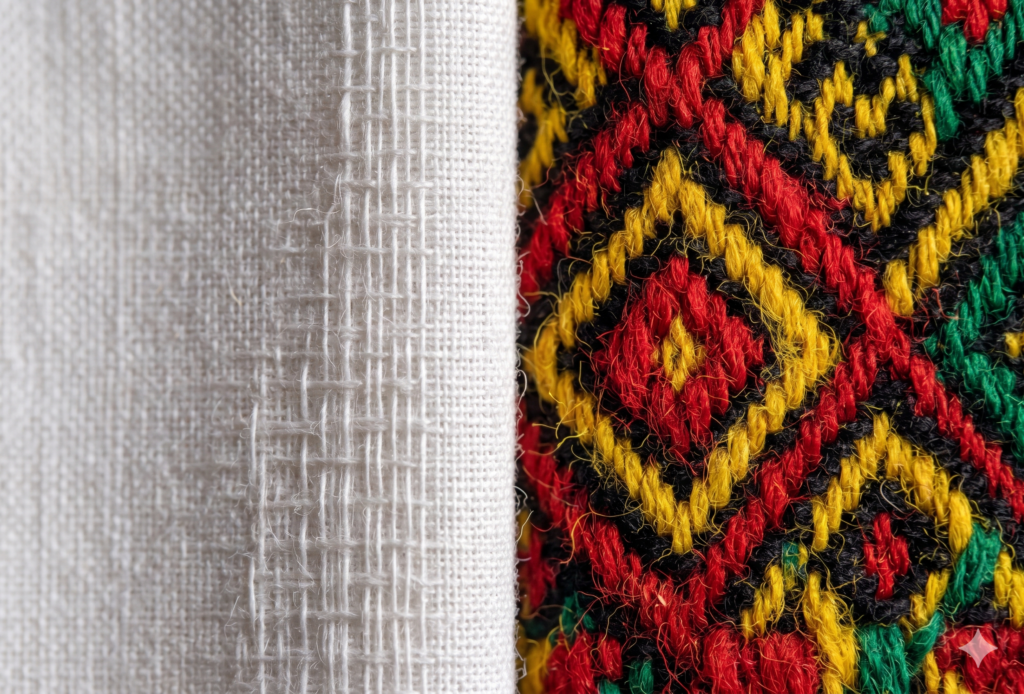
3. The Harmonious Symphony of Spirituality and Folk Culture
The true beauty of Majuli’s textiles lies in the peaceful co-existence of these two distinct cultures. On one hand, the monastic weaves exude spiritual detatchment and absolute purity; on the other, the tribal handlooms burst with the joy of life and the colors of nature. This harmony transforms Majuli’s textile landscape into a living blueprint for sustainable and eco-friendly fashion.
Conclusion
The textiles of Majuli are far more than a warp and weft of threads; they narrate the history, devotion, and indigenous heritage of a sacred island. Whether it is the calming grace of a Satra’s white chador or the fiery geometric patterns woven by Mising hands—every piece of cloth from Majuli is a living treasure. Vunavya takes immense pride in presenting this matchless craftsmanship to the global stage.