
Bihar’s GI-tagged Khatwa Applique Work. Discover the royal history, fabric-cutting mechanics, and intricate geometric designs of this heritage craft.
Read this in-বাংলা/हिन्दी/मैथिली
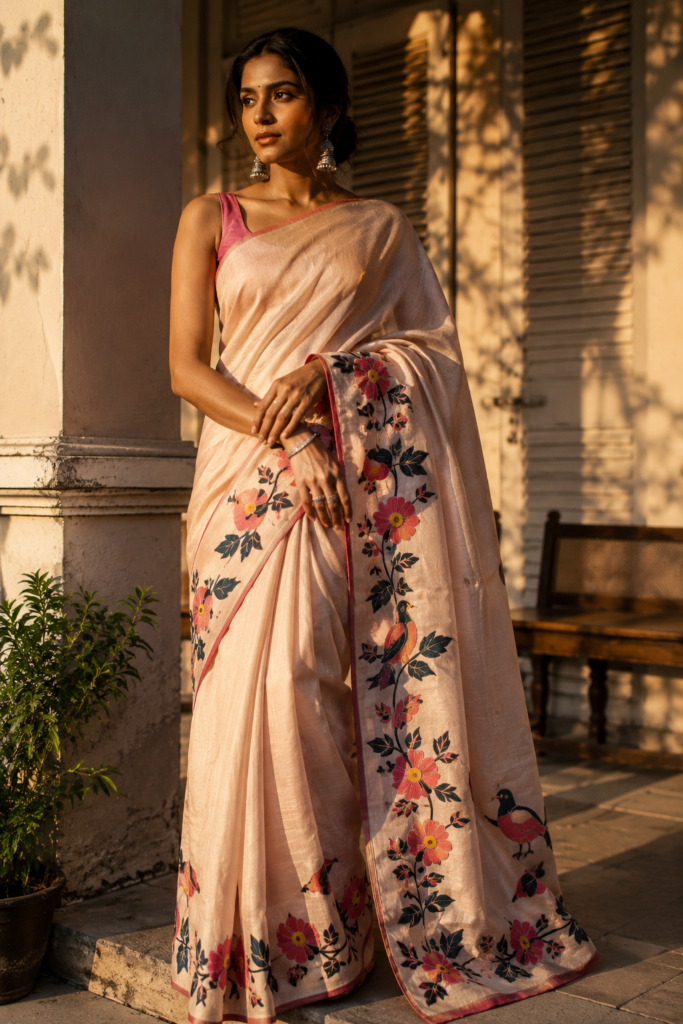
Every single traditional craft in India carries a distinct calculated structure and ornamentation technique. One such incredibly ancient, royal, and meticulous textile art from Bihar is Khatwa Applique Work. This is not basic embroidery; rather, it is a complex folk art of layering and cutting fabric over fabric to create a magnificent three-dimensional collage or design configuration. Today, on this exclusive blog by Vunavya, we explore the fascinating history, meticulous fabric-cutting mechanics, and the majestic motifs woven into the heritage textiles of Khatwa Applique Work.
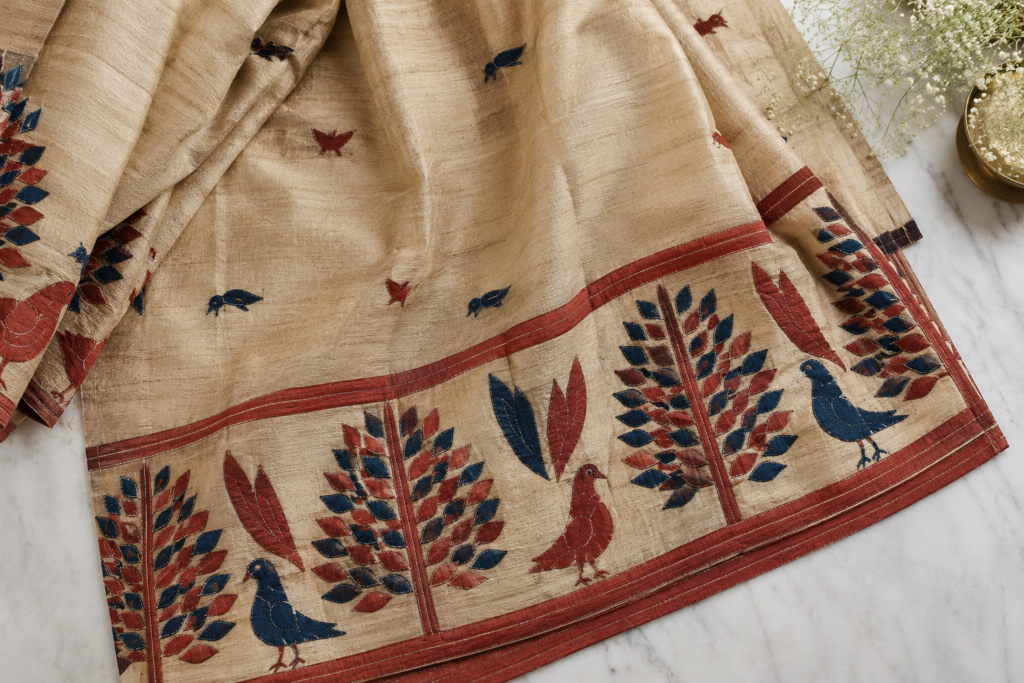
1: The History of Khatwa — From Royal Mughal Tents to GI Tag
The essence of the word ‘Khatwa’ is deeply rooted within the specialized skill of cutting fabric. For centuries, this traditional art form has held an incredibly prestigious position in the cultural landscape of Bihar.
- The Royal Aristocracy: During the historic Mughal era, artisans strictly used extensive Khatwa applique work to decorate royal tents (Shamianas), magnificent drapes, and ceremonial canopies for elephants and horses. Therefore, it represented absolute grandeur and aristocratic wealth. In contemporary fashion, master craftsmen have beautifully translated this heavy geometric layout into premium sarees, stoles, and luxury home furnishings. Today, the prestigious GI Tag (Geographical Indication) explicitly protects its authenticity on the global platform.
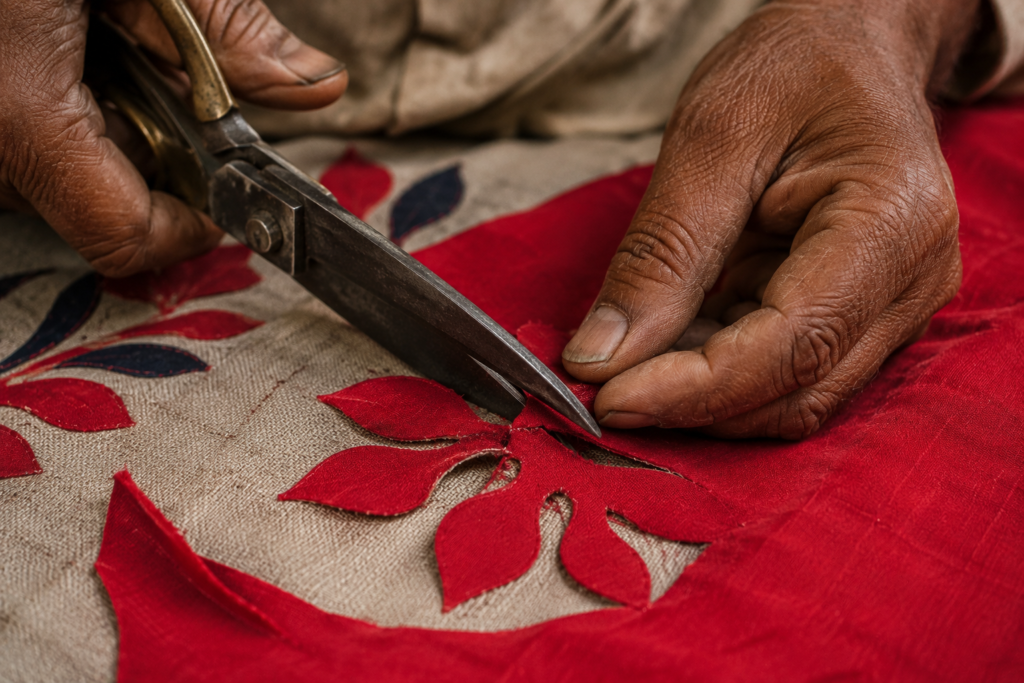
2: Cutting Mechanics and Motifs — A Symphony of Sharp Scissors and Fine Stitches
The primary allure of Khatwa applique lies heavily within its extreme cutting accuracy and structural neatness. While the visual composition looks clean, its execution requires immense geometric calculations by the artisans.
- The Scissor and Needle Paradigm: In this craft, artisans strictly place a contrasting colored piece of fabric directly on top of a base fabric layer. First, using highly specialized sharp scissors, they meticulously cut out the top fabric into precise individual figures. Second, they utilize fine hem stitches or dense chain stitches to outline and securely fuse the cutouts onto the base textile.
- Flora, Fauna, and Geometric Motifs: Khatwa designs explicitly feature stylized representations of majestic trees, wild flowers, elephants, peacocks, and traditional geometric lines inspired by ancestral folktales. Modern slow-fashion designers blend pastels with vibrant cotton configurations, making it a globally coveted choice for fusion silhouettes.
Conclusion
The heritage crafts of Bihar demonstrate how fashion can co-exist organically with geometric structures for hundreds of years. From the calculated scissor cuts to the fine hem stitches, every layered fabric panel in Khatwa applique narrates a story of sustainability and identity. Bridging the gap between these rural master artisans and global textile lovers, Vunavya stands proud in keeping this heritage alive.