
Eri Silk: Assam’s Eco-Friendly Ahimsa Textile, Comfortable in Both Winter and Summer
Read this in – हिन्दी/বাংলা/असमिया
When we talk about Assam’s traditional textiles, the golden hue of Muga silk first comes to mind. But there is another gem in Assam’s handloom treasure trove, which is acclaimed worldwide today not just for its beauty, but for the great ‘philosophy’ behind it. Its name is ‘Eri Silk’.
If you are an animal lover, prefer ‘Vegan Fashion’, and are looking for a saree or outfit made without harming the environment, then Eri silk could be the proudest collection in your wardrobe.
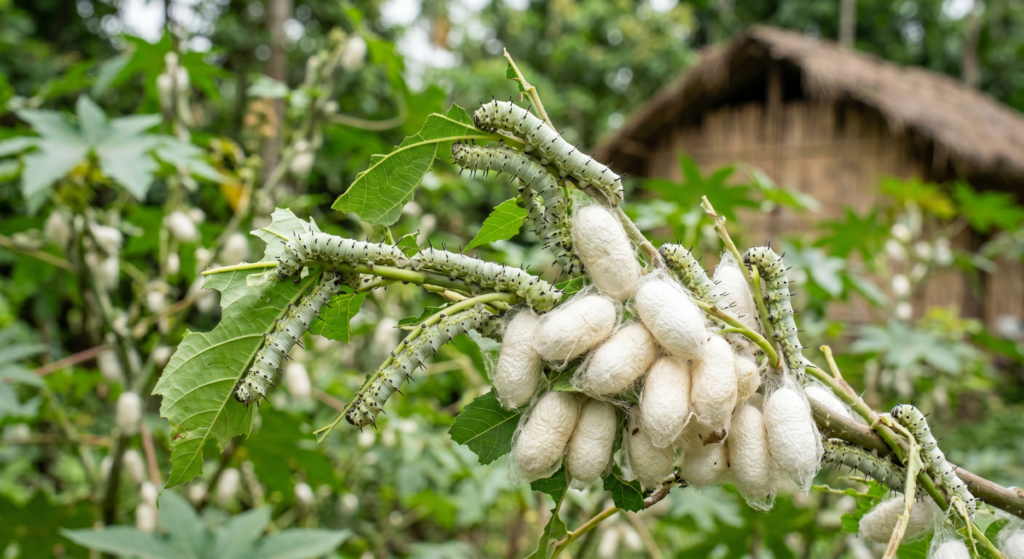
What is Ahimsa or ‘Peace Silk’?
Usually, to get silk threads, the silk cocoon is boiled in water, causing the insect inside to die. But the story of Eri silk is completely different.
During the production of Eri silk, the worm inside the cocoon is allowed to grow into a full moth. Only when the moth naturally pierces the cocoon and flies away, the abandoned cocoon is collected to make threads. Since not a single animal dies in this process, Eri silk is proudly called ‘Ahimsa Silk’ or ‘Peace Silk’ all over the world.
Unique Features of Eri Silk: Cotton-like Comfort, Wool-like Warmth
The most magical aspect of Eri silk is its weather-friendly nature. Eri threads possess a unique thermal property.
- Winter Warmth: It keeps the body extremely warm in winter without being as heavy as wool.
- Summer Comfort: On the other hand, in summer, it is as soft, breathable, and comfortable as cotton.
In short, it is a silk that you can effortlessly wear at any time of the year, in any season.
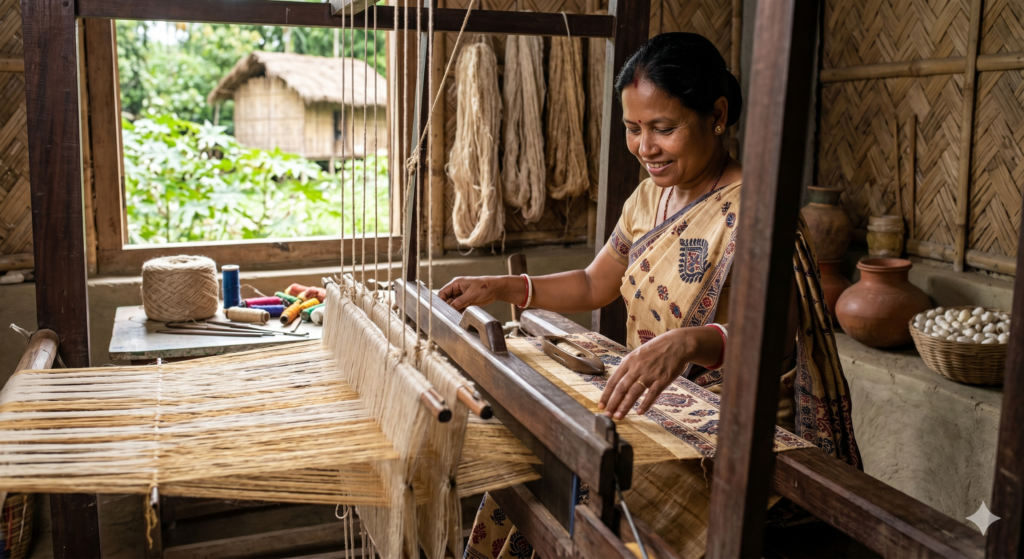
Origin and Weaving Process
The word ‘Eri’ comes from the Assamese word ‘Era’, which means Castor plant. These silkworms primarily survive by eating castor leaves.
Since the insect pierces the cocoon to get out, a long continuous thread cannot be obtained from the Eri cocoon like Muga or regular silk. Its thread has to be spun on a spinning wheel, much like cotton or wool. Due to this special process, the texture of Eri silk is not very smooth or shiny; rather, it has a ‘Matte’ finish and carries an earthy elegance. The most interesting fact is that the more Eri silk is washed, the softer and more comfortable it becomes.
Eri Silk in Modern Fashion
In the old days, Eri silk was mainly used in Assam to make winter wraps or shawls. But nowadays, thanks to modern weavers, highly elegant sarees, Mekhela Chadors, kurtas, and jackets are being made from Eri silk. Stunning designs are created by using natural dyes on its matte finish and natural off-white or cream color base.
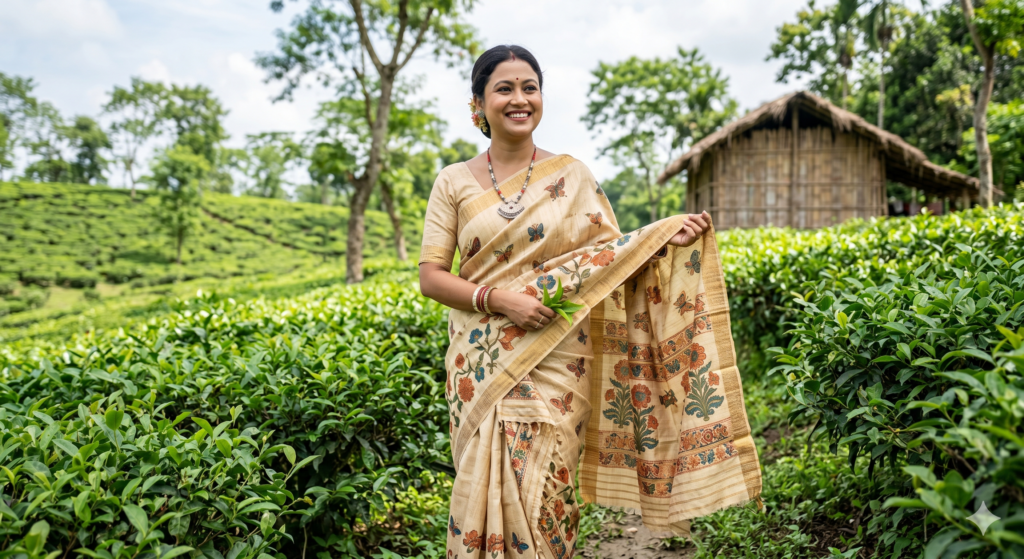
What is the price range of an Eri Silk saree?
Eri Silk is widely known as “Ahimsa Silk” or peace silk because its extraction process does not involve killing the silk moths. It is more affordable than Muga silk and features a unique, comfortable texture that closely resembles a blend of cotton and wool.
Standard Eri Silk Sarees: A basic or lightly embroidered authentic Eri silk saree typically ranges from ₹4,000 to ₹8,000.
Designer or Intricate Eri Sarees: If the saree showcases premium traditional weaves, intricate motifs, or uses natural dyes, the price can vary between ₹10,000 and ₹20,000, or even higher depending on the exclusivity.
The Fusion of Heritage and Ethics
Fashion is no longer just about looking good; what you wear and the story behind it is very important today. Vunavya believes in sustainable fashion that respects nature and heritage. Wearing an Eri silk saree is not just about carrying elegance, but also about giving a silent message of your love for nature and non-violence.
What is your fashion choice? Shiny regular silk, or this eco-friendly matte-look Ahimsa Eri silk? Let us know in the comments!