
The ultimate guide to Meghalaya’s textile heritage. Discover the eco-friendly Eri Silk (Ryndia), Khasi Dhara & Jainsem, and the floral motifs of Garo Dakmanda.
Read this in – हिन्दी/অসমীয়া/বাংলা
Fondly known as the ‘Abode of Clouds’, Meghalaya is home to three major indigenous tribes: the Khasis, the Jaintias, and the Garos. The absolute centerpiece of their vibrant mountain culture is their historic art of handloom weaving. For generations, the women of Meghalaya have woven magnificent fabrics using completely eco-friendly methods—crafting masterpieces that stand today as a stellar blueprint for sustainable slow fashion. Today, on this comprehensive master blog by Vunavya, we dive deep into the fascinating history and weaving mechanics of the 3 most iconic textile traditions of Meghalaya: Ryndia (Eri Silk), Khasi Dhara & Jainsem, and Garo Dakmanda.
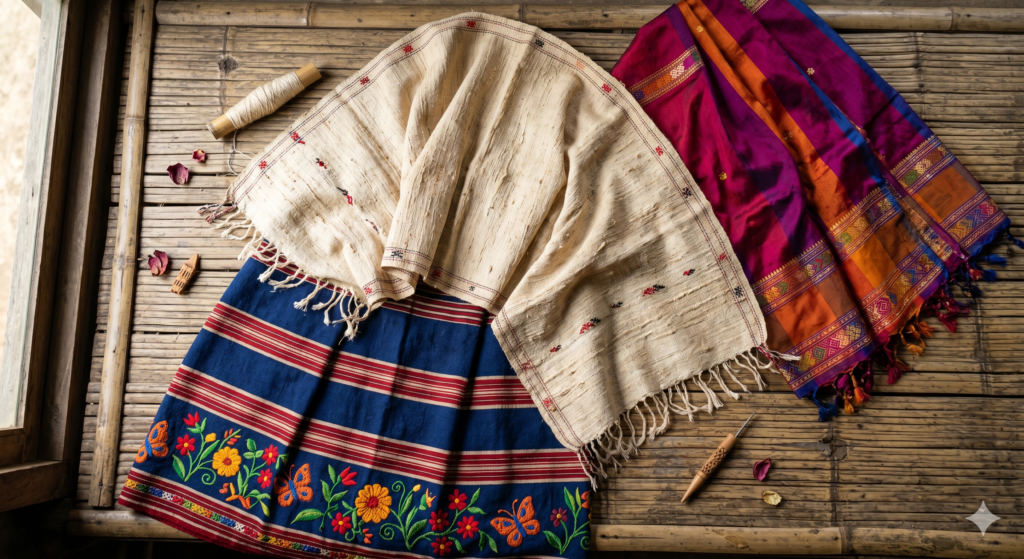
1: Ryndia or Eri Silk — The Organic Peace Silk of Umden Village
An invaluable jewel of Khasi and Jaintia heritage is Eri Silk, locally revered as Ryndia. Specifically, the scenic village of Umden in the Ri-Bhoi district is globally celebrated as the epicenter of this organic silk craft.
- The Ethical Weave: The defining signature of Ryndia is its completely cruelty-free extraction process. Weavers harvest the silk threads only after the silkworms naturally leave their cocoons. Therefore, it is proudly called ‘Peace Silk’. Khasi women use pure vegetable dyes extracted from local forest leaves and barks to color the yarn. Furthermore, Ryndia possesses unique thermal properties, keeping the wearer warm in winter and cool in summer.
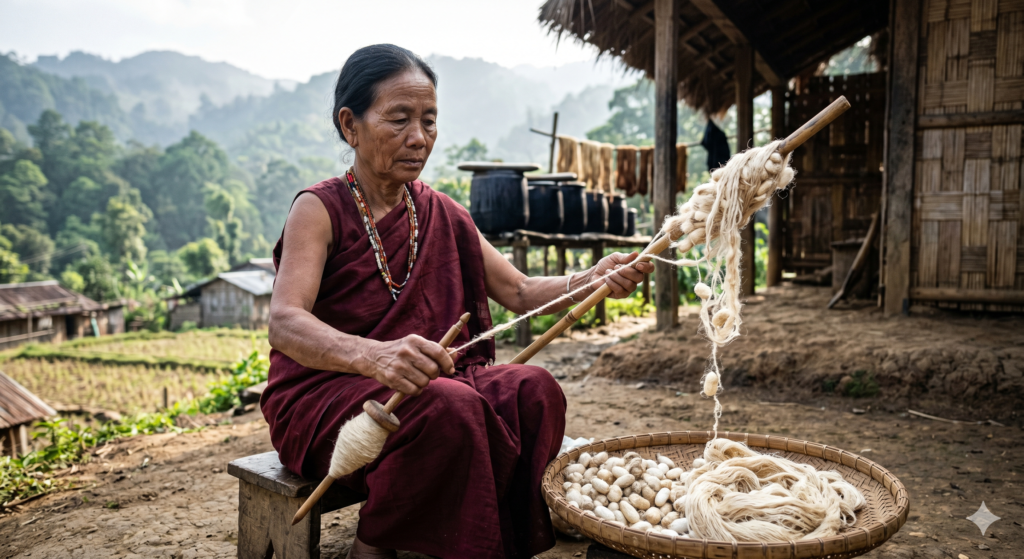
2: Khasi Dhara & Jainsem — The Royal Silhouette of Khasi Women
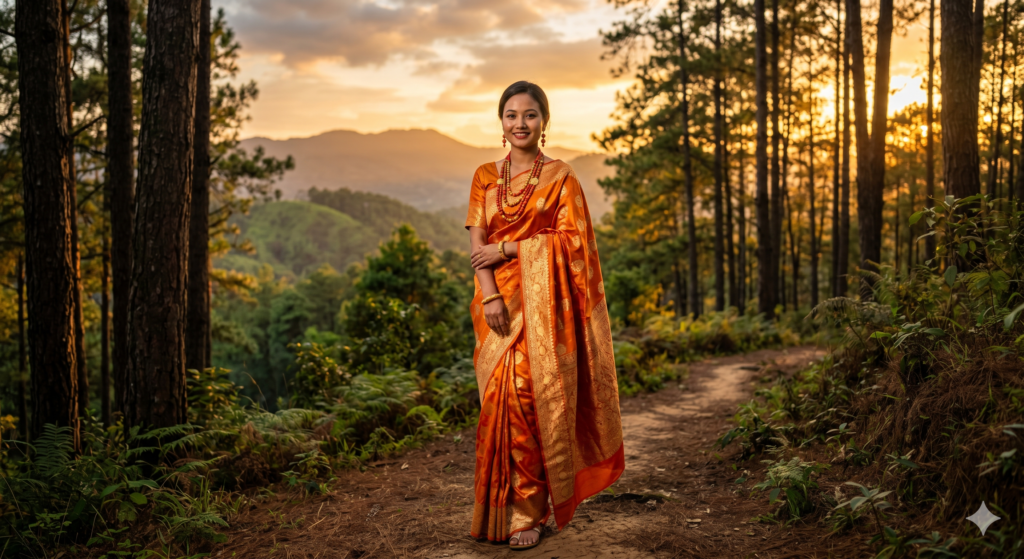
The traditional and highly dignified attire worn by Khasi women consists of two distinct silk garments: the Jainsem and the Dhara.
- Design and Occasion: The Jainsem is a graceful everyday attire made of two matching pieces of fine silk, knotted neatly over the shoulders. On the other hand, the Dhara is a much heavier, intricately woven silk drape. Khasi women reserve the Dhara exclusively for weddings, festivals, and major cultural gatherings. Woven tightly on traditional looms, its glossy texture serves as a direct indicator of aristocratic social status.
3: Garo Dakmanda — The Flora-Inspired Traditional Wrap Skirt
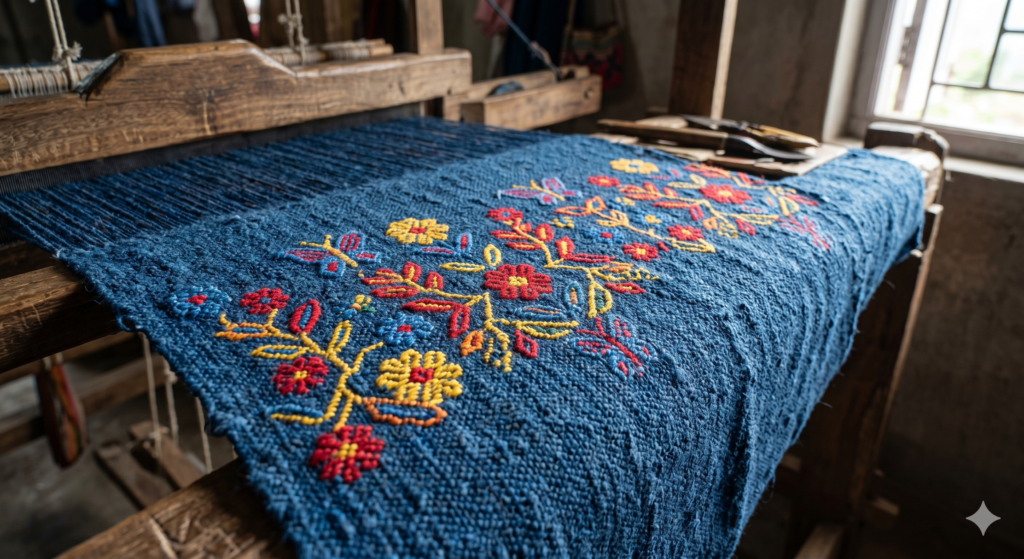
Inhabiting the lush Garo Hills, the women of the Garo community practice a distinct handloom tradition, and their most famous hand-woven garment is the Dakmanda. It is a heavy-duty wrap-around skirt.
- Nature-Inspired Motifs: The primary visual charm of a Dakmanda lies in its elaborate ornamentation. Garo weavers intricately introduce beautiful representations of wild flowers, butterflies, and vivid geometric patterns along the borders. Woven securely using high-quality cotton yarn on loin looms, this fabric is exceptionally thick and durable, making it perfect for the demanding lifestyle of the hills.
Conclusion
The tribal handlooms of Meghalaya demonstrate how fashion can co-exist organically with nature for hundreds of years. From the eco-friendly touch of Ryndia to the floral motifs of the Garos, every thread narrates a story of sustainability and identity. Bridging the gap between these mountain looms and global textile lovers, Vunavya stands proud in keeping this heritage alive.