
Mekhela Chador: Types of Traditional Assamese Attire and Step-by-Step Draping Guide
Read this in – বাংলা/हिन्दी/অসমীয়া
At first glance, it might look like a regular saree, but the essence of Assamese heritage lies within the folds of the ‘Mekhela Chador’. Its structure and draping style are entirely unique. It is a traditional two-piece attire that offers the wearer a royal, elegant look along with immense comfort.
Today, in this special blog by Vunavya, we will explore the different types of Mekhela Chador, their estimated prices, and a step-by-step guide to draping it perfectly.
What is a Mekhela Chador?
The name itself reveals its two components:
- Mekhela: This is the lower garment. It is a cylindrical, skirt-like cloth that is pleated and worn around the waist.
- Chador: This is the upper garment. One end of this long fabric is tucked into the Mekhela, while the remaining part is draped over the shoulder like a saree’s pallu.

Types of Mekhela Chador and Estimated Prices
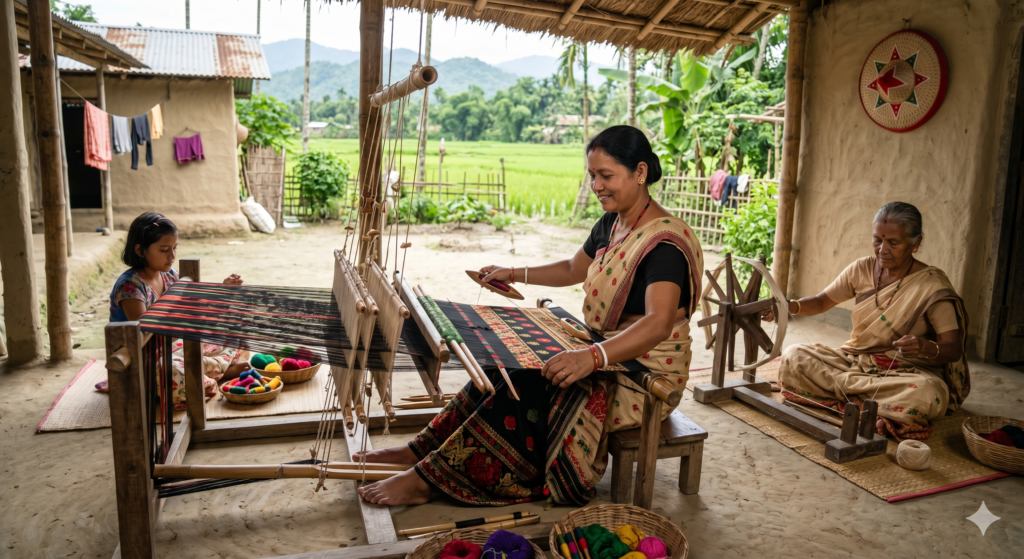
Weavers in Assam craft this traditional attire using various types of silk and cotton. The 4 main varieties and their price ranges include:
- Muga Mekhela Chador: Made from Assam’s exclusive golden ‘Muga Silk’, this is the most premium and royal variant. An authentic handwoven Muga Mekhela Chador generally ranges from ₹20,000 to ₹50,000 or more, depending on the craftsmanship.
- Paat Mekhela Chador: Woven with pure mulberry silk, it features intricate gold or silver zari work. Widely preferred as bridal wear, a Paat Mekhela Chador ranges from ₹8,000 to ₹25,000.
- Eri Mekhela Chador: Known for its soft texture and warmth, Eri silk is ideal for winter wear. An authentic Eri Mekhela Chador costs between ₹3,000 and ₹8,000.
- Cotton & Tussar Mekhela Chador: Made for daily or casual wear, these light and comfortable handloom pieces are priced between ₹1,500 and ₹4,000.

How to Wear a Mekhela Chador? click here
- Put on a regular underskirt/petticoat and a matching blouse. Tie the petticoat firmly around your waist.
- Step into the cylindrical Mekhela cloth like a skirt. Make 2 to 3 large pleats at the waist. Unlike a saree, remember that these pleats must face the right side. Tuck the pleats securely into the petticoat.
- Take the Chador fabric. Start from the top of the Mekhela pleats, wrap it once around your waist, and tuck it in near the navel.
- Take the remaining length of the Chador, bring it around your back, and drape it over your left shoulder, allowing it to hang gracefully like a saree pallu.
- Secure the drape at the waist and on the left shoulder with safety pins to keep the outfit intact.
Vunavya is dedicated to bringing India’s rich handloom legacies directly from the weavers to your wardrobe. Explore our collection for genuine quality and the best prices.