
The ultimate guide to Mubarakpur Silk Sarees. Discover the rich history, Jacquard mechanics, and practical tips to identify authentic handloom luxury.
Read this in- বাংলা/हिन्दी/मैथिली
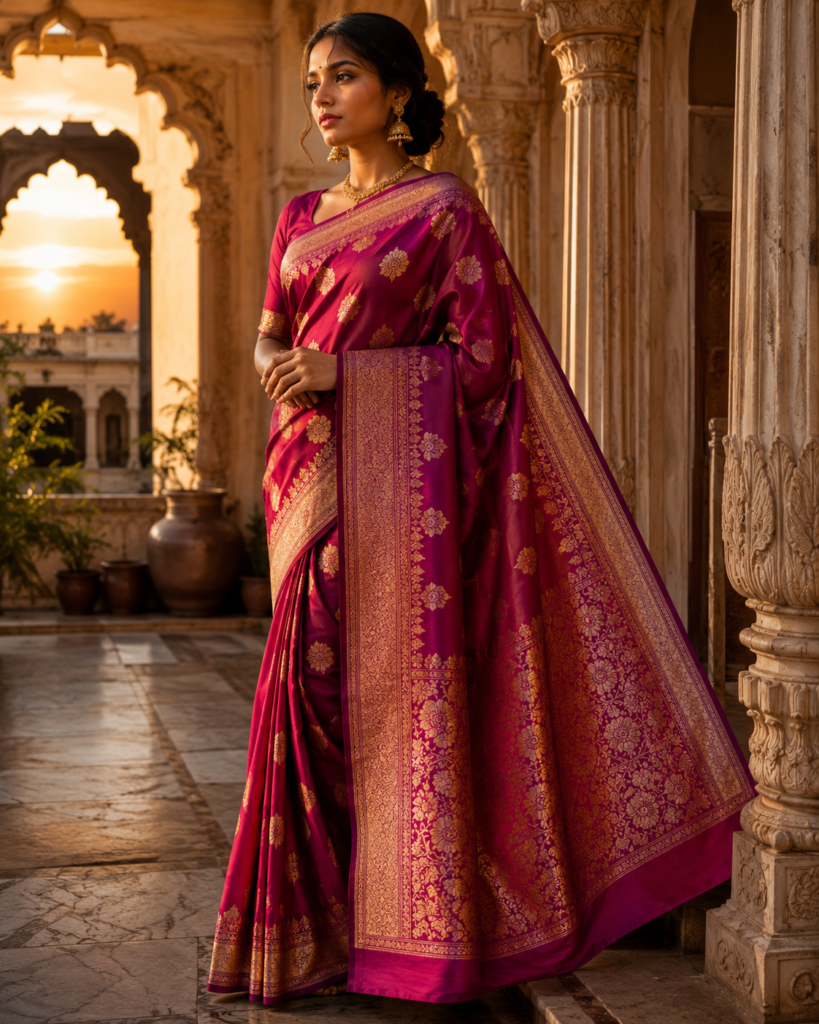
The historic weaving cluster of Mubarakpur in the Azamgarh district of Uttar Pradesh holds an extraordinarily prestigious place in global textile history. Dating back to the 14th century, this imperial silk weaving tradition flourished immensely under Mughal and Awadh patronage. Often standing toe-to-toe with Banarasi silk, Mubarakpur Silk is revered for its refined elegance and dense structural geometry. Today, on this comprehensive blog by Vunavya, we explore the fascinating history, intricate material specifications, and provide practical answers to essential questions regarding the Mubarakpur Silk Saree.
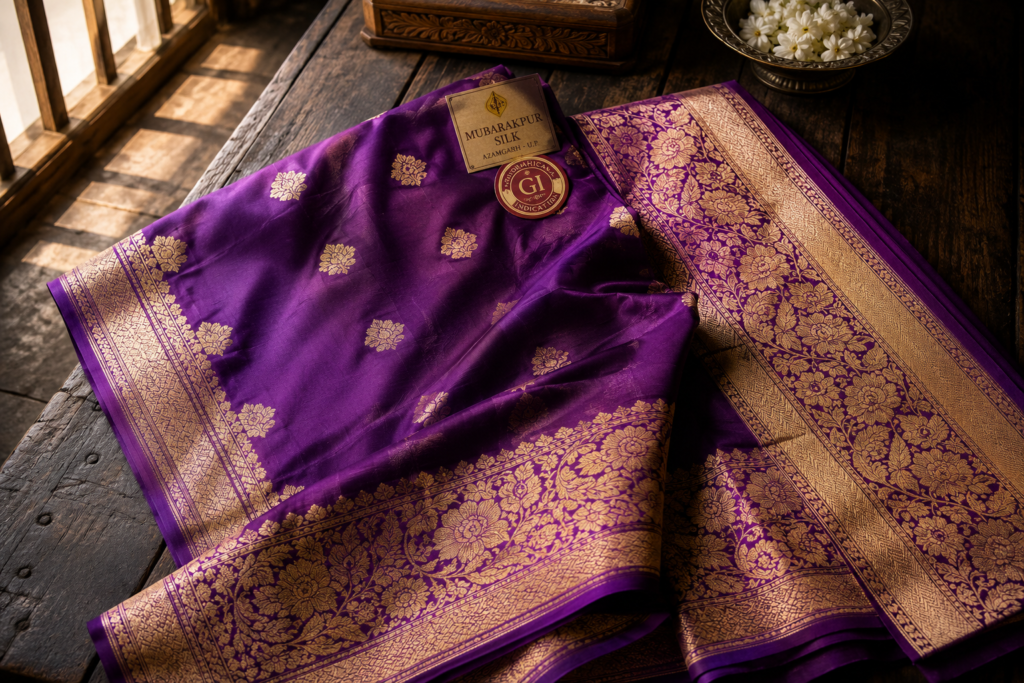
1: The Technical Mechanics of Mubarakpur Weaving — Kadwa & Jacquard Artistry
The primary allure of Mubarakpur Silk Sarees lies heavily within their high yarn density, soft hand-feel, and dense metallic zari embellishments. Artisans execute these configurations using 100% pure Mulberry Silk bases.
- Kadwa and Jacquard Integration: To interlace complex bootis across the body, weavers deploy specialized Jacquard shuttles alongside the traditional ‘Kadwa’ technique. Using supplementary metallic zari threads (Extra Weft), motifs are embedded without leaving loose float yarns on the reverse side.
- Structural Durability and Weight Balance: Mubarakpur weavers utilize high-count, fine silk filaments. Consequently, while the saree matches the structural strength and royal aesthetic of a Banarasi drape, it remains distinctly lighter in weight and exceptionally comfortable to wear.
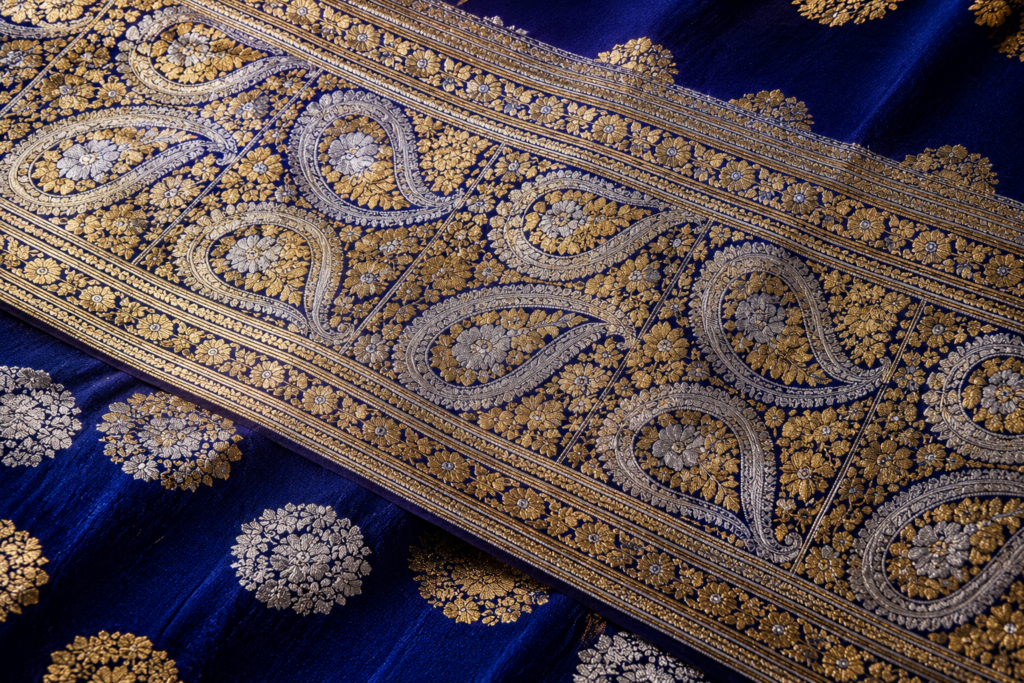
2: Traditional Geographical Hub and Contemporary Sustainable Luxury
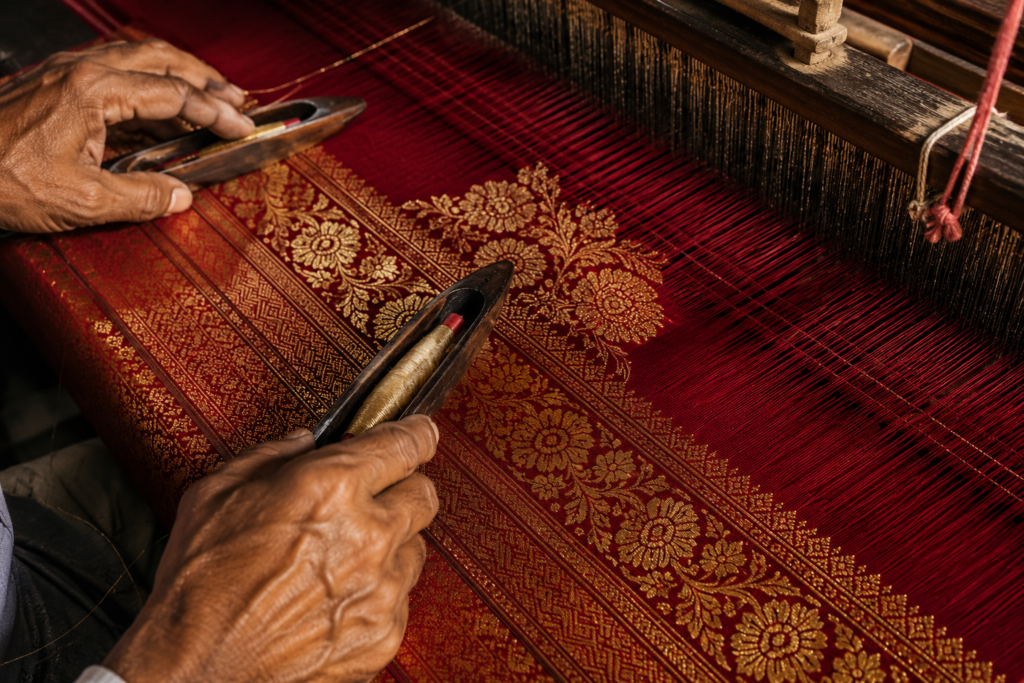
- The Azamgarh Weaving Corridor: The definitive historical hub for authentic Mubarakpur silk spans Mubarakpur and Sikandarpur within the Azamgarh district. Here, master craftspeople manually weave drapes on traditional pit-looms. Officially certified by its GI Tag (Geographical Indication), contemporary global designers actively convert these silk panels into luxury bridal sarees, pastel lehengas, and imperial stoles for the international slow-fashion market.
3: Frequently Asked Questions (FAQ)
Q1: What is the most reliable method to identify an authentic hand-woven Mubarakpur silk saree?
Answer: An authentic handloom Mubarakpur saree will explicitly feature fine structural knots on its reverse side within motifs, along with a rich, natural sheen characteristic of pure Mulberry silk.
Q2: What is the primary distinction between Mubarakpur Silk and Banarasi Silk?
Answer: Banarasi sarees are typically heavier with extremely dense zari layouts. Mubarakpur silk sarees offer comparable durability and royal aesthetics, but feature slightly more spaced motifs, making them lighter and easier to drape.
Q3: What is the recommended care routine for a Mubarakpur silk saree?
Answer: Due to its pure silk fibers and metallic zari, you should strictly dry clean the garment. Wrap it gently in a soft, breathable cotton cloth and store it flat in a moisture-free closet.
Conclusion
The grand drapes of Mubarakpur demonstrate how fashion can co-exist organically with human precision and timeless royalty across centuries. From the intricate Kadwa motifs to the soft luster of Mulberry silk, every single drape narrates a story of sustainability and identity. Bridging the gap between these rural master weavers and global textile lovers, Vunavya stands proud in keeping this heritage alive.