
The Symbol of Purity and Royal Elegance: Assam’s Traditional Paat Silk
Read this in –हिन्दी/বাংলা/असमिया
When speaking of Assam’s rich handloom industry, the three names that come to mind first are—Muga, Eri, and Paat. After the golden Muga and the eco-friendly Eri silk, today we will talk about the most royal and luminous gem of Assam’s silk trio, known as ‘Paat Silk’.
If you are looking for a silk that is the perfect blend of softness, purity, and royal elegance, there can be no better option than Paat silk.
What is Paat Silk and Where Does it Originate?
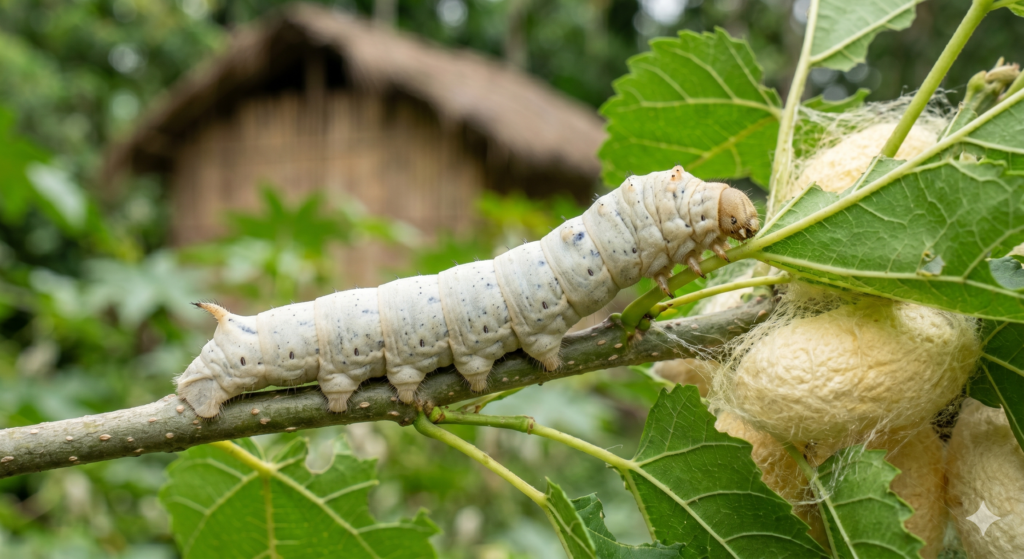
Paat silk is Assam’s own high-quality Mulberry silk. It is produced from a special species of silkworm called Bombyx textor. These worms primarily survive by eating the leaves of mulberry or Assam’s local ‘Nuni’ tree. For this reason, Paat silk is often locally referred to as ‘Nuni Paat’.
Unique Characteristics of Paat Silk
Paat silk has gained worldwide fame for its distinct characteristics:
1. Natural Purity: The biggest and most striking feature of Paat silk is its color. It is naturally a brilliant white or off-white (cream) color. Because of this sacred purity, it holds a highly respected place in Assamese culture.
2. Smoothness and Luster: Compared to Muga or Eri silk, Paat silk is much smoother, finer, and shinier. In the reflection of light, this silk creates a magical glow.
3. Durable Weave: Despite feeling light and sheer, the thread of Paat silk is extremely strong. With proper care, this silk can maintain its radiance for generations.
Designs and Motifs
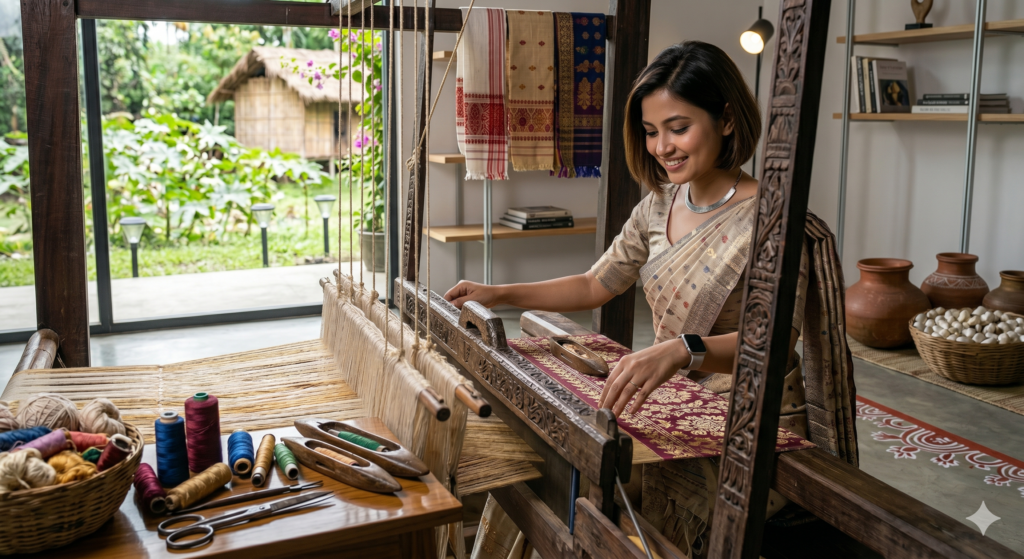
The white or cream base of handloom-woven Paat silk acts as a canvas for the weavers! When red, blue, green threads or gold-silver zari work (Extra Weft technique) are applied to this white base, it takes on an exquisite appearance.
Various traditional motifs of Assam are woven into Paat silk. The most popular among them are:
- Kingkhap: The symbol of Assam’s royal court.
- Japi: Assam’s traditional headgear.
- Gos Buta: Small tree or floral motifs.
- Minakari Work: The highly intricate work of filling colors inside the motifs with differently colored threads.
Modern Fashion and Heritage
The bridal attire in Assam is incomplete without Paat silk. A white Paat silk Mekhela Chador with gold zari work for the bride is an ancient tradition of Assam. However, in the modern era, along with the Mekhela Chador, highly attractive sarees, lehengas, kurtas, and scarves are being made from Paat silk. Because of its bright color, a Paat silk saree will make you stand out at any party or wedding ceremony.
What is the Price of a Paat Silk Saree?
Pure Paat silk is entirely handwoven and features highly intricate zari work, making it slightly more expensive than regular machine-made silk. The price of a pure Paat silk saree or Mekhela Chador with a simple design generally starts from ₹8,000 to ₹10,000. However, bridal wear featuring heavy gold zari or Minakari work can range from ₹20,000 to ₹50,000 or more, depending on the complexity of the design. For the assurance of the right price and premium quality of authentic handloom sarees, don’t forget to explore Vunavya’s collection.

How to Care for Paat Silk?
- To maintain the original shine of Paat silk, Dry Cleaning is always the safest option.
- Do not dry this silk in direct, harsh sunlight, as the white color may turn yellowish.
- When storing in the wardrobe, wrap it in a cotton cloth and change the folds occasionally.
Vunavya’s mission is to bring these pure GI-tagged handloom textiles hidden in every corner of India to you in their true glory.
Do you have any Paat silk outfits in your collection? How do you like its pure white elegance? Share your experience with us in the comments!