
The ultimate guide to Manipur GI-tagged textiles. Discover the temple motifs of Moirang Phee and the ethereal, mesh-like cotton weave of Wangkhei Phee.
Read this in – বাংলা/অসমীয়া/हिन्दी
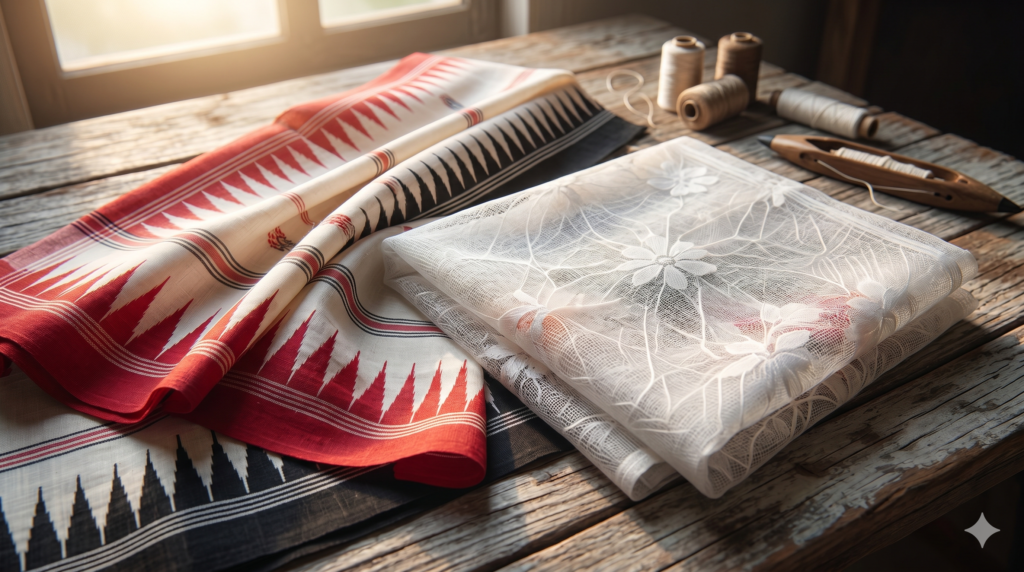
Located on the north-eastern frontier of India, Manipur is fondly called the ‘Jewel of India’, not just for its majestic natural beauty, but also for its rich and vibrant tapestry of indigenous handlooms and textiles. Every thread woven on Manipur’s historic looms holds a story of a glorious past. The ultimate centerpiece of their culture is the historic art of loin-loom (also known as backstrap) weaving. Among the plethora of Manipur handlooms, the Moirang Phee (Moirang Phee) and Wangkhei Phee (Wangkhei Phee)—stand today as the most celebrated textile traditions of Manipur, both holding the prestigious GI Tag (Geographical Indication) of India. Today, on this comprehensive master blog by Vunavya, we dive deep into the fascinating history, intricate mechanics, and profound sociological importance of the 2 most iconic textile traditions of Manipur.
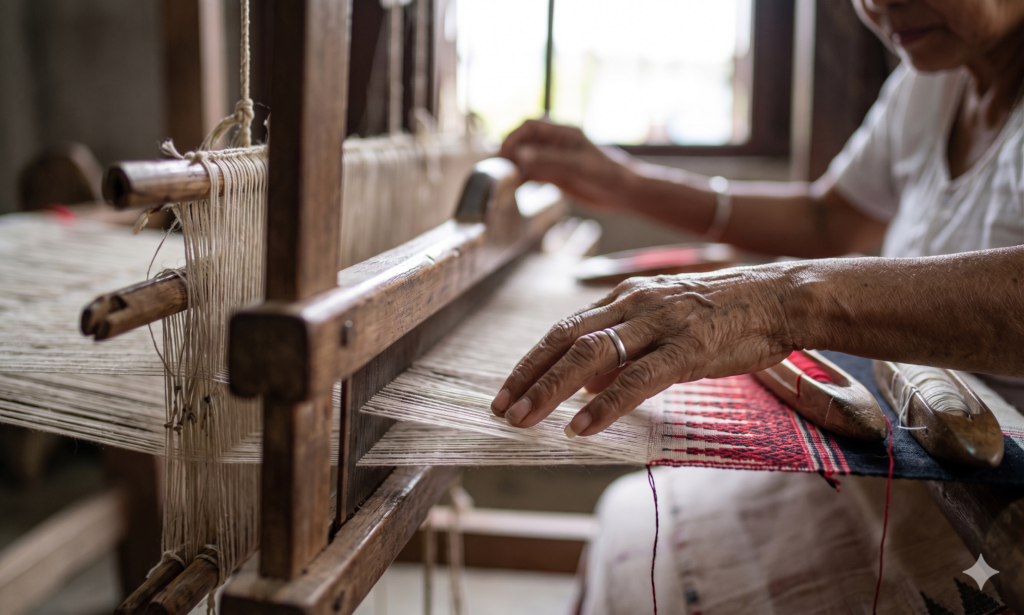
1: Moirang Phee (Moirang Phee) — The Temple Motif and Heritage Border
Moirang Phee is deeply rooted in Manipuri folklore and ancient mythology. It is primarily a cotton or silk saree or drape, with its key visual signature embedded within its border design. Traditionally, Moirang Phee was woven as ceremonial attire for royalty and was presented as a high-honor gift to brave warriors by the Manipuri Kings.
- Weave Density and Motifs: The unique visual signature of Moirang Phee is the flawlessly integrated geometric pattern known as the ‘Moirang Loikon’, or temple motif, resembling the spires of a traditional Manipuri temple. Hand-woven majorly on backstrap looms, master weavers meticulously create this pattern within the warp threads using high-count cotton yarn, giving the fabric a distinct, structured cultural identity.
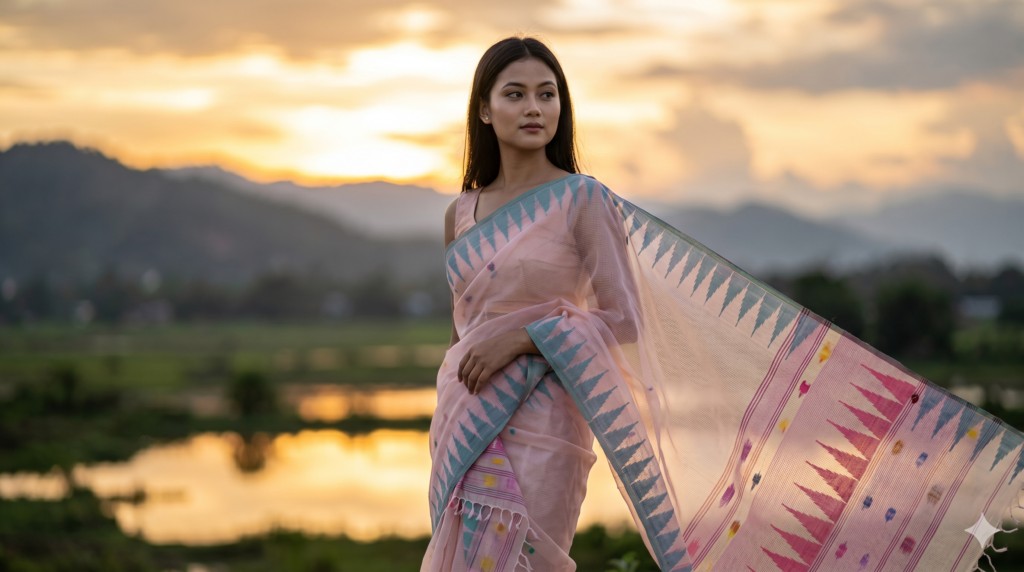
2: Wangkhei Phee (Wangkhei Phee) — The Ethereal, Mesh-Like Weave
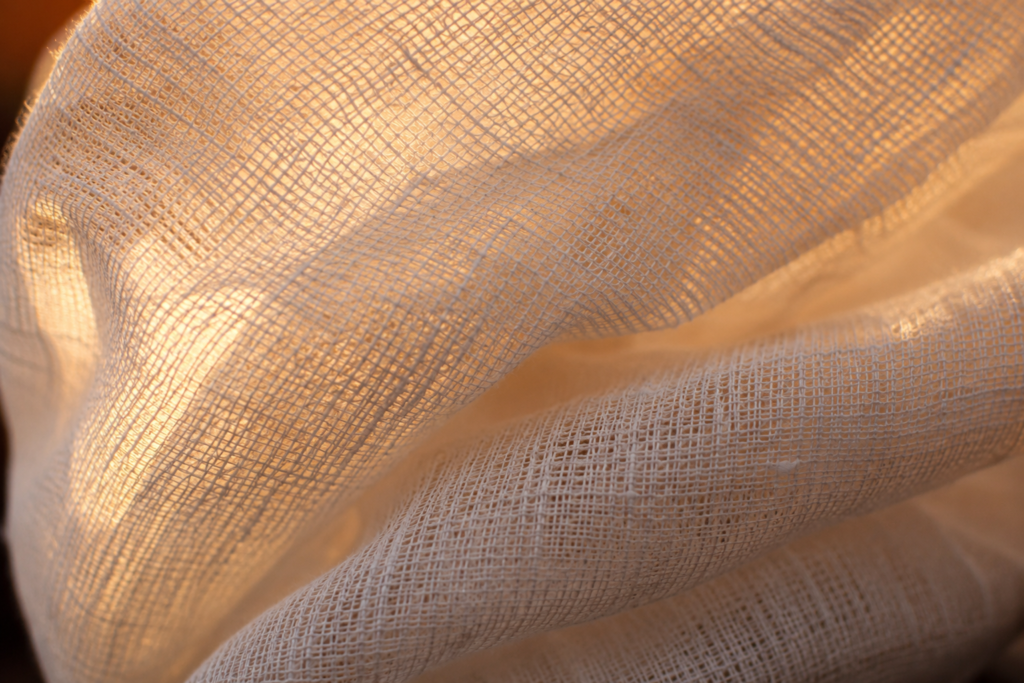
The ultimate hallmark of finesse and royalty in Manipur’s textile heritage is the Wangkhei Phee. It is an ethereal, hand-woven white cotton textile, symbolizing the grace and beauty of Manipuri women. Traditionally, Wangkhei Phee was woven exclusively for royal women as their daily attire. The threads were processed to be so fine that the resulting fabric would have a mesh-like look, earning it the metaphor of a spider’s web.
- The Loom Mechanics: Woven primarily out of exceptionally fine cotton yarn on ancient backstrap looms, the fabric is bound tightly using calculated body weight. The defining characteristic of Wangkhei Phee is its ‘Phee-shapan’ or mesh-like weave, resulting in a fabric that is translucent and incredibly thin. From a distance, the fabric appears as delicate as a spider’s web, yet possesses remarkable tensile strength. Honoring this grand heritage, contemporary slow-fashion designers are now actively integrating the classic Wangkhei Phee mesh-like weaves into modern sarees, evening gowns, and fusion fashion.
Conclusion
The traditional drapes of Manipur demonstrate how fashion can co-exist organically with nature for hundreds of years. Bridging the gap between these mountain looms and global textile connoisseurs, Vunavya stands proud in keeping this heritage alive.