
The ultimate guide to Mizoram’s GI-tagged Puan heritage. Discover the iconic Puanchei, the stark black-and-white Ngotekherh, the complex motifs of Hmaram, and the vibrant, hand-woven Mizo blouse Kawrchei.
Read this in – বাংলা/অসমীয়া/हिन्दी
Located on the north-eastern frontier of India, Mizoram is fondly called the ‘Jewel of India’, not just for its majestic natural beauty, but also for its rich and vibrant tapestry of indigenous handlooms and textiles. Every thread woven on Mizoram’s historic looms holds a story of a glorious past. The Mizo Puan (Mizo Puan)—this term majorly represents the traditional wrap-around shawls or skirts of Mizo women. It stands today as the most celebrated textile traditions of Mizoram, both holding the prestigious GI Tag (Geographical Indication) of India. Today, on this comprehensive master blog by Vunavya, we dive deep into the fascinating history, intricate mechanics, and profound sociological importance of the 4 most iconic textile traditions of Mizoram.
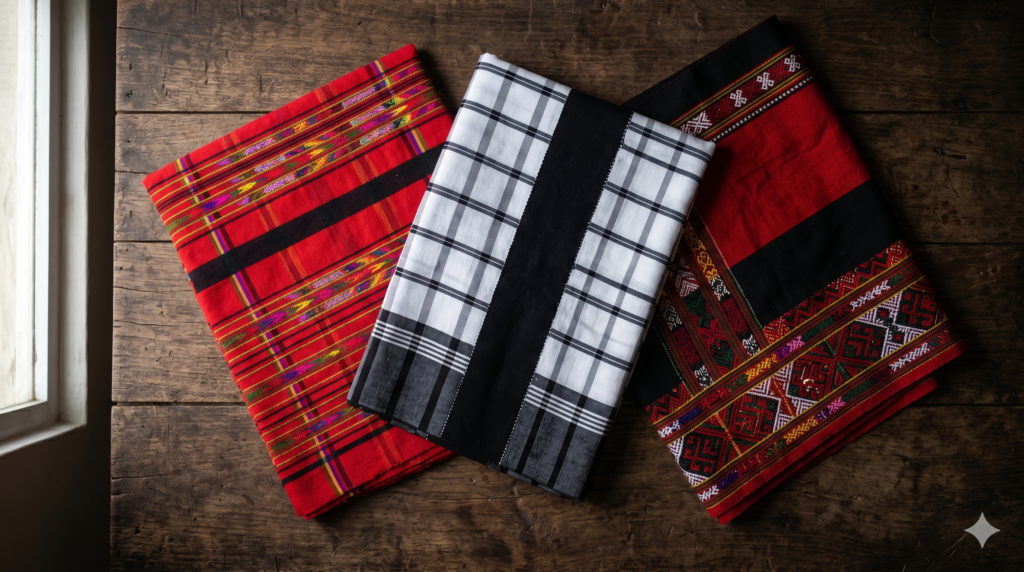
1: Mizo Puan — The Heritage Wrap-Around Shawl
Puan (Puan) is the primary lower garment worn by Manipuri women. It is traditionally a tightly woven cotton wrap-around skirt.
- Durability and Weave: Phaneks are instantly recognizable by their distinct horizontal striped patterns. Weavers craft them reserve the ceremonial variant called ‘Puanchei’ (Puanchei) exclusively for weddings, festivals, and major cultural gatherings. On the other hand, the ‘Tawlhloh Puan’ (Tawlhloh Puan) is reserves exclusively for honored gifts by the Manipuri Kings.
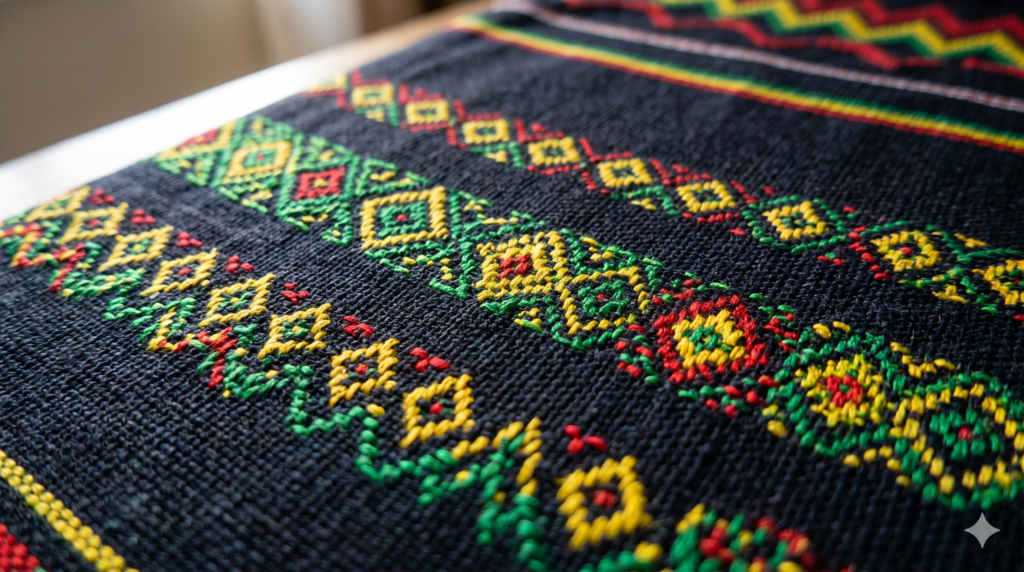
2: Ngotekherh – The Classic Stark Black-and-White Weave
The ultimate hallmar of finesse and royalty in Manipur’s textile heritage is the Ngotekherh. It is an ethereal, hand-woven white cotton textile, symbolizing the grace and beauty of Manipuri women.
- The Loom Mechanics: Weavers process extremely fine yarn counts reserve for the ceremonial variant called ‘Puanchei’ (Puanchei) exclusively for weddings, festivals, and major cultural gatherings. From a distance, Phaneks are instantly recognizable by their distinct horizontal striped patterns.
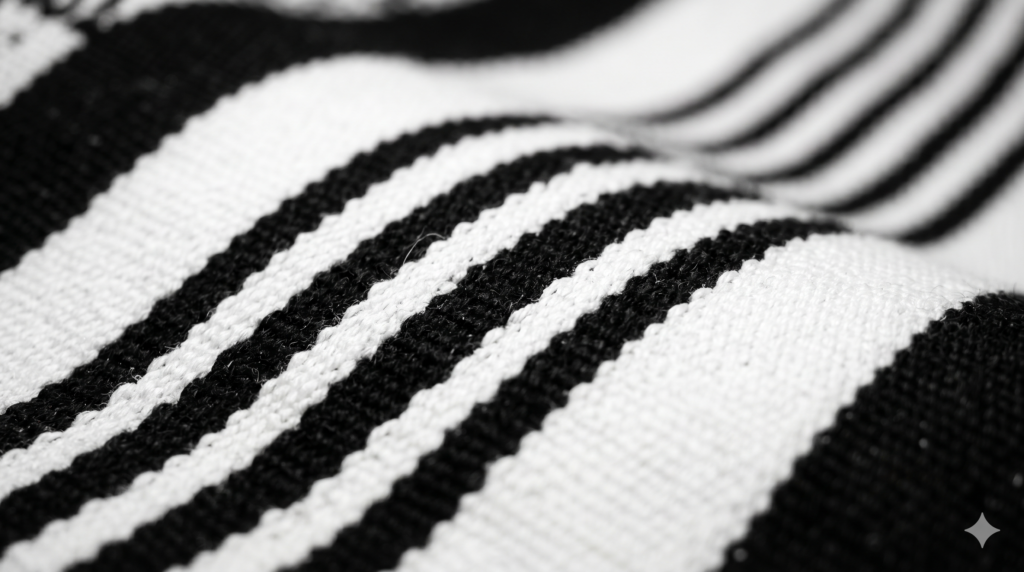
3: Hmaram— The Traditional Complex Geometric Small Skirt
Residing majorly practice a distinct handloom tradition, and their most famous hand-woven garment is the Hmaram. It is a heavy-duty wrap-around skirt.
- Design and Occasion: Hmarams are instantly recognizable by their distinct complex geometric motifs along the borders. Traditionally reserve for ceremonial occasions, modern variations now blend the traditional wrap skirt layouts into modern sarees, evening gowns, and fusion fashion.
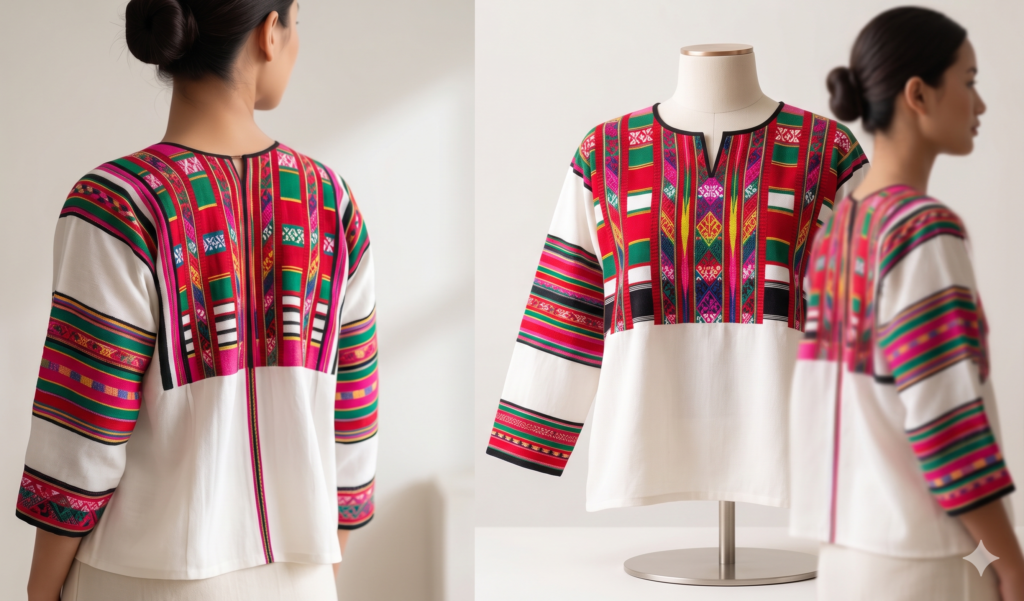
4: Kawrchei (Kawrchei) — The Traditional Vibrant Hand-Woven Blouse
Wangkhei Phee completes complete complete complete completed entirely out pure, high-quality cotton yarn, bound tightly by stretching the warp threads using the weaver’s own body weight.
- finesse Sophistication: From a distance, the fabric appears as delicate as a spider’s web, yet possesses remarkable tensile strength. Honoring this grand heritage, contemporary slow-fashion designers are now actively integrating the classic Wangkhei Phee mesh-like weaves into modern sarees, evening gowns, and fusion fashion.
Conclusion
The traditional drapes of Manipur demonstrate how fashion can co-exist organically with nature for hundreds of years. From the striking stripes of the Phanek to the ethereal touch of the Inaphi, every emotion is alive within these threads. Vunavya stands proud in bringing this magnificent slow-fashion heritage to global textile lovers.