
Nagaland’s GI-tagged Naga Shawls. Discover the fascinating weaving styles of Ao, Angami, and Chakesang tribes, and the social symbolism behind colors
Read this in – বাংলা/অসমীয়া/हिन्दी
Fondly known as the ‘Land of Festivals’, Nagaland is home to a rich and vibrant tapestry of indigenous tribes. The absolute centerpiece of their mountain culture is their historic art of handloom weaving. Every single garment from this region holds a deep cultural story. The traditional Naga Shawls proudly stand today as one of the most celebrated textile traditions of Northeast India, holding the prestigious GI Tag (Geographical Indication). Today, on this comprehensive master blog by Vunavya, we explore the fascinating history, tribal variations, and the profound social symbolism behind their colors.
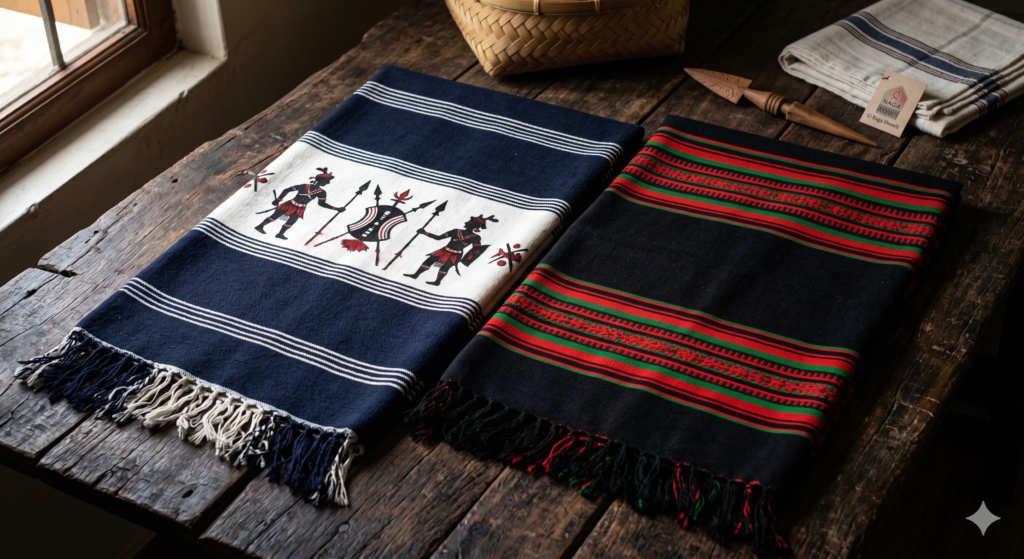
1: Tribal Diversity — Chakesang, Ao, and Angami Weaves
Nagaland is home to over 16 distinct major tribes, each practicing a unique weaving style with dedicated cultural rules. Among them, the weaves of the Ao, Angami, and Chakesang tribes are globally revered.
- The Ao ‘Tsungkotepsu’: This is a magnificent warrior shawl woven exclusively for successful Ao Naga men. It features a distinct white band in the center, hand-painted with black motifs of elephants, tigers, cocks, and human heads. Therefore, it serves as a direct indicator of aristocratic social status and bravery.
- The Angami ‘Lohe’: This shawl displays a stark, deep black background fabric. Furthermore, it incorporates broad red and green borders along the edges, showcasing a highly sophisticated visual appeal.
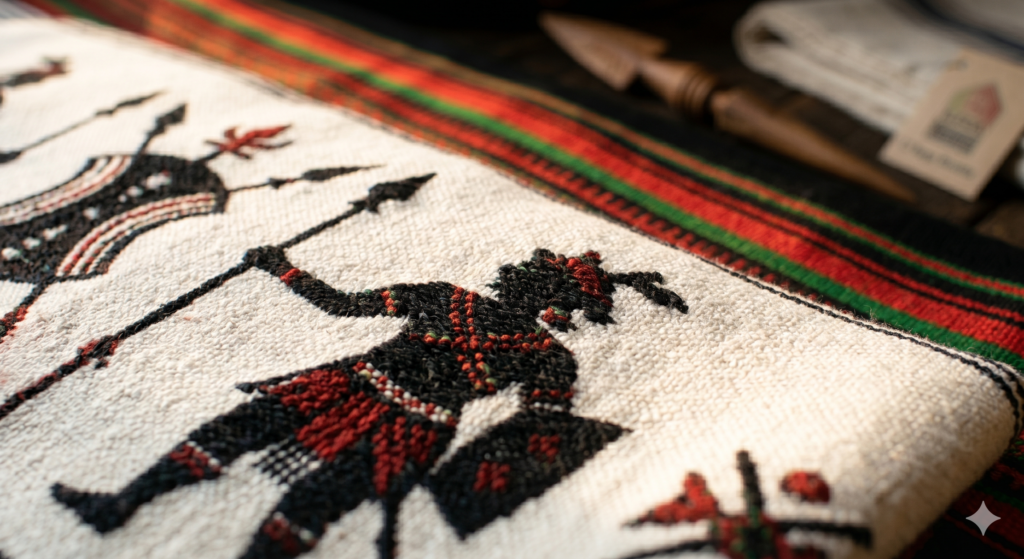
2: Meaning of Colors and Symbols — Red, Black, and White
The primary allure of Naga handlooms lies in their strict and calculated color palette, heavily dominated by red, black, and white yarn. In Naga society, these colors are not chosen randomly; rather, they hold immense sociological importance.
- Red and Black Symbolism: Red represents courage, blood, and the raw valor of successful warriors. Traditionally, shawls with heavy red configurations were reserved for individuals holding a high position of respect. On the other hand, black forms the stable background, symbolizing the roots, soil, and the daily hard life struggles of the hills. Finally, the intricate animal motifs woven into the fabric explicitly reveal the wearer’s wealth and social status.
Conclusion
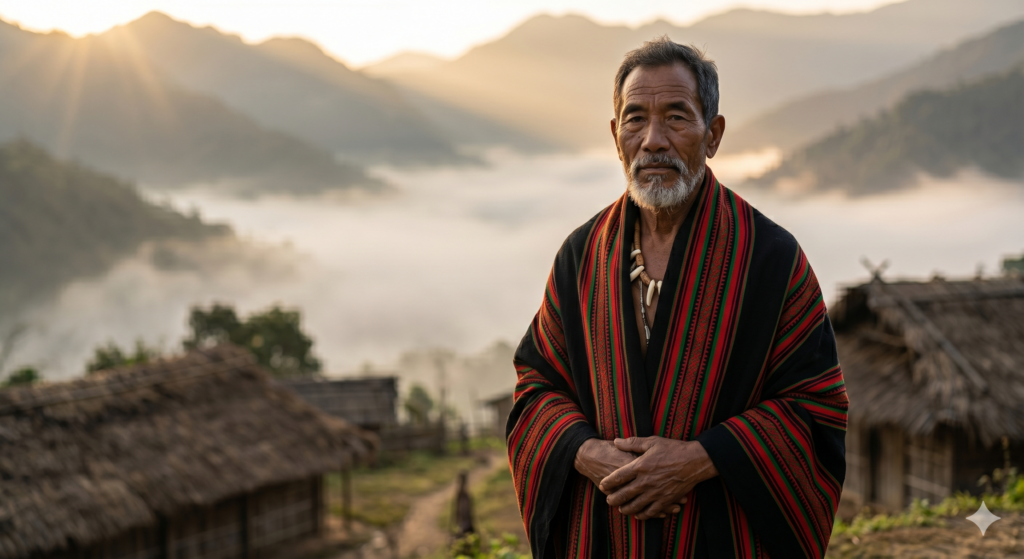
The traditional drapes of Nagaland demonstrate how fashion can co-exist organically with history for hundreds of years. From the striking stripes to the deep meaning of colors, every emotion is alive within these threads. Vunavya stands proud in bringing this magnificent mountain craftsmanship to the global stage.