
Bihar’s GI-tagged Sujani Embroidery. Discover the beautiful history, running stitch techniques, and emotional storytelling woven into this heritage craft.
Read this in – বাংলা/हिन्दी/मैथिली
Every single folk art in India carries a beautiful reflection of the daily life of its people. In particular, the handcrafted skills of rural women in Bihar hold an extraordinarily prestigious place globally. One such incredibly fine and emotionally rich craft is Sujani Embroidery. For generations, this traditional art form has served as a powerful medium for women to express their identity and narratives. Today, on this exclusive blog by Vunavya, we explore the fascinating history, meticulous stitching mechanics, and the incredible storytelling woven into the fabrics of Sujani Embroidery.
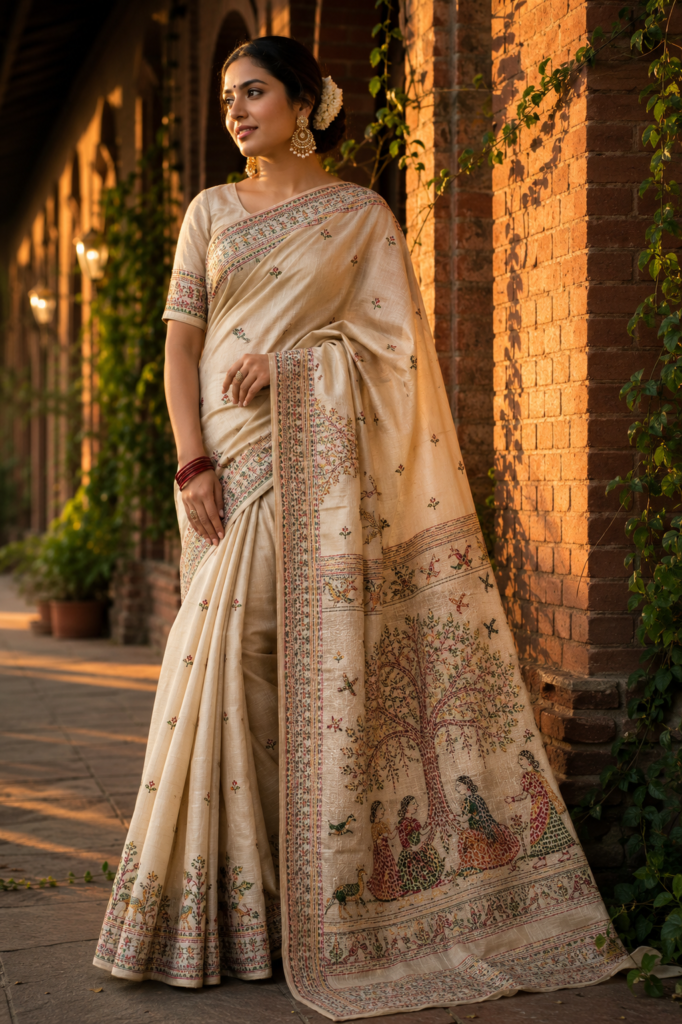
1: The History of Sujani — From Traditional Quilts to GI Tag
The word ‘Sujani’ is derived from two structural terms— ‘Su’, meaning beautiful or easy, and ‘Jani’, meaning birth. Originally, it was a soft, protective quilt crafted specifically to welcome newborn babies into the world.
- The Sustainable Weave: In ancient times, women from Muzaffarpur and neighboring rural districts of Bihar layered old cotton sarees and dhotis together to stitch soft winter quilts. Therefore, it stands as an ancient indigenous blueprint for sustainable upcycled fashion. In contemporary times, master artisans have beautifully integrated this intricate running stitch into premium sarees, stoles, and tunics. Today, the prestigious GI Tag (Geographical Indication) explicitly protects its authenticity on the international platform.
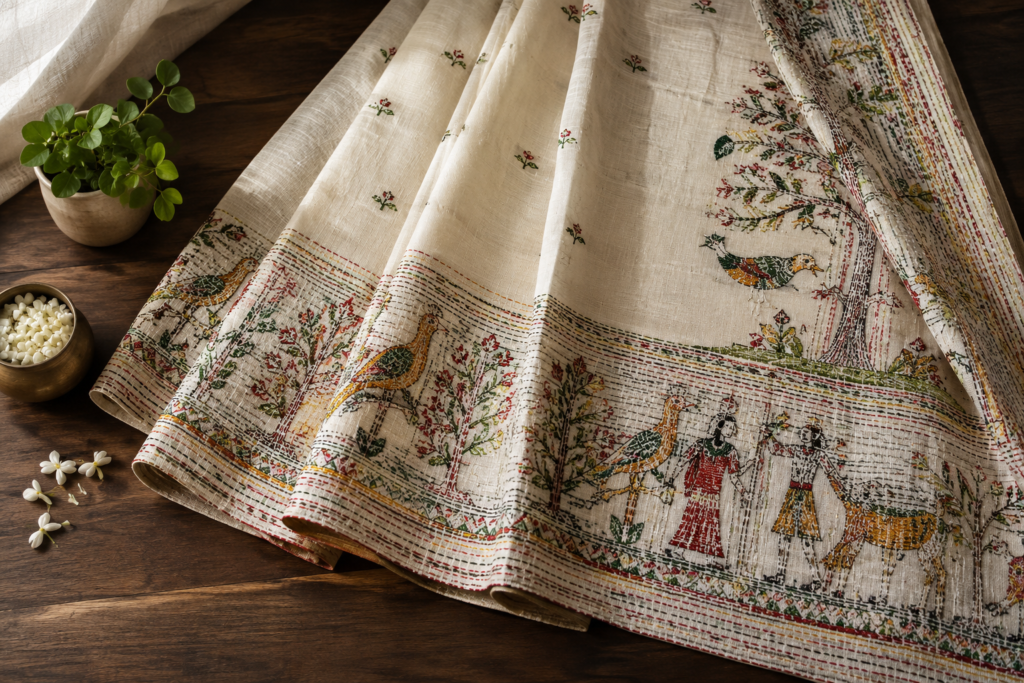
2: Stitching Mechanics and Motifs — A Living Canvas of Stories
The primary allure of Sujani embroidery lies heavily within its calculated stitching patterns and intensely expressive motifs. While it looks similar to basic quilting, its artistic configuration is deeply complex.
- The Magic of Running Stitches: Artisans strictly use two primary stitching variations to create a piece. First, they execute extremely fine, dense ‘running stitches’ to fill the background fabric uniformly. Second, they utilize distinct chain stitches to outline and raise the primary figures.
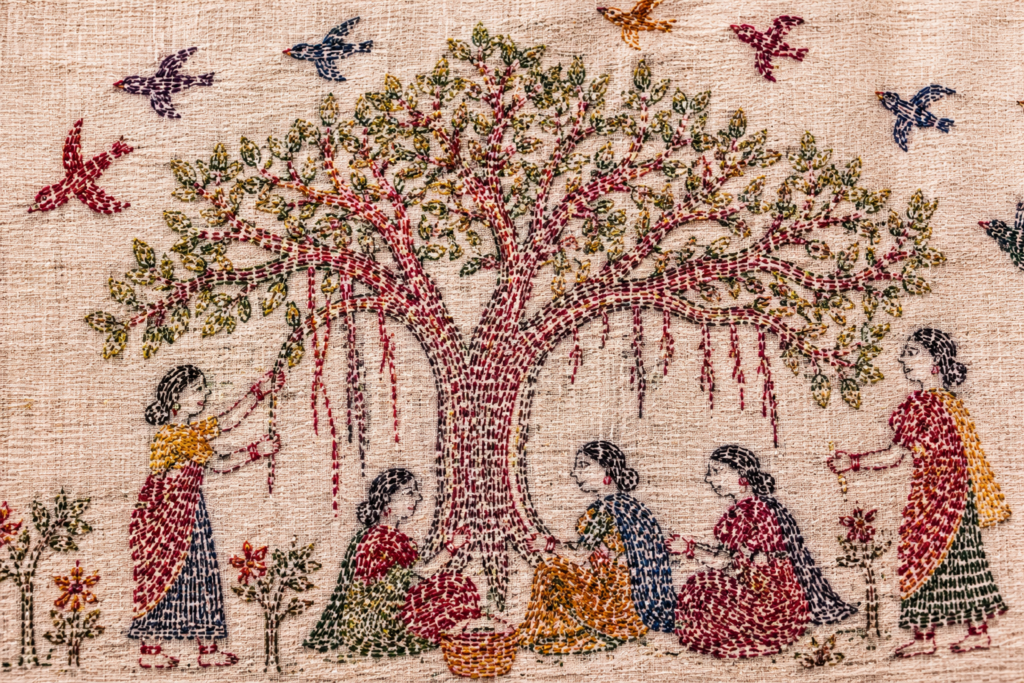
- Expressing Everyday Reality: Unlike standard embroidery that features basic floral patterns, Sujani motifs explicitly portray the real-life struggles, domestic joys, local birds, environment, and social issues faced by rural women. Consequently, every single Sujani saree transforms into a living canvas of human emotions and contemporary history.
Conclusion
The heritage crafts of Bihar demonstrate how fashion can co-exist organically with human emotions for hundreds of years. From the rhythmic running stitches to the deeply moving narratives, every thread in Sujani embroidery narrates a story of sustainability and identity. Bridging the gap between these rural artisans and global textile lovers, Vunavya stands proud in keeping this heritage alive.