
Bihar’s GI-tagged Bawan Buti Saree. Discover the rich Buddhist history, mathematical precision, and 52 iconic motifs woven into this Nalanda heritage.
Read this in – বাংলা/हिन्दी/मैथिली
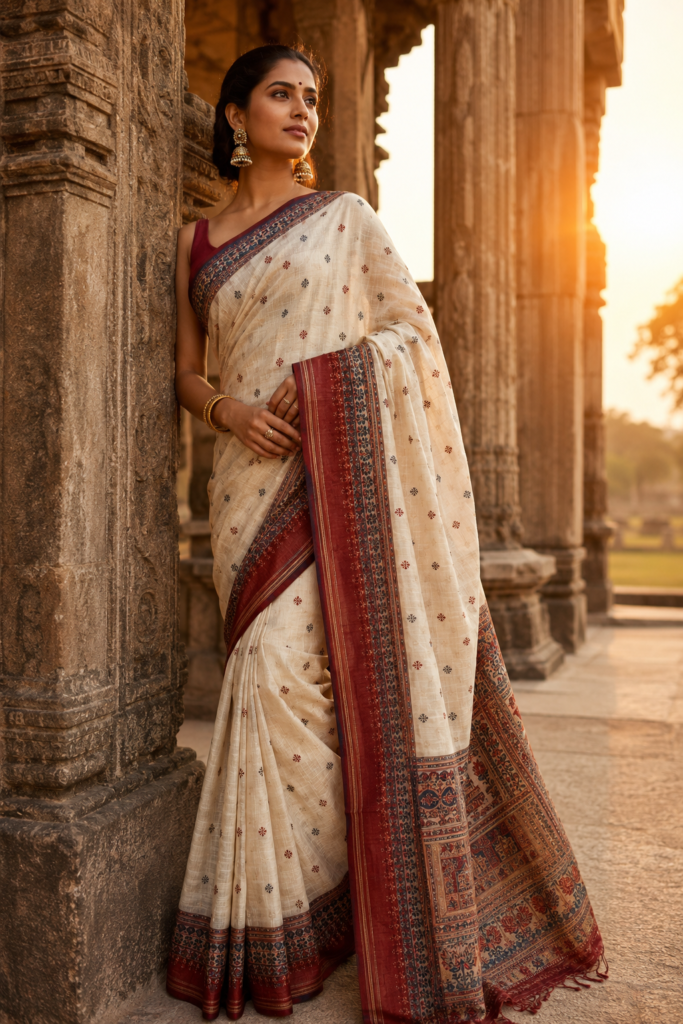
Every single traditional saree in India carries a distinct calculated structure and symbolic cultural configuration. One such incredibly ancient, spiritual, and meticulous textile art from Bihar is the Bawan Buti Saree. This is not a basic commercial weave; rather, it is a complex folk art of translating chapters of Buddhist history onto a fabric canvas using precise structural thread counts. Today, on this exclusive blog by Vunavya, we explore the fascinating history, meticulous extra-weft mechanics, and the majestic motifs woven into the heritage handlooms of the Bawan Buti Saree.
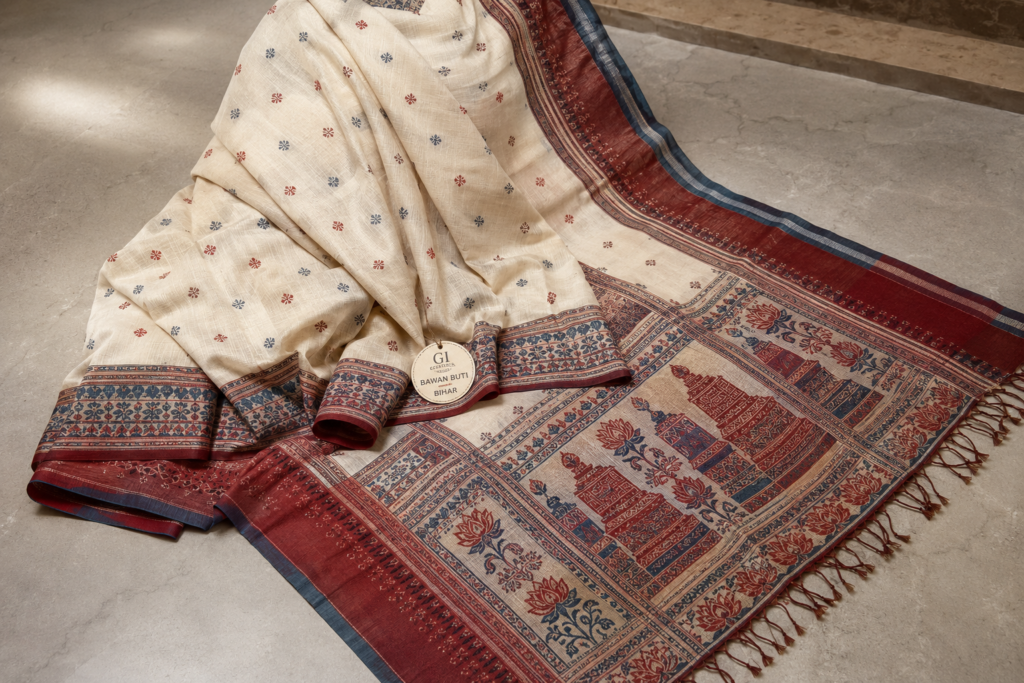
1: The History of Bawan Buti — From Ancient Nalanda to GI Tag
The essence of the phrase ‘Bawan Buti’ is deeply rooted within its strict mathematical composition. In local Indian languages, ‘Bawan’ literally translates to the number 52 (Fifty-Two).
- The Buddhist Influence: Centuries ago, weavers residing near the historic Nalanda Mahavihara and the sacred sites of Lord Buddha’s teachings strictly initiated this specialized handloom tradition. Therefore, its design philosophy reflects profound Buddhist principles. In contemporary fashion, master craftsmen have beautifully translated this heavy geometric layout into premium cotton and Tussar silk sarees. Today, the prestigious GI Tag (Geographical Indication) explicitly protects its authenticity on the global platform.
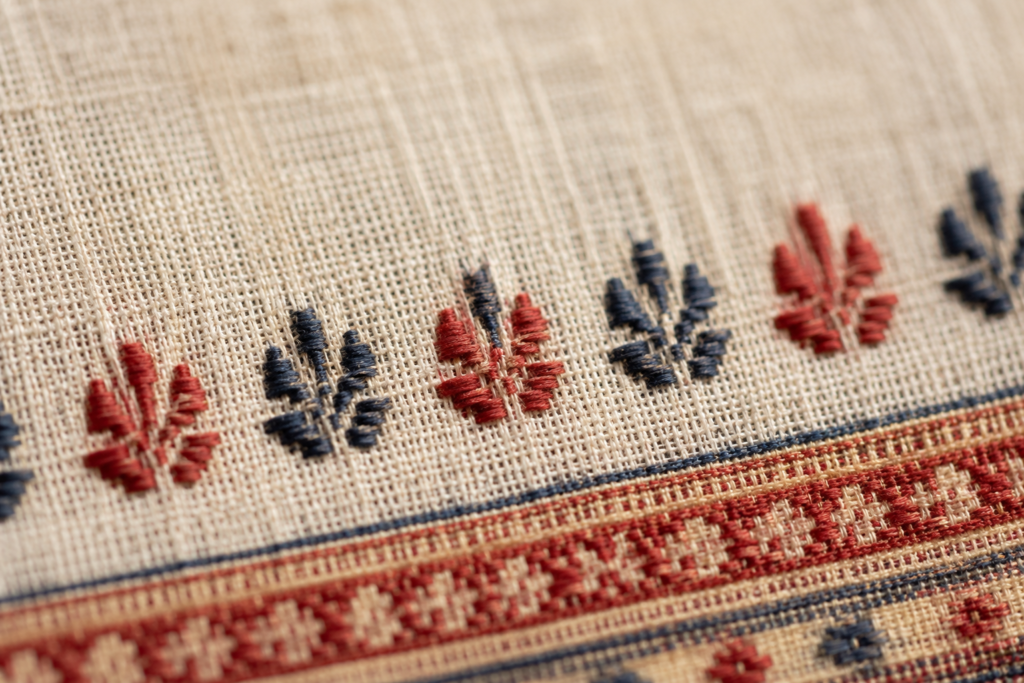
2: Weaving Mechanics and Motifs — A Symphony of Extra Weft and 52 Miniature Dots
The primary allure of the Bawan Buti saree lies heavily within its extreme geometric accuracy and structural neatness. While the visual composition looks clean, its execution requires immense thread-counting skills by the weavers.
- The Magic of Extra Weft: In this craft, weavers strictly introduce additional decorative threads over the base fabric layer using the ‘Extra Weft’ technique. They calculate the entire length of the saree uniformly to weave exactly 52 miniature motifs or butis across the surface.
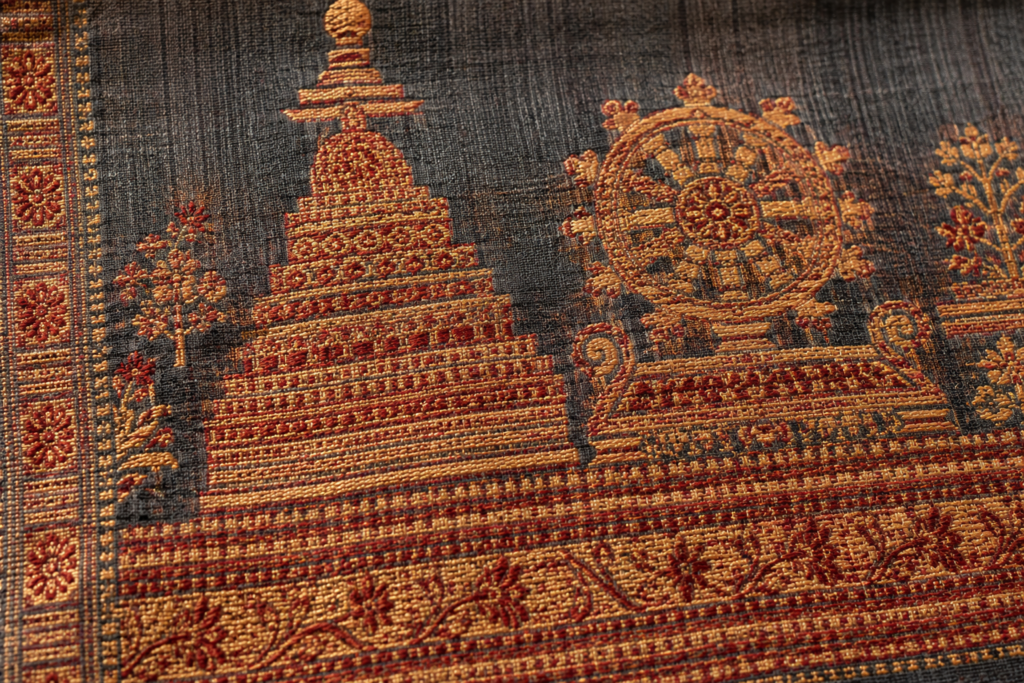
- Lotus, Stupa, and Wheel Motifs: The pallu and broad borders explicitly feature stylized representations of sacred Buddhist iconography—including the pristine Lotus, Buddhist Stupas, and the historic Dharma Chakra (Wheel). Modern slow-fashion designers blend pure linen and fine Tussar silk with these 52 buti configurations, making it a globally coveted choice for luxury handloom connoisseurs.
Conclusion
The heritage crafts of Bihar demonstrate how fashion can co-exist organically with historic structures for hundreds of years. From the calculated extra-weft turns to the 52 sacred miniature motifs, every single thread in a Bawan Buti saree narrates a story of sustainability and identity. Bridging the gap between these rural master artisans and global textile lovers, Vunavya stands proud in keeping this heritage alive.