
The ultimate guide to Odisha Ikat. Discover the rich history, double-ikat weaving mechanics, and spiritual heritage of Sambalpuri and Khandua silk handlooms.
Read this in – हिन्दी/বাংলা/ଓଡ଼ିଆ
The historic handloom textiles of Odisha hold an extraordinarily prestigious place in global textile history, and the absolute crown jewel of this heritage is Odisha Ikat. Woven intricately by the master craftsmen of Sambalpur and Nuapatna, every single thread carries a beautiful reflection of spiritual devotion and mathematical precision. This unique craft is deeply intertwined with the sacred Jagannath culture of Puri. Today, on this comprehensive blog by Vunavya, we explore the fascinating history, tie-and-dye mechanics, and provide practical answers to some highly essential questions regarding Odisha Ikat.
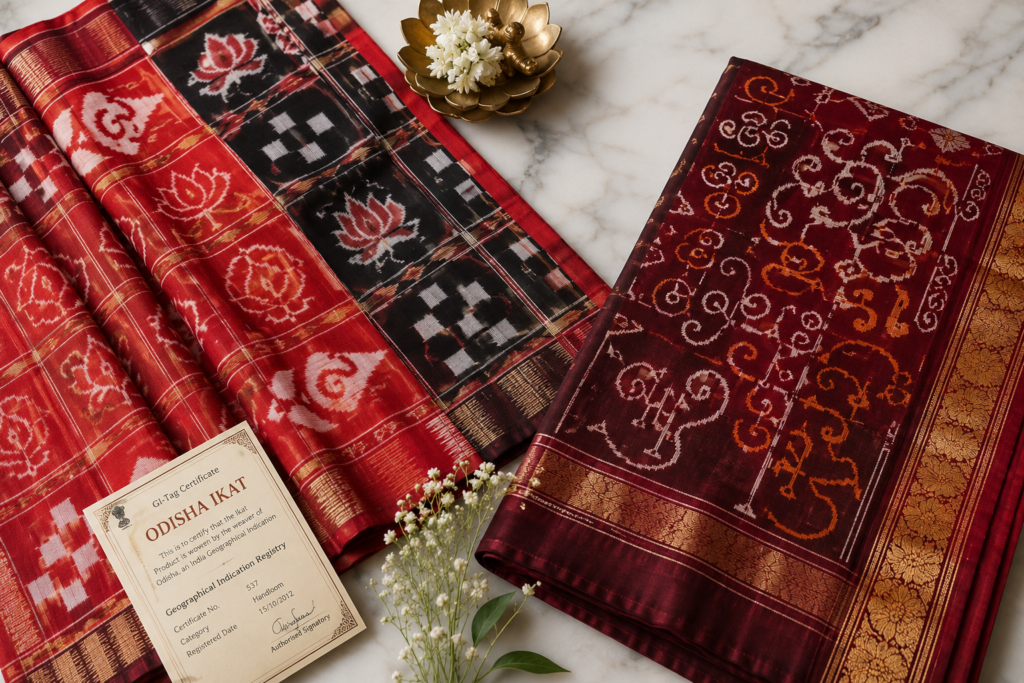
1: The Technical Mechanics of Odisha Ikat — The Art of ‘Bandha’
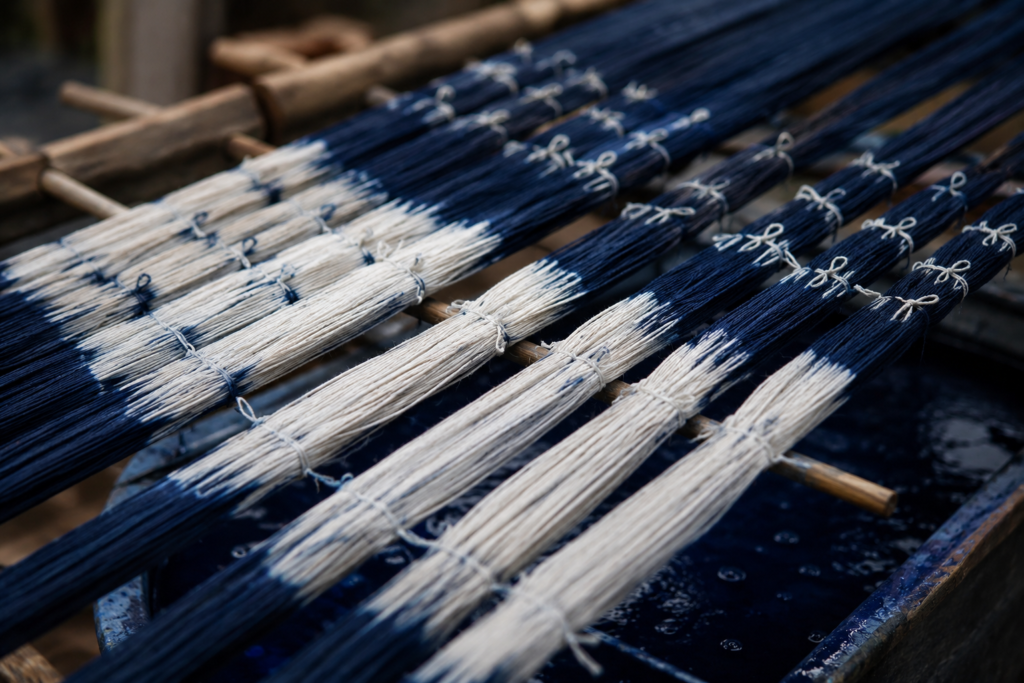
The primary allure of Odisha Ikat lies heavily within its intensely complex pre-weaving dye process and distinct structural geometry. Locally, this indigenous craft is celebrated as ‘Bandha’.
- The Tie-and-Dye Process: Before mounting the yarn onto the handloom, artisans strictly bind calculated segments of the threads using organic fibers according to a premeditated design layout. Consequently, these wrapped sections completely resist the dye during the coloring process. Odisha’s weavers excel heavily in executing this on both warp and weft threads, a highly sophisticated method known globally as ‘Double Ikat’.
- Sambalpuri vs. Khandua Silk: Sambalpuri sarees strictly utilize fine cotton or matted Tussar silk bases adorned with motifs of the conch (Shankha), wheel (Chakra), and pristine lotuses. Conversely, Khandua Silk is traditionally woven as a sacred offering for Lord Jagannath in Puri. Weavers meticulously weave holy verses from Poet Jayadeva’s ‘Gita Govinda’ directly into the red silk borders and pallu. Today, the prestigious GI Tag (Geographical Indication) explicitly protects its authenticity on the international platform.
2: Spiritual Connection and Contemporary Sustainable Fashion
Odisha Ikat is far more than a commercial textile product; rather, it serves as a profound symbol of absolute spiritual devotion for the people of Odisha.
- The Jagannath Cultural Synthesis: The prominent usage of red, black, yellow, and white colors in Khandua Ikat explicitly mirrors the divine hues of Lord Jagannath, Lord Balabhadra, and Goddess Subhadra. This sacred fabric is traditionally processed as an offering for the deities of Puri, elevating its status above ordinary textiles.
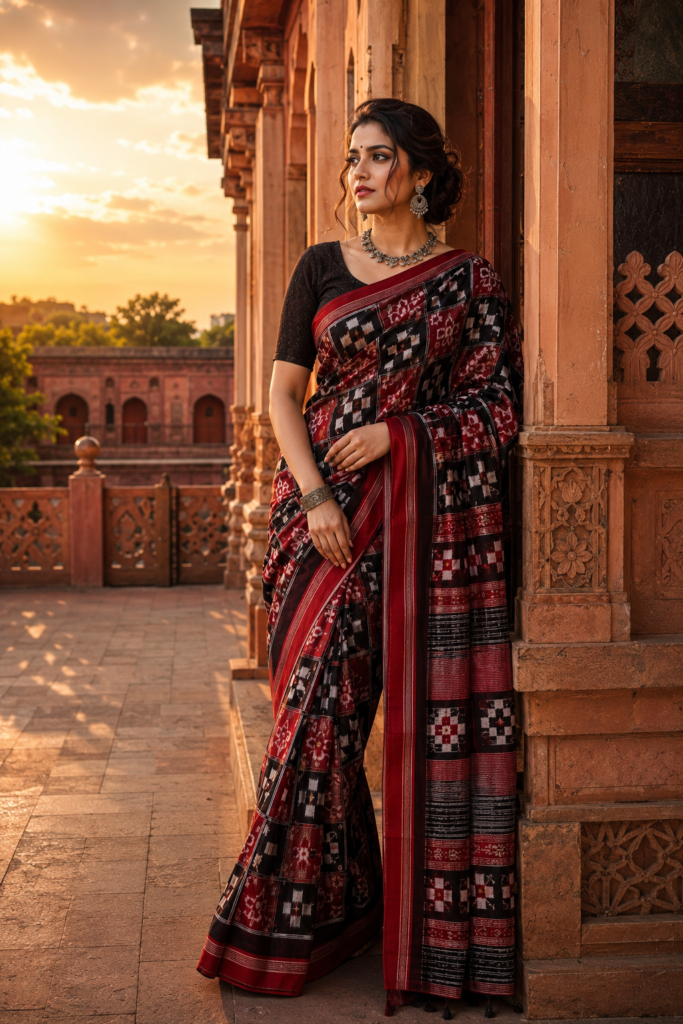
- Modern Silhouette Adaptations: Respecting this magnificent heritage, contemporary slow-fashion designers actively integrate Odisha Ikat into high-end sarees, fusion tunics, dupattas, and structural corporate blazers. Consequently, this unique blend of ancient spirituality and green ethics has made it highly coveted among global sustainable fashion enthusiasts.
3: Frequently Asked Questions (FAQ)
Q1: How can I identify an authentic hand-woven Odisha Ikat saree?
Answer: An authentic handloom Odisha Ikat saree features identical design clarity and color intensity on both the front and reverse sides. If the underside of the motif appears faded, blurry, or white, it is explicitly a machine-printed imitation.
Q2: What makes a traditional Khandua Silk saree so special?
Answer: The primary distinction of a Khandua Silk saree is its feather-light weight combined with a glossy mulberry silk base. It traditionally features sacred temple borders and red-indigo color blocks representing the dieties of Puri.
Q3: Is a Sambalpuri cotton saree suitable for hot summer weather?
Answer: Yes, absolutely. Sambalpuri cotton sarees are crafted out of 100% pure premium cotton yarn count. This makes the fabric highly breathable, exceptionally absorbent, and perfectly cooling against the skin during hot summer months.
Conclusion
The heritage handlooms of Odisha demonstrate how fashion can co-exist organically with spiritual devotion and geometric structures for hundreds of years. From the sacred verses of Khandua to the bold patterns of Sambalpuri Ikat, every single drape narrates a story of sustainability and identity. Bridging the gap between these rural master artisans and global textile lovers, Vunavya stands proud in keeping this heritage alive.