
The Soil of North Bengal: The Heritage of Rajbongshi Textiles and the Magic of Yellow & Green | Vunavya
Read this in – हिन्दी /বাংলা /অসমীয়া
The mere mention of North Bengal conjures up images of the dense forests of Dooars and the silver streams of the Teesta and Torsa rivers. Yet, cradled in this natural landscape lies a unique and glorious textile heritage of the Rajbongshi community from Cooch Behar and Jalpaiguri— ‘Rajbongshi Textiles’. Crafted entirely using domestic handlooms, the cloth woven by Rajbongshi women for generations stands today as a stellar blueprint for sustainable and eco-friendly fashion. Today, on this special blog by Vunavya, we delve into the rich history of Rajbongshi weaves and the story behind the striking dominance of yellow and green in their fabrics.
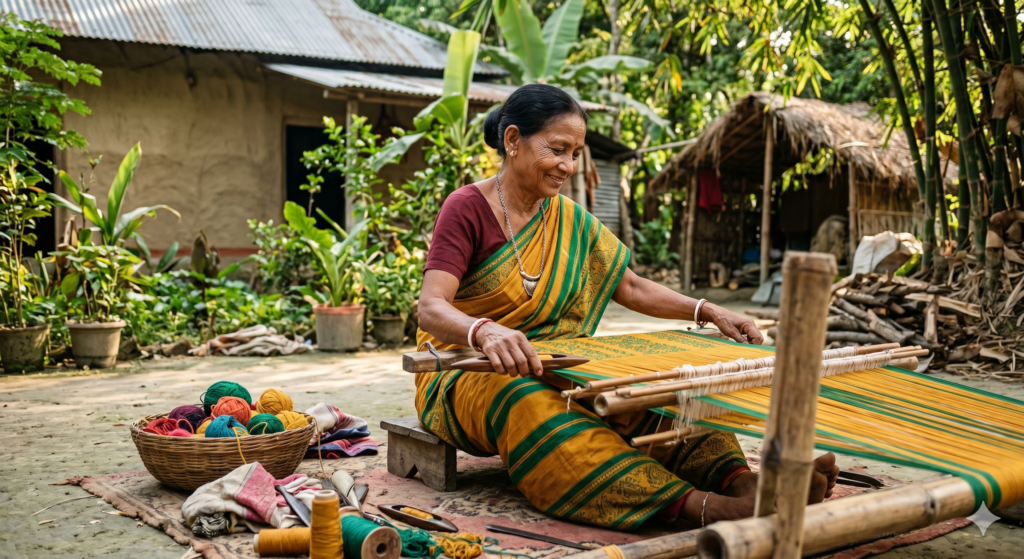
1. Patani: The Signature Attire of Rajbongshi Culture
The ultimate crown jewel of Rajbongshi weaving is the ‘Patani’ (also known as Phota-Patani). It is a wide, heavy-duty fabric traditionally wrapped around the body from the chest down to the knees by Rajbongshi women.
- The Weaving Craft: Rajbongshi mothers carefully weave this cloth on simple domestic handlooms. The yarn used is exceptionally strong and densely packed, designed to protect the body against the humid and chilly weather of North Bengal.
- Motifs & Layout: The visual signature of a Patani cloth is its distinct arrangement of broad horizontal and vertical stripes, framed by beautifully integrated geometric borders at the ends.
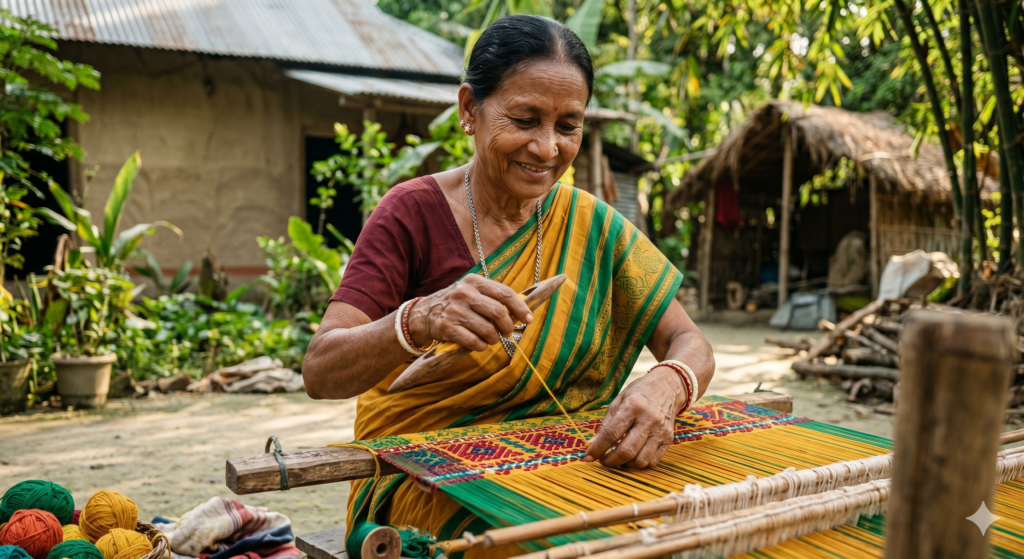
2. The Symphony of Yellow and Green: A Tribute to Nature
Rajbongshi handlooms are instantly recognizable by their distinct color palette, governed heavily by shades of Yellow and Green. This choices stem from a profound connection with their surroundings:
- The Sanctity of Yellow: In Rajbongshi culture, yellow is a sacred hue. It represents their fertile agricultural lands, blooming mustard fields, and auspicious beginnings.
- The Grace of Green: Green symbolizes the lush canopy of the Dooars forest, sprawling tea gardens, and their deep-rooted co-existence with nature. The contrast of yellow and green yarn infuses the fabric with an organic, refreshing earthy feel.
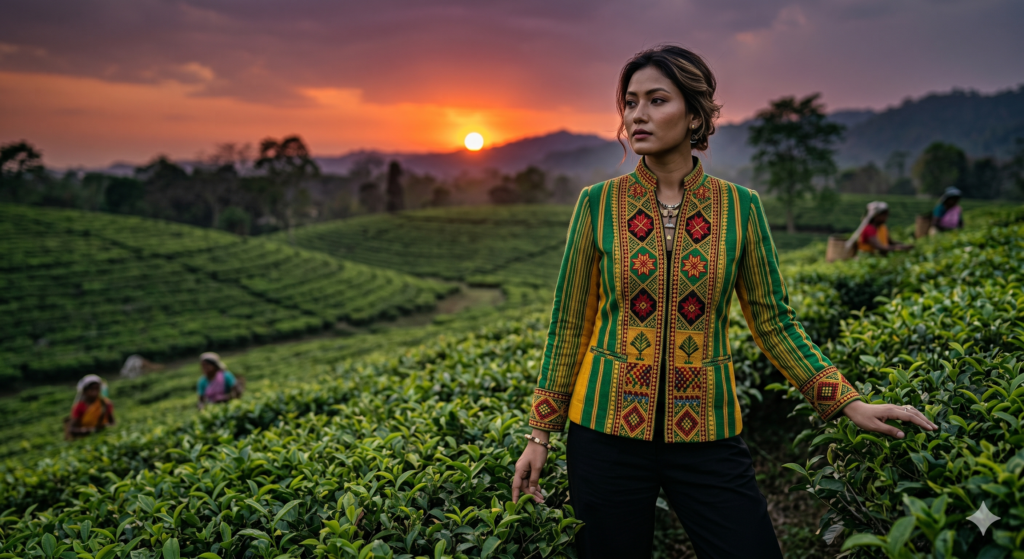
Conclusion
The traditional craft of the Rajbongshi weavers of Cooch Behar and Jalpaiguri is a living archive of North Bengal’s soil. Dedicated to making this historic harmony of yellow and green a global fashion statement, Vunavya proudly supports these indigenous artisans in preserving their matchless legacy.