
The Himalayan Looms: The Tale of Sikkim’s Traditional Lepcha Thara, Pangden, and Bhutia Carpets
Read this in – বাংলা /हिन्दी /असमिया
The snow-capped peaks of Khangchendzonga and the pristine blue waters of Tsomgo Lake define the iconic beauty of Sikkim. However, cradled within this mystical mountain terrain lies an incredibly profound textile heritage. Today, on this comprehensive master blog by Vunavya, we explore the 3 most celebrated textile legacies of Sikkim— Lepcha Thara, Pangden, and the historic craft of Bhutia Carpet Weaving.
1: Lepcha Thara — The Magic of Geometric Weaves
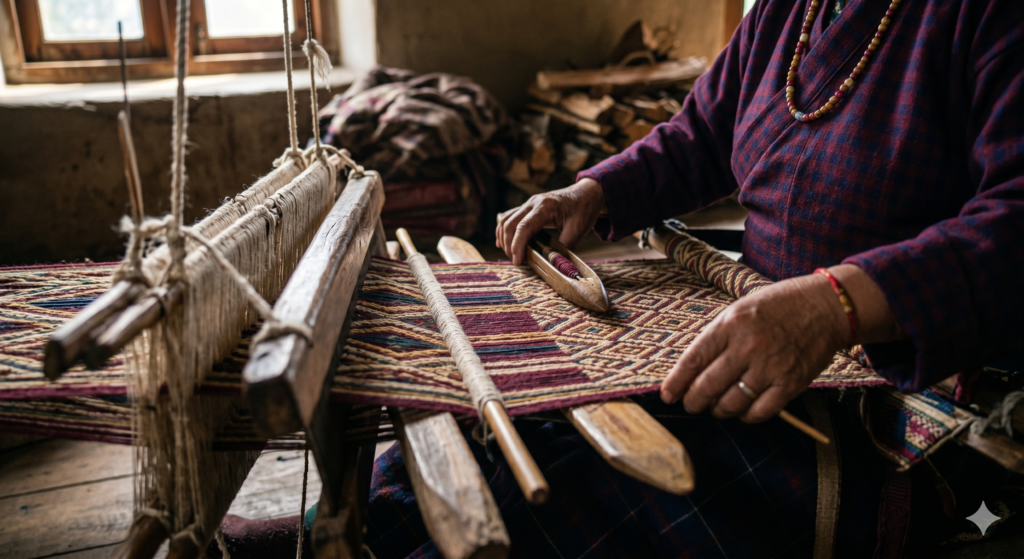
The traditional, handwoven fabric crafted by the indigenous Lepcha community is called ‘Thara’. It is predominantly woven using ancient backstrap looms.
- Weave and Motifs: The unique essence of Lepcha Thara lies in its complex geometric layouts. Master weavers integrate triangles, squares, and crisp vertical blocks into the core fabric using sturdy cotton-wool blends.
2: Pangden — The Radiant Identity of Married Women
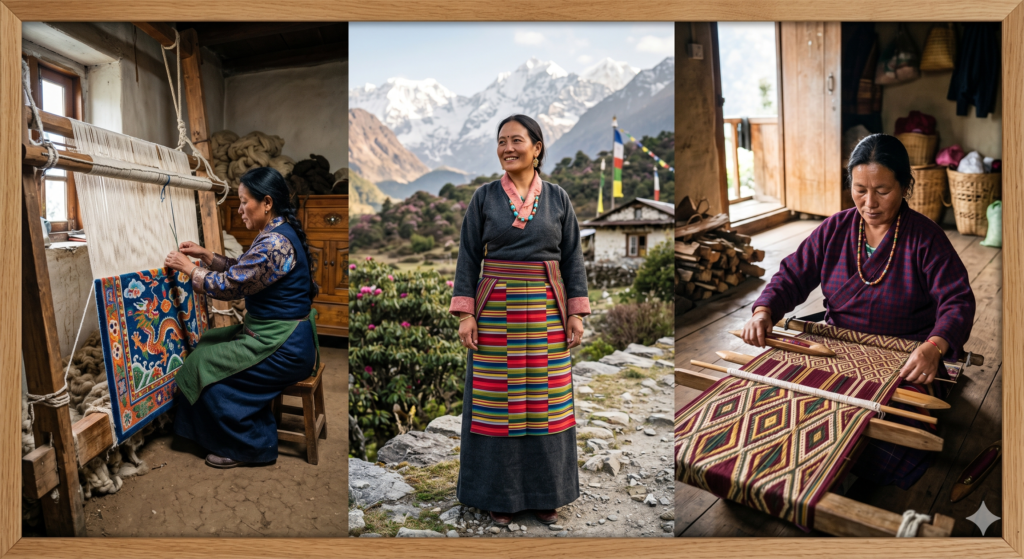
When observing women belonging to Bhutia or Tibetan heritages in Sikkim, one cannot miss the bright, multi-colored striped fabric worn at the front of their traditional dress. This is called the ‘Pangden’.
- Cultural Significance: The Pangden is a traditional apron handwoven using fine sheep wool. In Bhutia customs, a woman is entitled to wear this apron only after marriage, making it a sacred symbol of wedded life.
- Color Schemes: Characterized by its brilliant horizontal stripes, artisans use combinations of striking red, blue, yellow, and emerald green woollen yarn to create a beautiful rainbow contrast.

3: Bhutia Textiles and Heritage Carpet Weaving
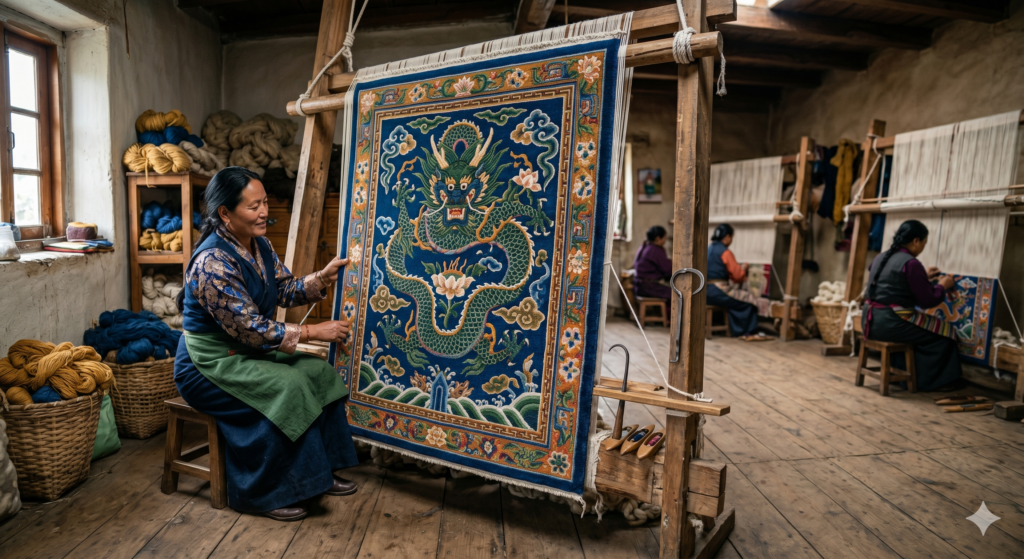
To withstand the unforgiving Himalayan winters, the Bhutia community has perfected the art of wool processing over centuries. Their handmade woollen carpets are globally renowned.
- Dragon and Lotus Motifs: Deeply rooted in Buddhist philosophies, Bhutia carpets feature spectacular motifs of mythical Tibetan dragons, sacred lotuses, snow lions, and stylized clouds. The vegetable-dyed wool retains its luster for decades.
Conclusion
Sikkim’s textiles are a living archive of Himalayan folklore, devotion, and sustainability. Vunavya proudly serves as a global bridge to deliver this magnificent mountain craftsmanship straight to heritage lovers worldwide.