
Zardosi and Mukesh Work: The Royal Elegance of Nawabs Woven in Bengal’s Threads
When we think of Bengal’s textile industry, the rhythmic clatter of handlooms and the soothing comfort of cotton usually come to mind. However, the history of Bengal’s weaves is not limited to ordinary threads; it is intertwined with the sparkle of gold and silver and the royal elegance of the Nawabs. Today, on Vunavya’s ‘Textile Heritage’ page, we bring you the story of an embroidery style that instantly lends a majestic aura to any bridal outfit or premium blouse. The name of this exquisite art is— Zardosi and Mukesh Work.
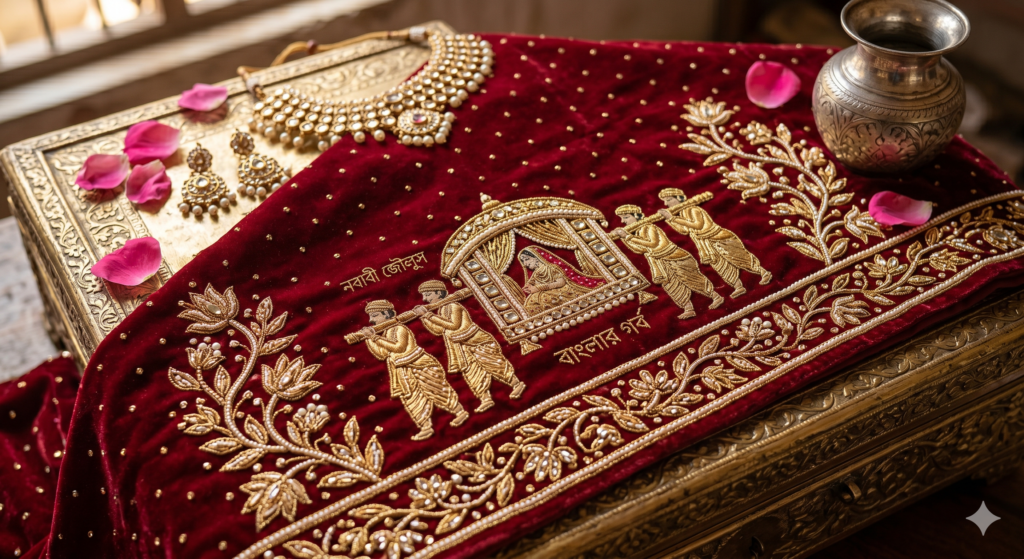
The Origin of Zardosi
From Persia to the Courts of Murshidabad The word ‘Zardosi’ originates from the Persian language. ‘Zar’ means gold, and ‘Dosi’ means embroidery. Quite literally, it translates to golden thread embroidery. This art form was brought to India from Persia during the Mughal era.
It entered Bengal through the patronage of the Nawabs of Murshidabad. Murshidabad’s silk already had global fame, and soon, this golden embroidery began to be used to adorn the royal garments of Nawabs and Begums, velvet shoes, and even elephant drapes. Later, when the exiled Nawab of Awadh, Wajid Ali Shah, arrived in Metiabruz, Kolkata, he brought skilled artisans with him. This established a massive hub for Zardosi and Mukesh work in Kolkata, which thrives to this day.
Zardosi & Mukesh
How Are These Royal Designs Created? This craft is highly intricate, time-consuming, and expensive. Instead of regular cotton threads, metallic threads or ‘Zari’ are used.
- Zardosi Work: Artisans first stretch the fabric tightly tightly over a wooden frame (called an ‘Adda’). Then, using a special needle (Aari), they meticulously stitch gold or silver-coated metallic wires (known as Salma or Dabka), pearls, and Kundan stones onto the fabric.
- Mukesh Work: Mukesh or ‘Mukaish’ is a distinct variation of Zardosi. Here, flattened metallic wires are twisted and stitched into the fabric to create tiny dot-like patterns that sparkle like stars. This work looks absolutely stunning on Chiffon or Georgette fabrics.
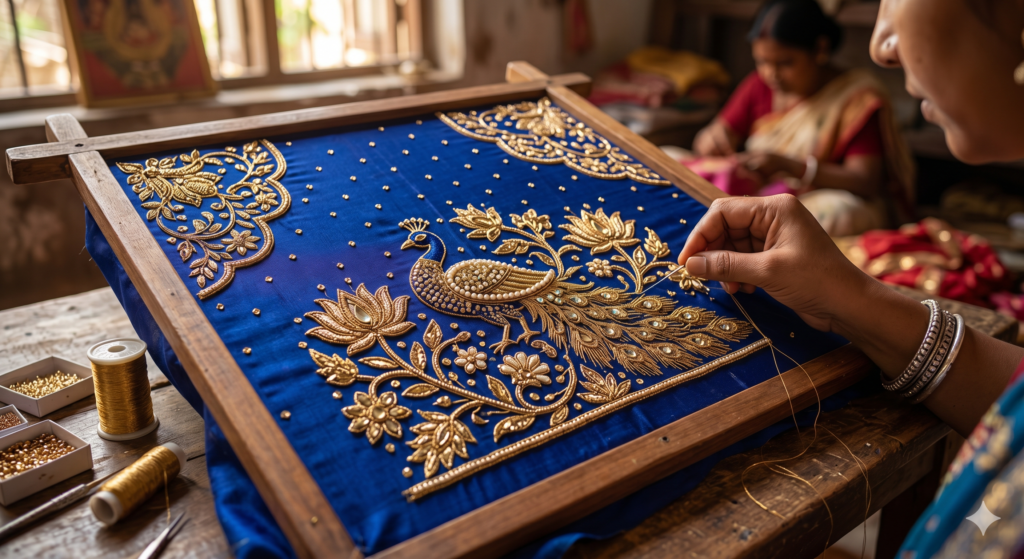
The Reign of Zardosi in Modern Bridal Fashion The era of the Nawabs may have ended, but the value of Zardosi has not diminished; rather, it has become even more luxurious in modern fashion. Today, there is a massive demand for Zardosi and Mukesh work on bridal Banarasi sarees, premium silks, lehengas, and designer blouses.
When traditional motifs like peacocks, lotuses, or palanquins (Palki) are brought to life through Zardosi on the sleeves or back of a bridal blouse, it transcends being just an outfit and becomes a masterpiece. It can take several artisans more than a month to complete a heavily embroidered Zardosi blouse or saree.
Vunavya believes that true luxury cannot be manufactured by machines; it is created by the magic in the fingers of Bengal’s skilled artisans. Our goal is to give a modern touch to this royal history of Bengal and make your special days even more dazzling.
Do you have any Zardosi work on your bridal outfit or a favorite premium blouse? Which aspect of this royal art do you love the most? Share with us in the comments!