
The ultimate guide to Odisha’s Bomkai Saree. Discover the rich history, extra-weft weaving mechanics, and traditional tribal motifs of this Sonepuri heritage.
Read this in – বাংলা/हिन्दी/ଓଡ଼ିଆ
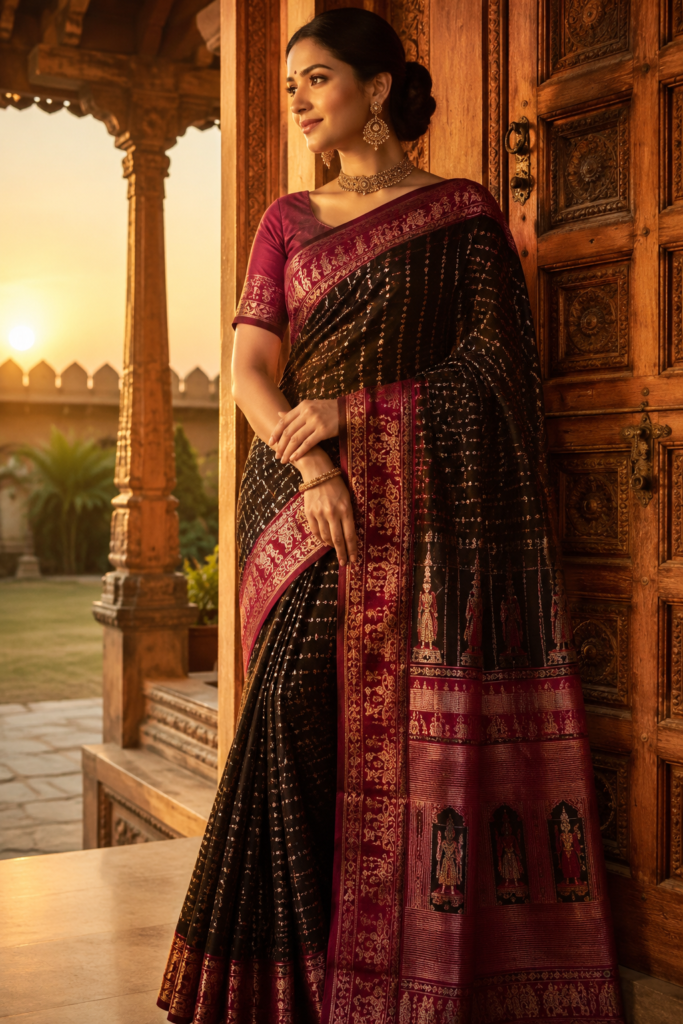
Every single traditional weave from the state of Odisha carries a brilliant configuration of geometric structures and cultural stories. One such exceptionally ancient, prestigious, and heavily ornamented textile art from the Ganjam and Subarnapur (Sonepur) regions is the Bomkai Saree, locally celebrated as the ‘Sonepuri’. This traditional drape is far more than a luxury commercial garment; rather, it stands as a powerful symbol of tribal identity and royal aristocracy. Today, on this comprehensive blog by Vunavya, we explore the fascinating history, extra-weft mechanics, and provide practical answers to some highly essential questions regarding the Bomkai Saree.
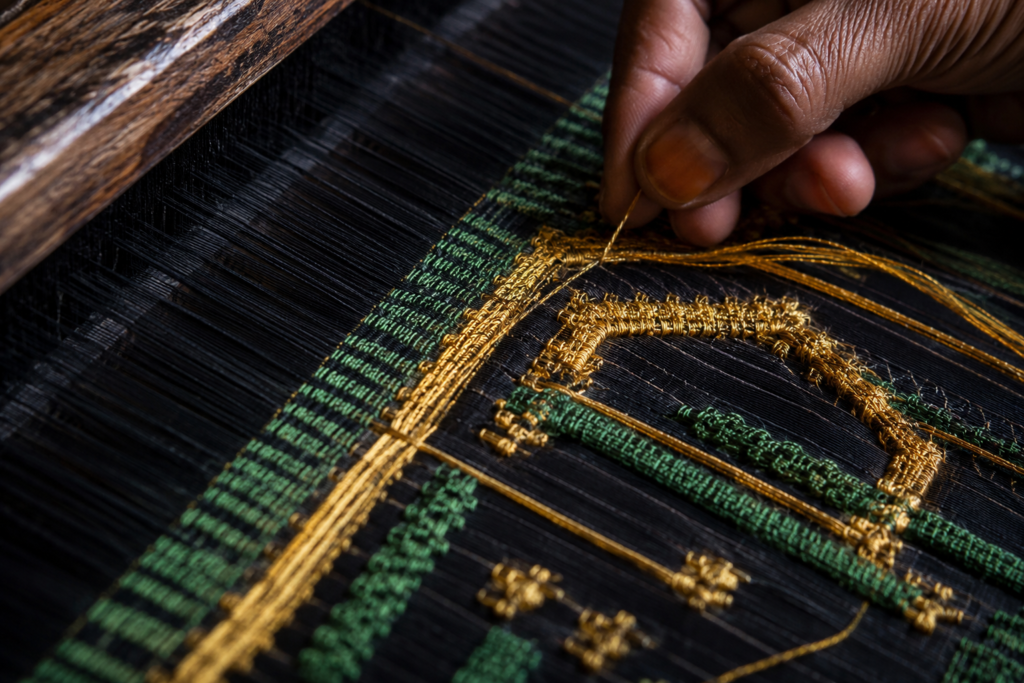
1: The Technical Mechanics of Bomkai Weaving — The Power of Extra Weft
The primary allure of the Bomkai Saree lies heavily within its dense structural weave and the three-dimensional rendering of motifs across its grand pallu.
- The Extra Weft Technique: While weaving the primary base fabric on the handloom, artisans strictly introduce additional decorative supplementary colored threads or metallic zari. Consequently, this extra-weft mechanism explicitly raises the intricate design patterns above the fabric surface, giving it a rich, embroidery-like tactile feel.
- The Transition to Premium Silk: Historically, Bomkai was woven exclusively out of coarse cotton counts for local tribal women. However, after receiving extensive royal patronage from the Sonepur court, master weavers seamlessly transitioned this craft onto premium mulberry silk bases, turning it into a globally coveted luxury silhouette.
2: Royal Motifs and Contemporary Sustainable Fashion Trends
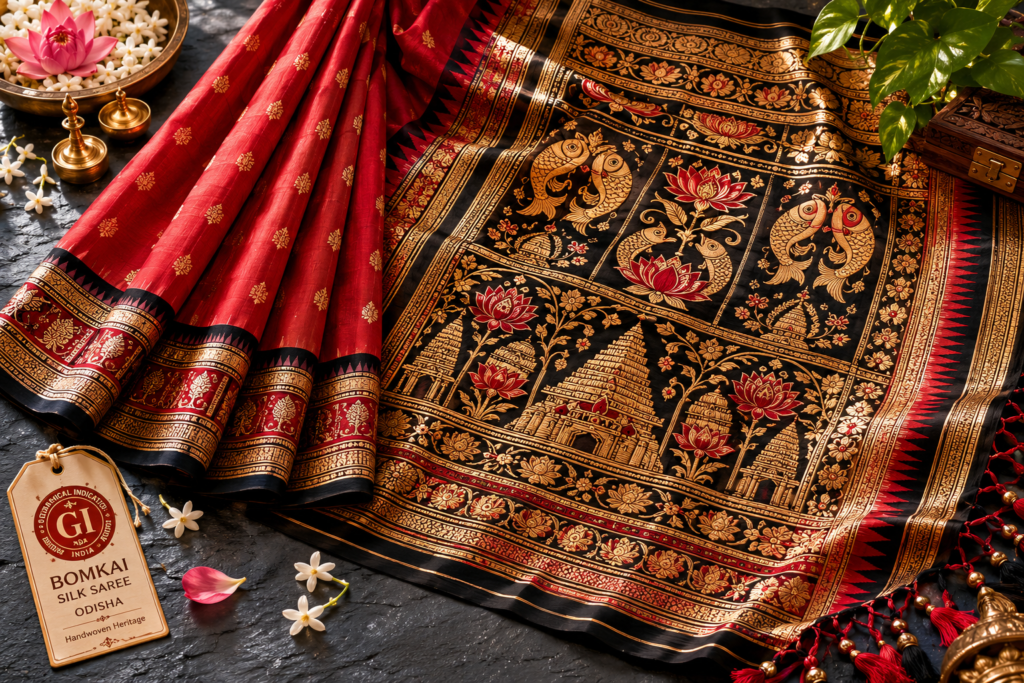
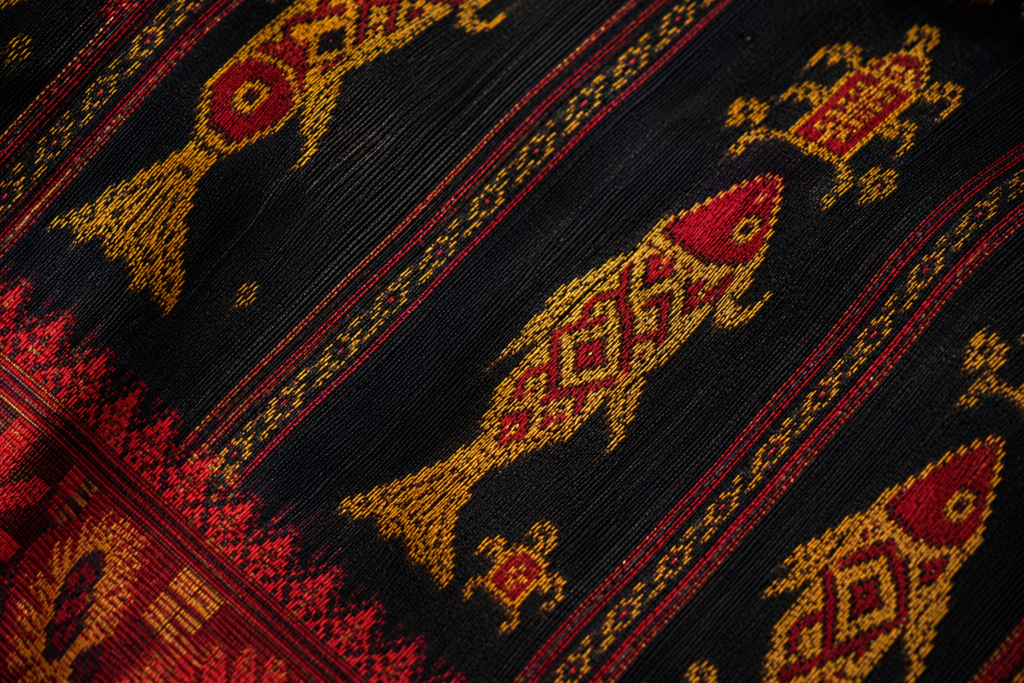
- The Language of Symbolism: The deep borders and heavy pallu of a Sonepuri saree explicitly display elements inspired by local coastal folk life. These feature stylized configurations of ‘Fish’ (symbolizing fertility), the pristine ‘Lotus’, tortoises, and the structural temple spires known as ‘Mandira Borders’. Today, protected strictly by its official GI Tag (Geographical Indication), contemporary slow-fashion designers actively integrate Bomkai weaves into high-end corporate ethnic wear, luxury shawls, and fusion separates.
3: Frequently Asked Questions (FAQ)
Q1: What is the primary difference between a Bomkai and a Sambalpuri saree?
Answer: A Sambalpuri saree relies majorly on the ‘Tie-and-Dye’ or Ikat process where the yarn is colored prior to weaving. Conversely, a Bomkai saree utilizes the extra-weft technique to create raised, dense geometric motifs on the pallu over an optional ikat base.
Q2: How can I identify an authentic hand-woven Bomkai Saree?
Answer: An authentic handloom Bomkai saree features small visible loose thread ends or tiny yarn knots on its reverse side where the extra-weft threads terminate. Machine-made lookalikes feature an explicitly flat, smooth, or polyester-blended reverse surface.
Q3: What is the longevity and durability of a Sonepuri Silk saree?
Answer: Woven meticulously out of premium mulberry silk with high structural density, a Sonepuri silk saree is exceptionally durable. With correct maintenance, the fabric preserves its gloss and structural strength for multiple decades.
Conclusion
The traditional drapes of Sonepur demonstrate how fashion can co-exist organically with historic structures and coastal symbolism for hundreds of years. From the raised thread work of the extra weft to the sacred temple spires, every single motif in a Bomkai saree narrates a story of sustainability and identity. Bridging the gap between these rural master weavers and global textile lovers, Vunavya stands proud in keeping this heritage alive.