
The ultimate guide to Tripura’s textile heritage. Discover the newly GI-tagged Tripura Risa, the traditional Rignai-Pachra, and the geometric motifs of Chakma Pinon-Hadi.
Read this in – বাংলা/অসমীয়া/हिन्दी
Nestled in the lush, green landscapes of Northeast India, Tripura is home to 19 distinct indigenous tribes. The absolute centerpiece of their vibrant mountain culture is their historic art of handloom weaving practiced on traditional loin looms. Every single garment from this region holds a deep cultural story. Among the plethora of handlooms, the Tripura Risa proudly stands today as a celebrated textile tradition, holding the prestigious GI Tag (Geographical Indication). Today, on this comprehensive master blog by Vunavya, we explore the fascinating history of the traditional attire—Risa, Rignai-Pachra, and the geometric beauty of Chakma handlooms.
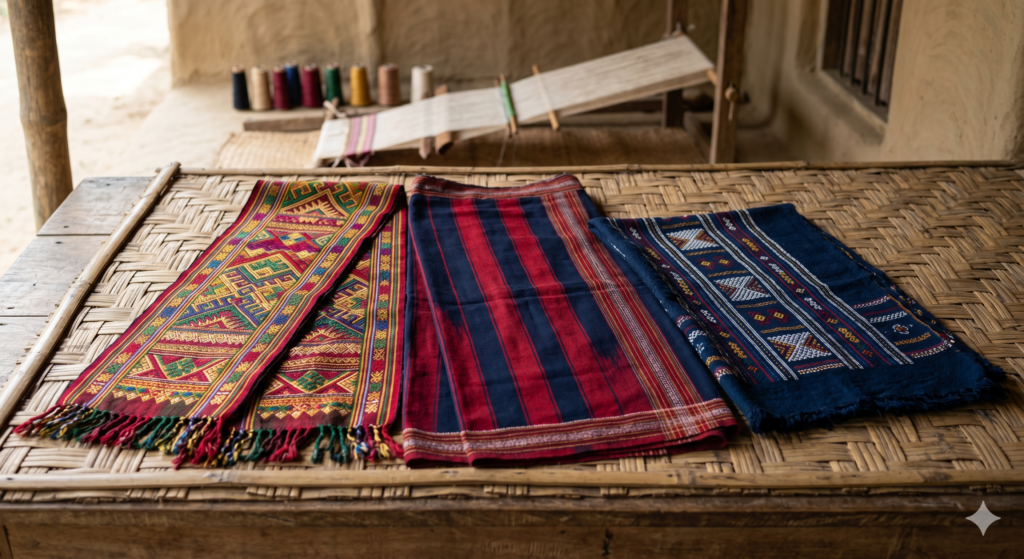
1: Tripura Risa, Rignai, and Pachra — The Classic Three-Piece Silhouette
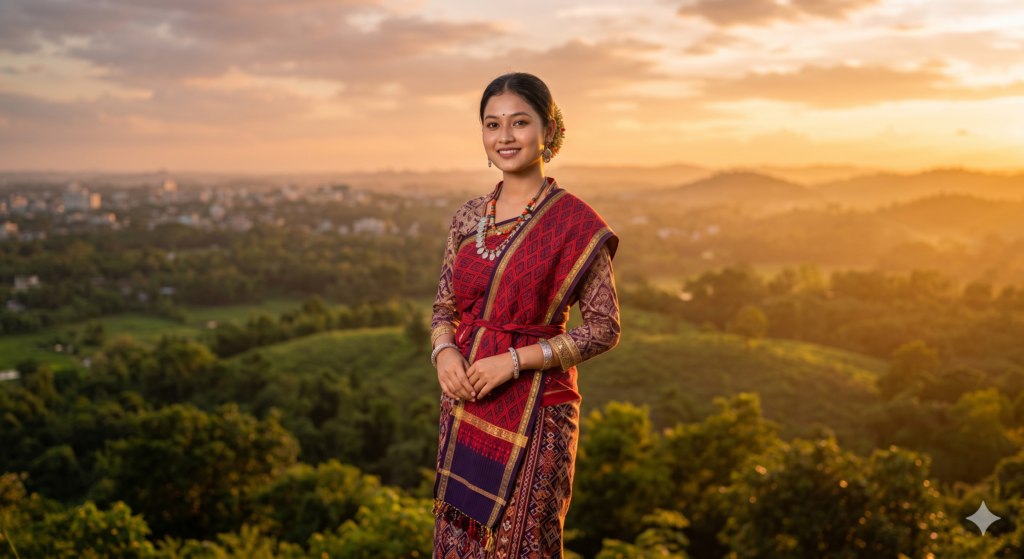
The traditional attire of Tripuri women is a highly sophisticated three-piece ensemble consisting of the Risa, the Rignai, and the Pachra.
- The Tripura Risa: This is a small, hand-woven, heavily ornamented stole or breast-cloth wrapped elegantly around the upper body. It is also presented to respected guests as a token of high honor. Its newly acquired GI Tag has granted it global recognition.
- Rignai and Pachra: The ‘Rignai’ is the lower garment worn as a classic wrap-around skirt. On the other hand, the ‘Pachra’ is a broader piece of cloth used as a matching drape or stole over the shoulders. They feature bright, contrasting organic yarn combinations.
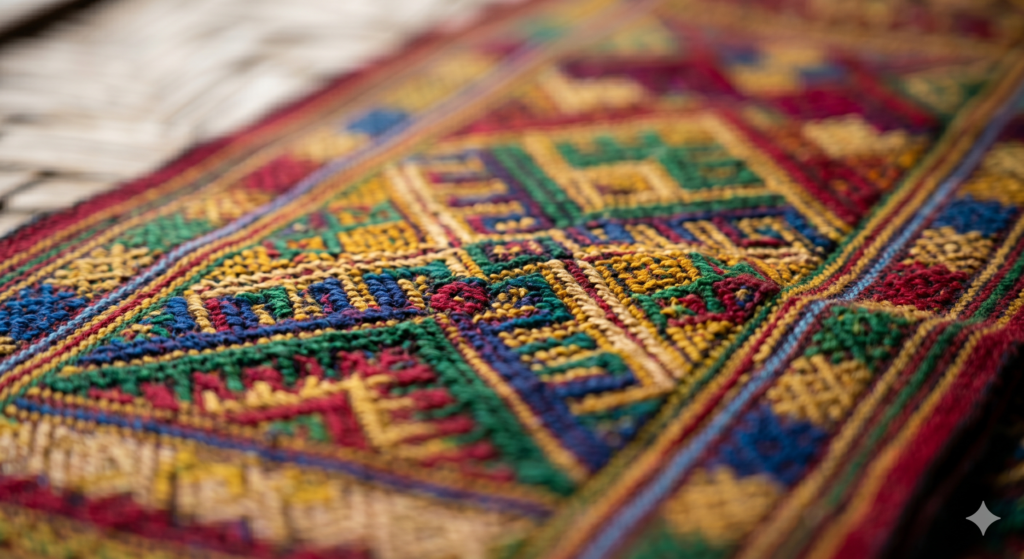
2: Chakma Textiles (Pinon and Hadi) and Tribal Motifs
Another spectacular handloom tradition of Tripura belongs to the women of the Chakma community.
- Pinon and Hadi: The lower wrap skirt worn by Chakma women is called the ‘Pinon’, and the matching upper drape is known as the ‘Hadi’. This attire is instantly recognizable by its striking geometric panels woven in deep black, navy blue, and crimson red yarn.
- The Language of Motifs: The true beauty of Tripura handlooms lies in their strict, nature-inspired geometric representations. Weavers meticulously capture local flora, mountain rivers, and ancestral beliefs into the fabric panels, locally known as ‘Khwbung’. These patterns explicitly elevate the garment from simple clothing to a canvas of living history.
Conclusion
The tribal handlooms of Tripura demonstrate how fashion can co-exist organically with nature for hundreds of years. From the newly celebrated Risa to the geometric panels of the Chakmas, every thread narrates a story of sustainability and identity. Vunavya stands proud in keeping this heritage alive.